




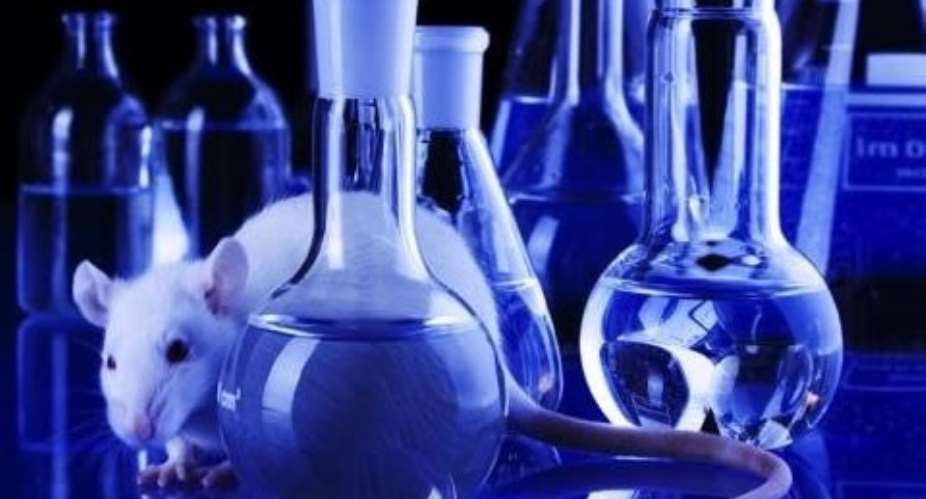
Losing the use of your eyes via retinitis pigmentosa or macular degeneration — diseases that effect your ability to sense light — can be absolutely traumatizing. But thanks to new research on lab mice, these types of blindness may soon be reversible through a series of injections.
In the study, a group of blind lab mice were given injections of a chemical called acrylamide-azobenzene-quaternary ammonium, or AAQ for short. Previously known to be active on nerve cells, AAQ, when injected directly into a mouse's eye, allowed the animal to once again sense light. Though it's difficult for researchers to measure exactly how much of the mouse's sight was restored by the injection, lab testing has so far shown the mice regaining near-normal function.
So far, AAQ has only been tested on mice — upcoming primate tests will tell scientists whether or not this drug is a possible solution for treating retinitis pigmentosa or macular degeneration in humans. But even if tests point to AAQ's effectiveness, regular injections may not be a preferred solution. After all, AAQ's effects only last for about 24 hours on the mice before they require another injection directly into the eye.
 Abandoned newborn baby found near gutter at Agona Swedru Woaraba
 Reparations Justice Forum questions imported schnapps for African libation ritua...
 35-year-old teacher found dead in room at Akyem Anweam
 If 2024 anti-LGBTQ bill was good, why wasn't same given to Mahama for assent? — ...
 'Oga should be worried' — Kwaku Azar reacts as pressure mounts on Ofori-Atta af...
 Nigerians facing xenophobic attacks in South Africa are legal migrants — Foreign...
 AG to meet US counterparts on pending extradition requests — Kwakye Ofosu
 JHS graduate, another drown in Twifo-Atti-Morkwa rivers during heavy rainfall
 27-year-old jailed 4years for stealing church musical equipment at Hohoe
 Call 'Rambo-style' Mintah Akandoh to order — Minority tells Mahama


