




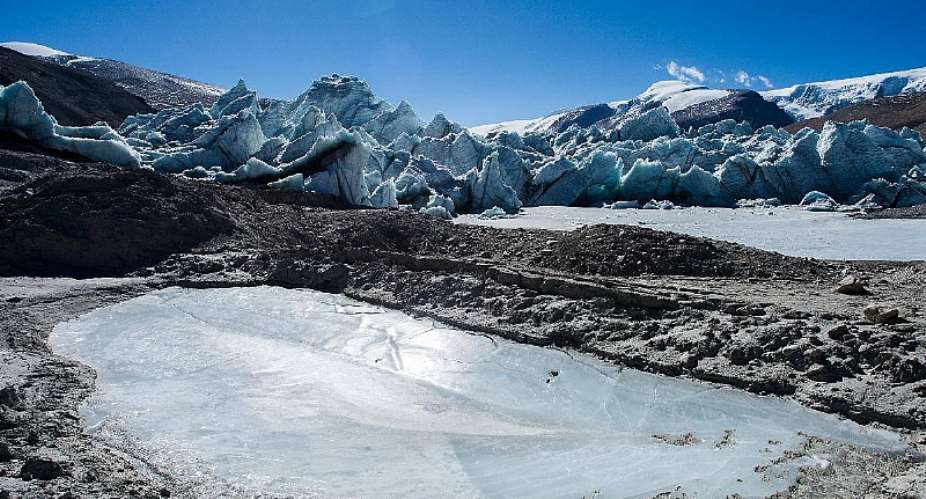
A team of researchers at the Chinese Academy of Sciences has found nearly 1,000 species of bacteria in snow and ice samples collected from Tibetan glaciers.
In their paper published in the journal Nature Biotechnology, the group describes collecting and studying the bacteria and their concerns about the spread of disease as the glaciers melt.
The problem with such bacteria and viruses is that they could be infectious to animals and humans. As the snow and ice melts, they could travel with the water into rivers and streams into populated areas.
And perhaps an even bigger problem could be that modern plants and animals, including humans, lack immunity to the older microbes, which suggests they could be deadly and difficult to treat.
Thus, they present the possibility of starting local epidemics and possibly pandemics.

 Preaching in moving vehicles banned, not stationed vehicles — Mahama clarifies
 Man picking mushroom accidentally shot dead at Nyagbo Kume Forest, hunter in pol...
 Strike suspended, but negotiations for teachers’ benefits not over — GNAT
 CSA rejects FBI claims, insists Ghana led cybercrime operation
 Govt suspends enforcement of ban on preaching in moving vehicles
 Trump strikes diesel deal with Putin, reversing years of pressure on Russia over...
 Powerful 7.6 magnitude quake shakes Panama, triggering tsunami warning
 GH¢800,000 worth of goods lost in Kia Rhino truck fire at Amanfrom
 I never said Ghana has more nurses than it needs — Akandoh
 I have tried reaching Boakye Agyarko after NPP chairmanship race, but to no avai...


