




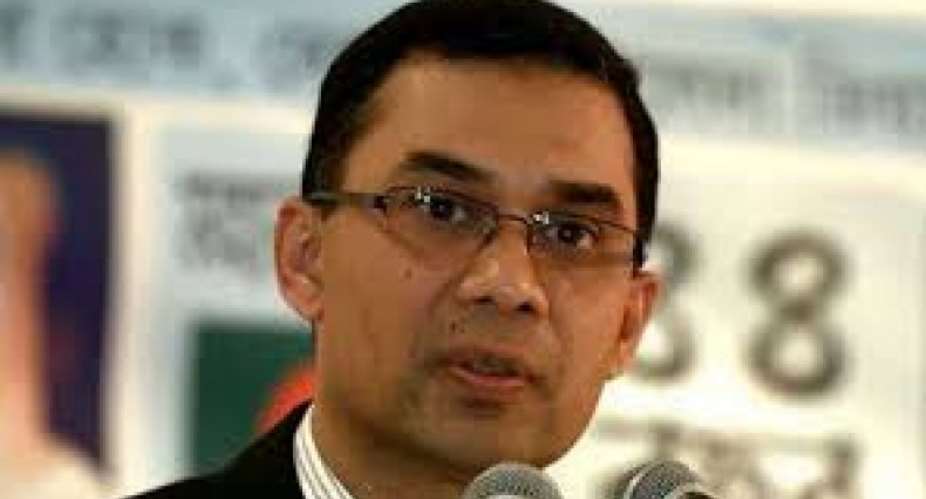
As Bangladesh stands at the crossroads of socio-political unrest, Tarique Rahman, the leader of the Bangladesh Nationalist Party (BNP), emerges as a beacon of hope for the nation. He carries the promise of democratic revival and human rights preservation.
Tarique's political lineage is deeply rooted in Bangladesh's fight for democracy. His father, Ziaur Rahman, the seventh President of Bangladesh, played a pivotal role in steering the nation away from dictatorship. Tarique's mother, Begum Khaleda Zia, who was Bangladesh's first female Prime Minister, was instrumental in restoring democracy in the country. As Tarique takes the helm, the Bangladeshi populace eagerly anticipates a recurrence of history, yearning for a nation that upholds human rights principles and treats its citizens with dignity and respect.
However, fulfilling this aspiration is no easy task. Tarique's leadership will need to resuscitate the faltering rule of law, ensure a fair judicial process, and restore the independence of the judiciary. The predicament of Surendra Kumar Sinha, the twenty-first Chief Justice of Bangladesh, who was allegedly compelled to leave the country, exposes the fragility of the nation's justice system. Under Tarique's rule, the judiciary must regain its credibility and impartiality.
Freedom of expression and association, two pillars of a thriving democracy, must be reinstated in their fullest sense. The culture of fear must be eradicated, and citizens should have the freedom to critique government policies, and join political parties, unions, and religious groups without fear of retribution.
Moreover, equal access to quality education and affordable healthcare must be made a reality for all citizens. This is particularly critical in a nation where education is a privilege of the elite, and healthcare has become a commoditised entity. The establishment of the right to food, water, air, and shelter — the very basics of human survival — will also be crucial.
In the economic realm, Tarique faces the challenge of rejuvenating Bangladesh's economy, which has been crippled by corruption and looting. An effective anti-corruption campaign in both the public and private sectors will be instrumental in restoring the nation's financial health.
An independent judiciary, a human-rights-oriented security apparatus, and a robust economy could be the defining pillars of Tarique's leadership, potentially solidifying the BNP's position for the next few decades.
Establishing close ties with Western nations, which have been allies and development partners of Bangladesh, will be equally important for Tarique. Countries such as Australia, Canada, Denmark, France, Germany, Japan, the Netherlands, Sweden, the United Kingdom, and the United States, who believe in Tarique's potential to reinstate democracy and the rule of law, could be key supporters in this endeavour.
In conclusion, as Tarique Rahman prepares to navigate these multifaceted challenges, the nation waits in anticipation. The Bangladeshi populace hopes that he will follow in the footsteps of his parents and guide the country towards a democratic renaissance, anchored in the rule of law, human rights, and socio-economic progress."


 “Our ancestors didn’t survive Notsie for us to divide ourselves” – Awadada
 Court jails mine worker 14 years for defiling 8-year-old girl at Manso Kumpese
 President Mahama orders review of Ghana’s disaster preparedness systems
 Galamsey: Ghana’s rivers now run chocolate and milk colour — Sam Jonah
 A nation of job-seekers will always be poor — Sir Sam Jonah
 CAGD pays promotion arrears to 56,003 GES teachers ahead of deadline
 “If you attack us with pepper spray, we’ll fight back” — NDC Yakubu Tony Aidoo w...
 We must support artisans to unlock job creation potential – Bawumia
 Ms. Emelia Affi Agbenyo must honourably resign as new EC Deputy Chairperson to p...
 Osahen Afenyo-Markin reflects on loneliness of public service, says survival is ...


