




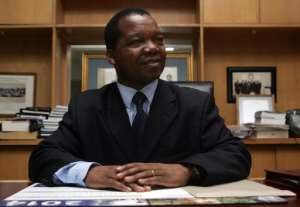
Harare (AFP) - Foreign investment in Zimbabwe more than halved in the first six months of the year, the central bank chief said Monday, calling for the country to "fight the negative perception" that was scaring off capital.
The news came as Mugabe, Africa's oldest leader at 90 who held onto power in disputed national elections last year, kicked off a trip to China aimed at luring investment in the nation's stagnant economy.
Central Bank chief John Mangudya said Zimbabwe needed to come up with credible policies and fight negative perceptions to attract desperately needed capital as the country battles economic crisis.
He called on the country to "fight the negative perception that Zimbabweans continue to create, knowingly or unknowingly, for ourselves".
"Investment inflows into Zimbabwe have remained subdued due to the perceived country risk," Mangudya said in a monetary policy statement.
In the first six months of 2014, the country received $67 million (51 million euros) compared to $165 million during the same period in 2013, the statement said.
Mugabe has ruled Zimbabwe since 1980, his more than three decades in power starting amid optimism but eventually characterised by corruption, enduring economic crisis and brutal crackdowns against political opposition.
In the face of Western opprobrium he adopted a "look East" policy, forging new ties and buttressing existing ones with east Asian countries, including China.
Once the breadbasket of southern African, the country now imports basic goods from neighbouring countries and is grappling with unemployment of around 80 percent.
Zimbabwe was forced to slash its growth forecast for the year from 6.1 per cent to 3.1 per cent due to weak economic activity.
Investors have been scared off by Harare's controversial indigenisation law, which prohibits foreign companies from controlling foreign owned businesses. Earlier this year, Harare said it will amend the law.
"There is therefore need for the country to create an investor-friendly environment so as to tap into these external capital resources to boost employment, production and exports," he added.
The solution lies in "putting in place credible, consistent and predictable investment policies," Mangudya said.
Zimbabwe is in the throes of an economic crisis characterised by tight liquidity crunch, companies closures, non-performing loans and a "disproportionate trade balance," according to the bank governor.
"This subdued level of exports further compounds the liquidity situation and deceleration in economic activity," he said.
 Former MASLOC CEO Sedina Tamakloe returns to Ghana after extradition to serve 10...
 Tension in Birim North as angry NDC youth attempt to disrupt cooperative mining ...
 One dead, several injured in tipper truck and fuel tanker crash on Accra–Tema Mo...
 How 70-year-old building was finally demolished over fear of collapse in Osu
 Minority MPs thank Afenyo-Markin for capacity-building programme in Canada
 Ghana has everything needed to prosper yet graduates remain unemployed — Dr Step...
 June 9: Cedi sells at GHS12.50 on forex market, GHS11.85 on BoG interbank
 Stephen Amoah advocates mixed market economy to tackle rising cost of living in ...
 KMA to reintroduce enhanced ‘Samansaman’ sanitation enforcement system from July...
 Nyinahin Catholic SHS teacher seen fighting female student in viral video arrest...



Comments
Indigenisation of 51% share in foreign companies in Zimbabwe is not a new development in Africa. Nigeria saw indigenisation programme. That did not change the situation in Nigeria. Can some in form me on the public purpose of indiginisation in Zimbabwe or what makes it illegal?