




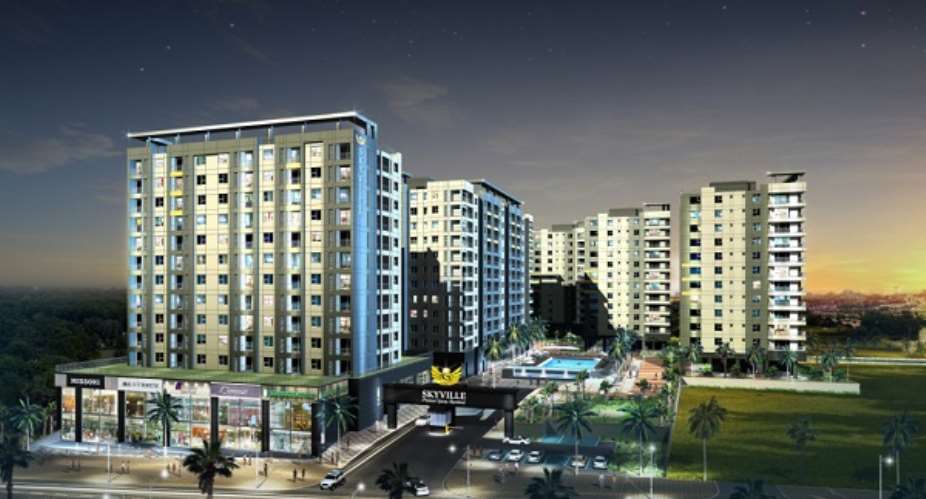
In the heart of Accra, along the northern stretch of Liberation Road, once stood the Shangri-La hotel. Known for its charming low-rise structure and the legendary "pizza by the pool," Shangri-La was once the epitome of elegance and aspiration for the middle-class. However, by 2011, the hotel had fallen into disrepair and was deemed unworthy by the very crowd that once adored it.
The saga took a dramatic turn when the hotel was demolished over a decade ago, leaving behind a barren plot of land that puzzled many residents. The story of Shangri-La is not just about a hotel but about the complex history of land ownership and development in Ghana. The land on which Shangri-La stood was once part of a larger tract acquired by the British colonial government in 1936 for an "anti-amaryl aerodrome," a facility for handling planes suspected of carrying diseases.
The plot thickened as the land changed hands over the years, eventually falling into the hands of private businesses under opaque circumstances. The Shangri-La saga is a stark reminder of the challenges and opportunities in Ghana's real estate and development sector.
Business Concept Paper: Public-Private Partnership Project for Shangri-La Redevelopment
Redevelopment of Shangri-La Hotel: A Public-Private Partnership Initiative
Executive Summary:
The redevelopment of the Shangri-La hotel site presents a unique opportunity for a public-private partnership (PPP) project that can serve the national interests and benefit future generations. This project aims to transform the barren plot of land into a modern, sustainable, and economically viable development that will enhance the surrounding area and contribute to Ghana's economic growth.
Project Objectives:
1. Revitalize the Shangri-La site: Transform the vacant land into a vibrant, mixed-use development that includes residential, commercial, and recreational spaces.
2. Promote sustainable development: Incorporate green building practices and renewable energy sources to minimize environmental impact.
3. Boost local economy: Create job opportunities and stimulate economic activity in the surrounding area.
4. Enhance public infrastructure: Improve infrastructure such as roads, utilities, and public spaces to benefit the community.
Project Scope:
- Site Preparation: Clearing and preparing the land for redevelopment.
- Design and Planning: Developing architectural and engineering plans for the new development.
- Construction: Building residential, commercial, and recreational facilities.
- Sustainability Initiatives: Implementing green building practices and renewable energy sources.
- Community Engagement: Involving local stakeholders in the planning and development process.
Funding and Financing:
The project will be funded through a combination of public and private investment. The government will provide initial funding for site preparation and infrastructure improvements, while private investors will finance the construction and development of the mixed-use facilities. The project will also seek funding from international development organizations and financial institutions.
Implementation Timeline:
- Year 1: Site preparation and initial infrastructure improvements.
- Years 2-3: Design and planning phase.
- Years 4-5: Construction phase.
- Year 6: Completion and opening of the new development.
Expected Outcomes:
- Economic Growth: Increased economic activity and job creation in the surrounding area.
- Sustainable Development: A model for sustainable urban development in Ghana.
- Improved Infrastructure: Enhanced public infrastructure and amenities for the community.
- Community Benefits: Improved quality of life for residents and visitors.
Business Open Letter to the Minister of Finance, Dr. Forson
Subject: Proposal for Public-Private Partnership Project: Redevelopment of Shangri-La Hotel Site
Dear Dr. Forson,
I hope this letter finds you well. I am writing to propose a public-private partnership (PPP) project for the redevelopment of the Shangri-La hotel site in Accra. This project presents a unique opportunity to revitalize a vacant plot of land and transform it into a vibrant, sustainable, and economically viable development that will benefit the community and contribute to Ghana's economic growth.
The Shangri-La hotel site has been lying fallow for over a decade, and its redevelopment can serve as a model for sustainable urban development in Ghana. By incorporating green building practices and renewable energy sources, we can minimize the environmental impact and create a development that is both environmentally friendly and economically beneficial.
I propose that the government provide initial funding for site preparation and infrastructure improvements, while private investors finance the construction and development of the mixed-use facilities. This partnership will not only boost the local economy but also create job opportunities and stimulate economic activity in the surrounding area.
I believe that this project aligns with the national interests and can serve as a model for future PPP projects in Ghana. I would be grateful for the opportunity to discuss this proposal further and explore ways to move forward with this initiative.
Thank you for your attention to this matter. I look forward to your positive response.
Sincerely,
Atitso Charles Akpalu
Retired Senior Citizen
Teshie-Nungua
024-414-0626

 VIDEO: Ayanfuri Chief dies after testing potency of his juju at funeral
 Ashanti North Police interdict Inspector over defilement allegations
 Here are areas to face power outage over ECG planned maintenance today
 Ghana pushes for instant payment systems across Africa
 GAF to conduct Exercise Storm Shield 2026 in Bono and Upper East
 ECG resumes two key stalled projects in Kumasi
 Mahama breaks ground for Green City Housing Project at Dedesua near Kumasi
 Celebrating mothers: Honouring the Heart of the Ghanaian Society
 EOCO Boss Raymond Archer defends PDS investigation methods
 Snakes, weeds take over multi-million 1D1F starch factory at Kyekyewere in Assin...


