




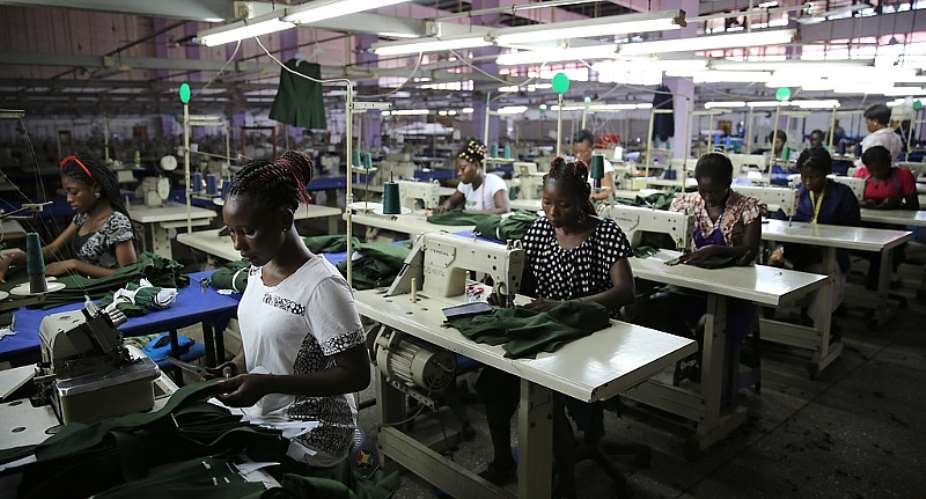
Nearly 70 per cent of the daily productive capacities of Small and Medium Enterprises (SMEs) in the Central Region have been dipped by the ongoing erratic power supply.
According to the Ghana Chamber of Commerce and Industry (GCCI), its routine checks and daily complaints from members indicated that more than 5,000 SMEs were reeling from severe economic privations.
Mrs Benedicta Anita Mensah, the Regional manager of GCCI in an interview with the Ghana News Agency, could not immediately give statistics to buttress the cost of the power crisis and job loss but bemoaned the terrible effects on SMEs.
The frequent power outages, or “dumsor,” she said had brought businesses to their knees, causing significant losses of productivity, and revenue, escalating operational costs, and damage to electronic infrastructures.
The additional burden of investing in expensive alternative energy sources, such as generators, she said, was also crippling businesses financially and could lead to both local and multinationals folding up if not corrected as soon as possible.
“The current energy situation is crippling businesses and creating unemployment — a twin situation that could lead to a national disaster.
“The energy situation has hit us hard. It is not an ideal situation and making the cost of production very high and productivity very low.”
“Many businesses are spending more money on energy now so how do we sustain jobs, expand and grow our businesses,” she wondered in dismay.
The most severely hit according to her, were the barbering shops, tailoring shops, hairdressing s and cold stores because many of them could not afford to buy generators or other sources of energy.
For those who could afford it, she said the skyrocketing prices of fuel was seriously affecting their business and it was unsustainable in the long run.
She regretted the fact that the SME sector had been highly burdened with numerous high taxes and licensing regimes that were stifling businesses.
“After recovering partially from the wrecks of the COVID-19 pandemic, one least expected the current power rationing conundrum to further deepen the woes of SMEs.”
Mrs Mensah cautioned that if the power crisis was not resolved with urgency, it could have dire socio-economic ramifications as the country which hitherto made efforts to boost SMEs through the African Continental Free Trade Area (ACFTA).
The ACFTA platform put into motion a huge ambition to create the largest free trade area in Africa with a pact connecting 1.3 billion people across 55 countries with a combined Gross Domestic Product (GDP) valued at US$3.4 trillion.
“The AfCFTA provides an opportunity for them to access regional export destinations and use the African regional market as a stepping stone to expand and graduate to overseas markets,” she explained.
Going forward, Mrs Mensah said it was time for the government to step up and provide solutions immediately as the lack of consistency and transparency in the ECG's communication exacerbates this critical matter.
SMEs should be supported with flexible tariff regimes and flexible solar-powered systems to sustain their businesses.
“In light of these developments, we are urgently calling on the government to implement immediate measures to mitigate the impact of the frequent power outages.
“Alternatively, if such interruptions are unavoidable, a clear and reliable schedule must be provided to enable businesses to plan effectively, fostering a more conducive operational environment,” Mrs Mensah said.
GNA

 Family Announces October 23 Memorial Mass for Nana Konadu Agyeman-Rawlings
 Eduwatch Urges Nationwide Audit of Sexual Misconduct in Secondary Schools
 Obuasi SHTS alleged sexual abuse: Kwasi Kwarteng criticises Education Minister o...
 ECOWAS’ $250,000 flood relief donation arrives in Ghana – Ablakwa
 Kennedy Agyapong has not resigned from NPP – Kwasi Kwarteng
 State failure, not GoldBod, driving galamsey – Daryl Bosu
 A Rocha Ghana raises alarm over human rights abuses in mining communities
 ECOWAS, AfDB discuss ways to advance West Africa’s development priorities
 October 16: Cedi gains against dollar, sells at GHS12.25 on forex market, GHS11....
 Galamsey: Ghana’s rivers now run chocolate and milk colour — Sam Jonah



Comments
Akufo-Addo, being driven home from office through his darkened capital, can reflect over the utter failure of his tenure as president of Ghana. While hopes and visions were high, his ineptness led to even basic infrastructure like electricity, water and driveable roads going the way of Zimbabwe. There is no excuse, no explanation apart from incompetence and corruption. The incompetence rests with all the loyalists who were preferred as heads of the different services ahead of competent leader...