




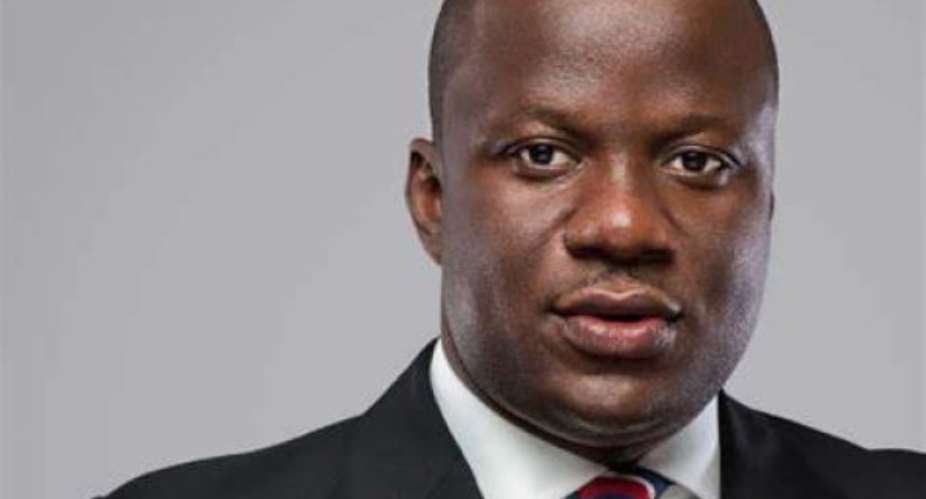
Mr Samuel Jinapor, Minister for Lands and Natural Resources has disclosed that the implementation of the local content policy regarding the procurement of goods and services in Ghana generates one billion dollars annually.
He explained that but for the policy the purchasing of these goods and services would have gone to other countries.
Mr Jinapor made the disclosure when he appeared before Parliament to respond to a question by Mr Elvis Morris Donkoh, Member of Parliament (MP) for Abura Asebu Kwamankese on new measures adopted to enhance local content in the procurement of goods and services and which areas have been a preserve for Ghanaians.
Mr Jinapor also explained that the government's overall policy objective for mining is to build a viable, sustainable, indigenous and environmentally sound mining industry with strong local content participation.
He said pursuant to this vision, in 2020, the government promulgated the Minerals and Mining (Local Content and Local Participation) Regulations, 2020 (L.I.2431) to, among others, promote job creation through the use of local expertise, achieve some minimum local level and in-country spend for provision of goods and services, maintain a degree of participation for Ghanaians and Ghanaian companies in the mining industry value chain and develop capacities in the mining industry value chain through education, skills transfer and expertise development etc.
He said the law requires mineral rights holders to develop for approval of the Minerals Commission, a localisation programme for the recruitment and training of Ghanaians, and a procurement plan to buy goods and services with Ghanaian content.
Mr Jinapor further clarity that regulation 7 of L.I.2431 empowers the Minerals Commission to publish in the Gazette, on its website and in a newspaper of national circulation, a local procurement list which stipulates the goods and services with Ghanaian content which are to be procured in the country by mineral rights holders.
He said pursuant to this, the Minerals Commission as of 3rd March 2022 concluded discussions with all stakeholders, including the Ghana Chamber of Mines and has increased the goods and services to be procured locally from 29 to 41.
In addition, regulation 10 of L.I.2431 requires minerals rights holders to ensure their insurable risk with companies licensed by the National Insurance Commission (NIC), unless expressly authorized by the NIC, and regulation 12 requires mineral rights holders to retain the services of financial institutions incorporated in Ghana for their operations that require financial transactions, with at least 20 per cent reserved for financial institutions owned by Ghanaians.
He also indicated that the Minerals Commission since the beginning of the year has been working with the Bank of Ghana and the National Insurance Commission has submitted to the Ghana Chamber of Mines a list of all insurance companies licensed by the NIC and a list of banks incorporated in Ghana and those owned by Ghanaians.
He said mineral rights holders have been directed to ensure full compliance with the requirement and the Minerals Commission is working with them to ensure that they comply fully.
GNA

 Highly influential people sponsoring Ghana Jollof TikTok activities – CID
 'Ghana Jollof' case: Bawumia's condemnation of nurse's arrest is hypocritical – ...
 Ahafo Ano South West MP involved in road accident
 Constitutional Review alone will not solve Ghana’s problems – Kwesi Pratt Jnr.
 East Legon Football Academy applauds NPA Boss for supporting youth football
 Gov't didn't show NPP enough respect in constitutional review process – Martin K...
 September 18: Cedi sells at GHS12.15 on forex market, GHS11.53 on BoG interbank
 Lawyer challenges two-week remand of Salomey over connection to wanted 'Ghana Jo...
 Minority calls for NSA boss Ampofo Ankrah, others to be dismissed over alleged 2...
 ‘You gave us GH¢60,000 to run 66 offices nationwide and expect us to function?’ ...


