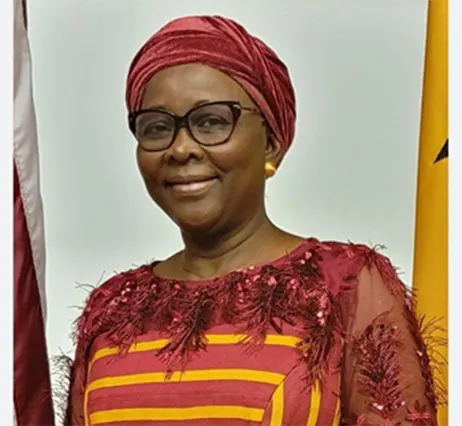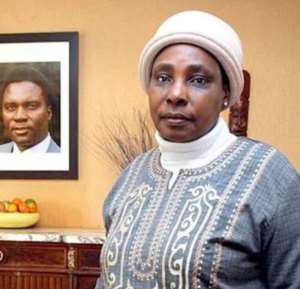
A French appeals court has ordered a new investigation into Agatha Kanziga Habyarimana, the widow of Rwanda's former president, over allegations she played a role in the 1994 genocide against the Tutsi. The Paris Court of Appeal overturned a previous decision to close the case, ruling that judicial inquiries into allegations of genocide and crimes against humanity must continue.
Who is Agatha Kanziga?
Agathe Kanziga Habyarimana was the First Lady of Rwanda from 1973 to 1994. She was frequently regarded as one of the powers behind the throne during her husband's 20-year presidency. She was at the centre of a powerful clique of northern Hutus called akazu (Kinyarwanda for "little house"), an informal organization of Hutu extremists whose members contributed strongly to the 1994 Rwandan genocide.
The Allegations
The case originated from a 2007 complaint filed by human rights groups, accusing Kanziga of helping plan or facilitates the genocide that claimed more than one million lives over approximately 100 days. Kanziga, who has lived in France since 1998, has consistently denied the allegations.
The Collective of Civil Plaintiffs for Rwanda accuses Kanziga of being a key financial backer of Rwanda's Radio des Mille Collines, which incited the killing of Tutsis, of helping draft a hit list of influential Tutsis and moderate Hutus, and of ordering the killings of seven employees of an orphanage she founded. The Legal
Rollercoaster
The case has had a turbulent legal history. In September 2024, the French National Anti-Terrorism Prosecutor's Office filed an appeal to obtain Kanziga's indictment. In May 2025, a Paris judicial court concluded that the prosecution's testimony was "contradictory, inconsistent, and even mendacious" and ordered the investigation closed. However, on 6 May 2026, the Court of Appeals of Paris overturned that decision and reopened the case.
What the Appeals Court Said
The appeals court determined that the inquiry into Kanziga's suspected role in both the planning and execution of the genocide should continue. The halt in proceedings had raised concerns among prosecutors and observers, who argued that key evidence and witness testimonies had not been adequately considered.
France's prosecution authorities had subsequently appealed, insisting the investigation remained incomplete. The appeals court cited the need for a more thorough review of available material. While no formal charges have been confirmed, the ruling signals that French authorities are not prepared to close the case without fully addressing lingering questions.
The Broader Context
For years after the Rwandan genocide, France was accused of shielding fugitives, but in recent years, as relations with Rwanda improved, it has sped up prosecutions. Since 2014, a former Rwandan spy chief and two former mayors have been jailed over their roles in the massacres. Kanziga's case, now nearly two decades old, remains one of the most closely watched genocide-related legal proceedings in France.
Mustapha Bature Sallama.
Medical/ Science Communicator,
Private Investigator, Criminal investigation and Intelligence Analysis.
International Conflict Management and Peace Building.USIP
[email protected]
+233-555-275-880

 NDC behaving as if they will stay in government forever — NPP’s Alfred Thompson
 Residents protest at NEDCo office in Kpandai over power disconnections
 Toxic fumes from generator during dumsor kills three individuals at Manhean
 Police arrest 11 suspects over AI deepfake videos impersonating president Mahama
 Election 2028: Bawumia appoints all four NPP presidential aspirants as co-chairm...
 Ghanaians in US romance scam case: Jamal caged, Kamal set free
 How father allegedly dragged his son with quad bike on tarred road at North Lego...
 May 8: Cedi sells at GHS12.10 on forex market, drops to GHS11.28 on BoG interban...
 Health Committee Chair tells health professionals to resign if they are tired of...
 GTEC orders Bolgatanga Technical University Vice Chancellor to resume duties