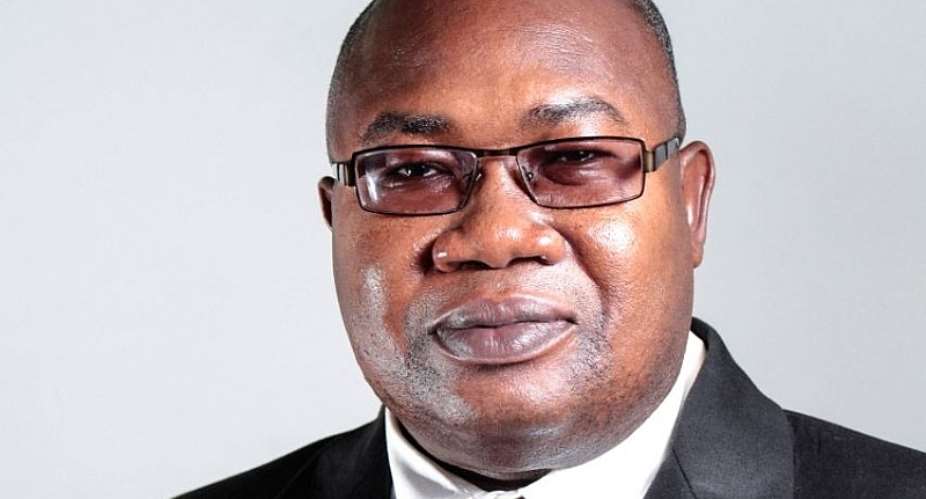
The Chairman of Parliament’s Health Committee, Dr Mark Kurt Nawaane, has called on medical professionals who feel overwhelmed or exhausted by the demands of the profession to step aside rather than compromise patient care and professional ethics.
His comments come in the wake of the release of findings by the ministerial committee that investigated the death of Charles Amissah, an engineer who died after failing to receive timely emergency medical treatment following a hit-and-run accident in Accra earlier this year.
Addressing members of the investigative committee, Dr Nawaane stressed that effective healthcare delivery depended not only on equipment and infrastructure but also on the commitment, discipline and ethical conduct of health workers.
“We are saying that it is beyond just the facilities; it is the individuals. Please, if you are a medical professional and you are tired of the work, you can resign. Ghana will survive,” he stated.
The committee, chaired by renowned pathologist and former Director General of the Ghana Health Service, Agyeman Badu Akosa, concluded that Charles Amissah died from excessive and preventable blood loss caused by failures in emergency care rather than from the injuries sustained during the accident itself.
The report recommended disciplinary measures against four doctors and three nurses from the Police Hospital, the Greater Accra Regional Hospital and the Korle Bu Teaching Hospital over breaches in duty of care during the emergency response process.
Dr Nawaane praised the committee for what he described as a bold and transparent investigation, particularly for identifying individuals accused of professional misconduct.
“Immediately we started and mentioned medical negligence and even started coming up with names, and I said thank God, this is a step forward,” he said.
According to him, previous investigations into similar incidents often concentrated on institutional shortcomings while avoiding individual responsibility.
“Now we are saying that it is beyond just a facility. It is the individuals,” he emphasised.
He further encouraged healthcare workers to seek support from more experienced colleagues whenever they encounter situations beyond their expertise instead of mishandling critical cases.
“If you are ready to work, there are ethics. If you can't do something, you call your colleague doctor or senior doctor. One funny thing about the senior doctors is that they are always happy to be called,” he added.
Meanwhile, Prof. Akosa cautioned against allowing the report to suffer the same fate as previous inquiry reports that were ignored after completion.
“We believe that this is not the first time an event like this has happened. Committee reports were done and the reports collected dust. We want to ensure that this report does not collect dust but is acted upon,” he stated.
The findings have sparked nationwide debate about accountability within Ghana’s healthcare system, especially regarding emergency response procedures and patient referral systems.
However, the Ghana Medical Association has raised concerns that public discussion has focused too heavily on naming individual health workers instead of addressing the deeper structural problems affecting emergency healthcare delivery.
In a statement issued on May 7, the Association acknowledged the committee’s findings but cautioned against reducing the tragedy to individual blame alone.
According to the GMA, the report itself identified “significant systemic weaknesses and longstanding gaps in emergency care delivery in Ghana”.
The Association argued that naming the professionals involved had shifted public attention away from the institutional reforms needed to prevent similar avoidable deaths in the future.
Charles Amissah, who worked with Promasidor Ghana, was reportedly transferred between the Police Hospital, the Greater Accra Regional Hospital and the Korle Bu Teaching Hospital after the February accident.
The committee found that although he remained alive throughout the transfers, he did not receive critical interventions such as bleeding control, intravenous fluids or blood transfusion.
The report described his injuries as survivable if emergency treatment had been administered promptly at any of the facilities.
Following the release of the findings, Health Minister Kwabena Mintah Akandoh directed that the seven health professionals involved face disciplinary action and announced reforms aimed at strengthening emergency healthcare delivery nationwide.
The minister said government would introduce measures including a national electronic bed management system and the opening of the Ghana Armed Forces Critical Care and Emergency Hospital for public use.
The committee also proposed the creation of a national emergency care fund to ensure critically ill patients receive immediate treatment regardless of their financial circumstances.
Prof. Akosa said the incident should become a turning point for Ghana’s healthcare system, warning that avoidable deaths would continue unless urgent structural reforms were implemented.
 Ghanaians in US romance scam case: Jamal caged, Kamal set free
 How father allegedly dragged his son with quad bike on tarred road at North Lego...
 May 8: Cedi sells at GHS12.10 on forex market, drops to GHS11.28 on BoG interban...
 GTVETS opens 2026 recruitment for teaching and non-teaching staff
 Health Committee Chair tells health professionals to resign if they are tired of...
 GTEC orders Bolgatanga Technical University Vice Chancellor to resume duties
 Tourism Ministry distances itself from Karnival Kingdom Festival
 North Legon: Police arrest man for allegedly dragging son on tarred road with qu...
 BTU Council Chair allegedly blocks Vice Chancellor from office despite GTEC dire...
 Man arrested for allegedly threatening police, military personnel