




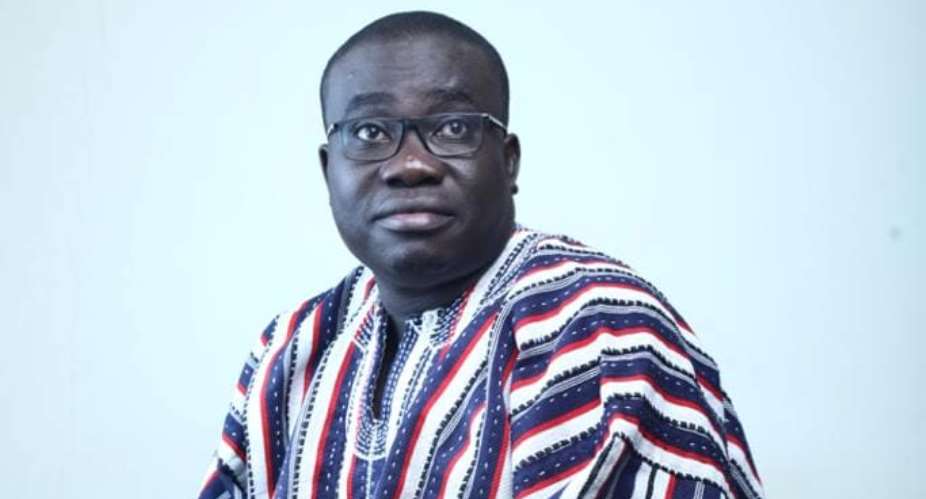
Lawyer and former Member of Parliament for Dormaa East, Paul Apreku Twum Barimah, has called on both the governing National Democratic Congress (NDC) and the opposition New Patriotic Party (NPP) to rein in their youth supporters over the increasing abuse and toxic conduct on social media.
According to him, the growing use of digital platforms by party youth wings for insults, propaganda, character assassination and personal attacks poses a serious threat to Ghana’s democratic culture and national cohesion.
“Studies on Ghana's digital political communication indicate that online political engagement is increasingly characterised by insults, hate speech and polarising narratives, often targeting opponents in ways that undermine respect for elders and erode culturally grounded norms of civility,” Mr Twum Barimah stated.
In a statement, the former legislator warned that the persistent spread of misinformation, political abuse and reckless commentary online was gradually damaging the country’s democratic values and weakening tolerance among citizens.
He noted that social media, which was expected to strengthen civic participation and democratic engagement, had instead become a platform for political hostility, tribal attacks, falsehoods and coordinated smear campaigns against opponents, often without regard for age, status or Ghanaian cultural values.
Mr Twum Barimah stressed that both the NDC and the NPP must accept responsibility for the worsening political atmosphere online, cautioning that encouraging or tolerating abusive party activists on social media could have dangerous long term consequences for the country.
“The politics of insults cannot build a nation. You cannot hide behind social media and destroy people's reputations every day, insult leaders, attack families, spread lies and expect the country to progress peacefully. At some point, we must rise above this dangerous politics of hatred,” he said.
He observed that political discussions in Ghana had significantly deteriorated, particularly on platforms such as Facebook, TikTok, X, WhatsApp and other social media spaces, where some individuals deliberately spread falsehoods, circulate manipulated videos and launch personal attacks simply for political advantage.
The former MP expressed concern that many young people were now growing up in an environment where vulgar language, disrespect and propaganda were increasingly being normalised as acceptable political behaviour.
According to him, the trend was not only harming Ghana’s democratic image but also negatively influencing the moral development of the younger generation.
“In recent years, we have seen respected elderly statesmen insulted publicly, judges attacked online, journalists threatened, clergy ridiculed, and even traditional leaders dragged into needless political abuse.
“This is not the Ghana we inherited from our forefathers. Political competition should never become a licence for moral destruction,” he stated.
Mr Twum Barimah further criticised what he described as a growing tendency among some political communicators and social media activists to deliberately inflame tensions online in order to gain attention and popularity.
He argued that some activists had turned insults and political provocation into a profession, profiting from confusion and division while contributing little to national development.
Without mentioning specific individuals, he referenced several political incidents in recent years where online propaganda, misinformation and manipulated content nearly heightened tensions during elections and national controversies.
He said false election claims, tribal commentary and coordinated online attacks had repeatedly deepened mistrust between supporters of the country’s two major political parties.
The former lawmaker warned that Ghana must not allow irresponsible social media behaviour to destroy the peaceful democratic reputation the country has built within Africa and the wider international community.
He also lamented that the increasingly hostile online political environment was discouraging many educated and responsible citizens from participating in public discourse.
“Many educated and responsible citizens are now afraid to even express opinions publicly because the moment you speak, political extremists descend on you with insults, propaganda and threats.
“That is dangerous for democracy because when decent voices go silent, extremists take over the national conversation,” he added.
 Accra Is Sinking Yet Again — Time to Be Truthful With Ourselves
 Fire guts rubber factory at Circle Odawna as flooding hampers firefighting effor...
 Flooding strands commuters on Winneba Cape Coast Highway
 Three feared dead after electrocution in Alajo flooding incident
 Nine missing after floods hit Awutu Senya East
 'Your mother, I should go to heaven and ask Nebuchadnezzar to stop the rain?' — ...
 Flood victim found dead along Alajo Railway track as rescue operations continue
 GMet warns more rain as flooding disrupts movement across Greater Accra
 'You sit on social media and talk nkwasiasem' — Nigel Gaisie blasts critics over...
 Osahen Afenyo-Markin accuses NDC of using GoldBod to promote illegal mining
