Introduction
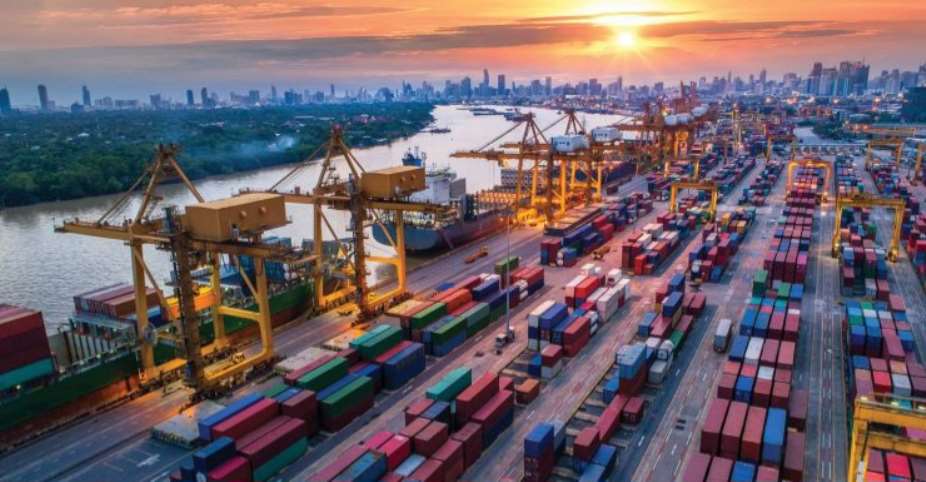
The recent closure of major Chinese ports has sent shockwaves through global trade networks. With containers piling up and ships unable to leave, the disruption is not just a Chinese issue—it has far-reaching implications for economies worldwide, including Ghana. As a country heavily reliant on imports from China, Ghana faces significant challenges in trade, exchange rates, and overall economic stability. This article explores these challenges and how Ghana can leverage President Mahama's 24-hour economy to rethink trade policies, diversify its economy, and build resilience against future disruptions.
Ghana's Trade Dependency on China
China is one of Ghana's largest trading partners, with imports from China accounting for a substantial portion of Ghana's total imports. In 2023, Ghana imported goods worth approximately $8 billion from China, including machinery, electronics, textiles, and construction materials. The closure of Chinese ports has disrupted the supply chain, leading to delays in the arrival of essential goods.
Impact on Exchange Rates
The Ghanaian cedi has been under pressure due to the country's import dependency. The disruption in Chinese exports has exacerbated this issue, as businesses scramble to secure alternative suppliers, often at higher costs. The exchange rate between the Chinese yuan and the Ghanaian cedi has shown fluctuations, with the yuan trading at approximately GH¢2.11 as of early April 2025. This volatility is expected to continue, putting additional strain on Ghana's economy.
Inflationary Pressures
The scarcity of imported goods is likely to drive up prices, contributing to inflation. Traders in Ghana have already expressed concerns about the rising cost of doing business, citing the depreciation of the cedi against major currencies. The increased cost of imports will inevitably be passed on to consumers, making life more expensive for the average Ghanaian.
Broader Economic Implications
1. Manufacturing and Construction: The unavailability of machinery and raw materials from China could slow down key sectors like manufacturing and construction, affecting job creation and economic growth.
2. Agriculture: Ghana's agricultural sector, which relies on imported fertilizers and equipment, may also face challenges, potentially impacting food security.
3. Government Revenue: Reduced trade volumes could lead to lower customs revenue, affecting the government's ability to fund public projects.
Rethinking Trade Policies and Building Resilience Under President Mahama's 24-Hour Economy
President Mahama's vision for a 24-hour economy offers Ghana a unique opportunity to address vulnerabilities exposed by global disruptions like the Chinese port closures. By leveraging this framework, Ghana can implement strategic reforms to diversify its economy and strengthen its resilience.
1. Diversifying: Under the 24-hour economy, Ghana can actively pursue trade agreements with emerging markets in Africa, Europe, and the Americas. This diversification would reduce dependency on Chinese imports and create a more balanced trade portfolio. Expanding partnerships within the African Continental Free Trade Area (AfCFTA) could also boost intra-African trade, fostering regional economic growth.
2. Promoting Local Production: A 24-hour economy encourages round-the-clock operations, which can be harnessed to scale up local manufacturing and agriculture. By investing in technology and infrastructure, Ghana can enhance productivity and reduce reliance on imported goods. Initiatives to support small and medium-sized enterprises (SMEs) would further stimulate domestic production and job creation.
3. Strengthening Currency Reserves: To mitigate exchange rate volatility, Ghana can focus on building robust foreign exchange reserves. This involves diversifying export products, such as cocoa and gold, and exploring new markets for these commodities. A stable currency reserve would provide a buffer against external shocks, ensuring economic stability.
4. Enhancing Logistics and Supply Chain Management: The 24-hour economy framework can be used to optimize logistics and supply chain operations. By improving port efficiency and transportation networks, Ghana can reduce delays and costs associated with trade disruptions. Investments in digital infrastructure would also streamline customs processes, making trade more efficient.
Conclusion
The closure of Chinese ports is a stark reminder of the interconnectedness of global economies. For Ghana, the immediate challenges are clear: rising costs, exchange rate volatility, and potential economic slowdown. However, this crisis also presents an opportunity for Ghana to rethink its trade policies, diversify its economy, and build resilience under President Mahama's 24-hour economy. By adopting strategic reforms, Ghana can position itself as a dynamic and self-reliant player in the global market.
Retired Senior Citizen
Teshie-Nungua
[email protected]

 NDC behaving as if they will stay in government forever — NPP’s Alfred Thompson
 Residents protest at NEDCo office in Kpandai over power disconnections
 Toxic fumes from generator during dumsor kills three individuals at Manhean
 Police arrest 11 suspects over AI deepfake videos impersonating president Mahama
 Election 2028: Bawumia appoints all four NPP presidential aspirants as co-chairm...
 Ghanaians in US romance scam case: Jamal caged, Kamal set free
 How father allegedly dragged his son with quad bike on tarred road at North Lego...
 May 8: Cedi sells at GHS12.10 on forex market, drops to GHS11.28 on BoG interban...
 Health Committee Chair tells health professionals to resign if they are tired of...
 GTEC orders Bolgatanga Technical University Vice Chancellor to resume duties