




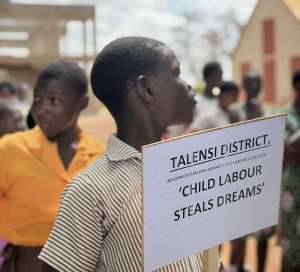
The call that “Children belong in classrooms, not in mining sites” resonated strongly during the commemoration of World Child Labour Day in Tongo, the capital of the Talensi District in Ghana’s Upper East Region.
The event brought together government officials, traditional leaders, civil society organisations, teachers, parents, and community members to reflect on the growing menace of child labour, particularly in mining communities.
The theme highlights a simple but powerful truth: every child deserves access to education, protection, and opportunities for a brighter future—rather than being exposed to hazardous work environments.
Child Labour in Mining Communities
Talensi District is one of the major mining areas in the Upper East Region, with both licensed and illegal small‑scale mining activities taking place across several communities.
While mining contributes to local livelihoods, it has also created an environment where many children are drawn into labour‑intensive and dangerous mining operations.
Children are often engaged in digging, carrying heavy loads of ore, washing minerals, crushing rocks, and assisting adults at mining sites. These activities expose them to serious physical injuries, respiratory diseases, and other health risks.
Instead of spending their time in classrooms acquiring knowledge and skills, many children spend long hours at mining sites in search of quick income.
How Mining Is Affecting Children’s Education in Talensi
• School Dropout Rates
One of the most significant impacts of mining on education is the rising number of school dropouts. The attraction of earning money from mining often leads some children to abandon their studies. Once they become accustomed to daily income, returning to school becomes difficult.
• Poor Academic Performance
Children who combine schooling with mining often struggle academically. Long hours of labour leave them exhausted and unable to concentrate in class. Many miss lessons regularly, resulting in poor examination performance and low educational attainment.
• Increased Absenteeism
In several mining communities, school attendance fluctuates depending on mining activities. During periods of intense mining, some children prioritise work over education, leading to frequent absenteeism.
• Exposure to Hazardous Environments
Mining sites are dangerous places for children. Exposure to dust, chemicals, collapsing pits, and heavy machinery can cause injuries and long‑term health complications. These health challenges further affect children’s ability to learn and remain in school.
• Child Exploitation and Abuse
Mining environments often expose children to exploitation, neglect, and various forms of abuse. Such conditions undermine their emotional, psychological, and social development, making it difficult for them to reach their full potential.
• Long‑Term Consequences
When children are denied education and pushed into labour, communities lose future teachers, nurses, engineers, entrepreneurs, and leaders. Child labour perpetuates poverty because children who miss educational opportunities are more likely to remain trapped in low‑income occupations throughout their lives.
For Talensi and the Upper East Region, investing in children’s education is essential for sustainable development. An educated population contributes significantly to economic growth, innovation, and improved living standards.
The Role of Parents and Communities
Parents, guardians, and community leaders have a crucial responsibility to ensure that children remain in school.
While economic hardship may tempt families to rely on children’s earnings, the long‑term benefits of education far outweigh the short‑term gains from child labour.
Traditional authorities, religious leaders, and opinion leaders must continue to advocate against child labour and support initiatives that promote education.
Government and Stakeholder Interventions
To effectively combat child labour in mining communities, stakeholders should:
- Strengthen enforcement of child labour laws
- Increase monitoring of mining activities involving children
- Provide educational support and scholarships for vulnerable children
- Expand school feeding and social protection programmes
- Create alternative livelihood opportunities for families
- Intensify public education on the dangers of child labour
- Promote vocational and skills training for youth who have dropped out of school
Conclusion
The message from the World Child Labour Day celebration in Tongo is clear and timely: children belong in classrooms, not in mining sites. Education remains the most powerful tool for breaking the cycle of poverty and building prosperous communities.
As mining activities continue to expand in Talensi, all stakeholders must work together to protect children, keep them in school, and secure a brighter future for the next generation.
Every child deserves a pen, a book, and a classroom—not a shovel, a pickaxe, or a mining pit.
By Abdulai Abdul‑Kadir, Upper East Region.
 Iran deal: Trump is back to square one, but the cards are now in Tehran’s favor
 Mahama held back acceptance of Sophia Akuffo's resignation letter at request of ...
 Zoomlion workers petition Ashanti Regional Minister over unpaid salaries
 Stay away from married men to avoid premature deaths - Atwima Trabuom Queen moth...
 Afigya Sekyere East: NPP Constituency Chairman petitions regional executives ove...
 Nyinahin Catholic SHS incident: 11 CSOs petition NTC to investigate alleged teac...
 Current presidential staff salaries inherited from Akufo-Addo era — Kwakye Ofosu
 Publish Sophia Akuffo’s resignation letter now – Martin Amidu urges govt
 Bole SHS investigates alleged sexual misconduct involving teacher and student
 Justice Sophia Akuffo did not disclose reason for Council of State resignation —...


