




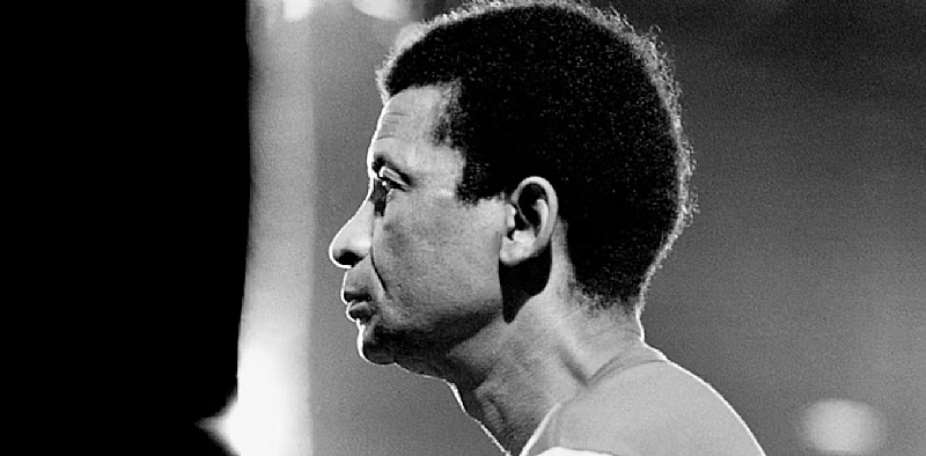
Adolph Johannes Brand was born on 9 October 1934 in Cape Town. He would become better known as Dollar Brand and then Abdullah Ibrahim, an artist of mixed ethnic descent who personified the city's multiculturalism and represented it on the world's stages.
He went to school in District Six, a municipal inner city area with residents of diverse backgrounds. Due to the enforcement of apartheid it was declared a “white area” in 1966 and the community was removed by force in 1982. It was the creative ambience in which he started to play piano aged seven.
A bebop-inspired jazz musician performing as Dollar Brand, he had his first musical successes in the mid-1950s. He became Abdullah Ibrahim when converting to Islam in 1968, and his deep religious spirituality was an essential ingredient to his music.
Ibrahim's more than 70 records received numerous prestigious awards. His deep spirituality, solemn dignity and soul has also been captured in the documentary films A Brother with Perfect Timing in 1987 and A Struggle for Love in 2005.
As a political scientist of southern Africa, I have written about Ibrahim as a defiant public intellectual, placing his work within his unique worldviews.
He personified the special brand of multiple identities and belief systems, consolidated and transmitted over generations among a variety of descendants in the urban settings at the Cape. His spirituality was not only a source of resilience but also defiance, his humanity political without any need for ideology.
In search of genuine expressions through music, he became an icon of a counter-world to the apartheid regime, taking sides by being and living up to what he was.
The early years
In 1959 he began to play in the Sophiatown-based band Jazz Epistles with other South African legends Kippie Moeketsi, Hugh Masekela, Jonas Gwangwa, Johnny Gertze and Makaya Ntshoko. They recorded Jazz Epistle Verse One as the first black South African jazz LP record.
In 1962 Ibrahim left for Europe, touring (with Gertze and Ntshoko) as The Dollar Brand Trio. In Switzerland the South African jazz vocalist Sathima Bea Benjamin put them in contact with Duke Ellington. Together Ellington and the Trio made two recordings (including Benjamin on the second one).
The Trio entered the circuit of international jazz festivals and toured Europe. In 1965 Ibrahim and Benjamin married and moved to New York, where he played at the Newport Jazz Festival. He continued close collaboration with Duke Ellington and interacted with some most renowned jazz musicians of the time.
Despite his international fame, he never forgot where he came from. Mandla Langa, a writer who was the African National Congress-in-exile's cultural attaché in Europe, has observed:
He could have lost all connection with South Africa, but he chose not to.
A personal experience illustrates the point: when performing in West Berlin in the mid-1970s, a few exiled Namibians living there visited him backstage before the concert. When on stage to play before a packed auditorium, he stopped after intonating a few notes on the piano. Turning around, he looked at the group and declared, “Ek speel net vir julle.” (I only play for you).
Mannenberg and Cape jazz
A turning point in Ibrahim's career (then still mainly known as Dollar Brand) – and a watershed for South African musical history – was his short return to South Africa during the mid-1970s.
Mannenberg, a 14-minute track capturing the atmosphere of the Cape Flats, was recorded in June 1974 in one take as an act of collective improvisation. It was released on the album Mannenberg – Is Where It's Happening.
As historian John Edwin Mason observed, its unique combination of musical vocabularies and idioms, rooted in South Africa, yet aware of international trends, helped to make it “the most iconic” composition in South African jazz history.
Within a year it sold more copies than any other South African jazz album. Being subsequently performed by some of the band's members at political protest gatherings, it became a song of resistance and resilience. A fellow jazz musician from District Six declared it “the most powerful anthem of the struggle in the 1980s … which had no words, it simply referred to a series of styles of music that was influenced by black culture”.
These were automatically associated with being free, to have an identity. Ibrahim's fusion of melodies in his improvisations resembled a mixture of American jazz with local genres such as marabi and mbaqanga, but also langarm, vastrap and ticky draai. This blend is known as Cape jazz. More recordings followed with African Herbs (1975), Banyana – Children of Africa and Black Lightning (both 1976).
Triggered by the Soweto uprising of 16 June 16 1976, Ibrahim declared his support for the African National Congress and returned to New York. In 1978 he released Anthem for the New Nation. Another milestone became African Marketplace, recorded in 1979 with a 12-piece-band – ranked as number 70 in a list of The 100 Jazz Albums that Shook the World.
Returning home
A legend in his own lifetime, Ibrahim returned to South Africa after he met the newly-released Nelson Mandela 1990 in Germany, who told him to come home. In 1994 he performed with a symphony orchestra on occasion of Mandela's inauguration as president. Mandela reportedly referred to him as “our Mozart”.
In 1999 Ibrahim founded an academy for South African musicians in Cape Town, where he also initiated the Cape Town Jazz Orchestra, launched in 2006. In 2016 he performed with Hugh Masekela for the first time since 1960, reuniting the legendary Jazz Epistles to commemorate the 40th anniversary of the Soweto uprising.
A solo piano recording was released in 2008 as Senzo (meaning ancestor in Chinese and Japanese, and a nod to his father's name, Senzo, which also means creation in South Africa's Nguni languages). As a review in All About Jazz ended:
Abdullah Ibrahim is a true inheritor of the ancestral name.
Upon release of The Balance in 2019, his first album after five years, The Wall Street Journal titled: A Jazz Master Continues to Grow.
In 2024 he released his final recording, an expansive and critically acclaimed double album called 3.
A legacy beyond music
Ibrahim has been a midwife to musical expressions under apartheid, which were a form of resistance based on one's own human dignity, self-respect and confidence as protest against oppression and discrimination. He did this without noise, rather – like his personal habitus – calm, steadfast and determined, resting in himself.
He contributed to a new culture under – and after – apartheid. Abdullah Ibrahim played a significant role in the creation of something new. There will be no other like him.
Henning Melber does not work for, consult, own shares in or receive funding from any company or organisation that would benefit from this article, and has disclosed no relevant affiliations beyond their academic appointment.
By Henning Melber, Extraordinary Professor, Department of Political Sciences, University of Pretoria
 Mahama held back acceptance of Sophia Akuffo's resignation letter at request of ...
 Zoomlion workers petition Ashanti Regional Minister over unpaid salaries
 Stay away from married men to avoid premature deaths - Atwima Trabuom Queen moth...
 Afigya Sekyere East: NPP Constituency Chairman petitions regional executives ove...
 Nyinahin Catholic SHS incident: 11 CSOs petition NTC to investigate alleged teac...
 Gov't must apologise over delayed disclosure of Sophia Akuffo's Council of State...
 Current presidential staff salaries inherited from Akufo-Addo era — Kwakye Ofosu
 Publish Sophia Akuffo’s resignation letter now – Martin Amidu urges govt
 Bole SHS investigates alleged sexual misconduct involving teacher and student
 Justice Sophia Akuffo did not disclose reason for Council of State resignation —...


