




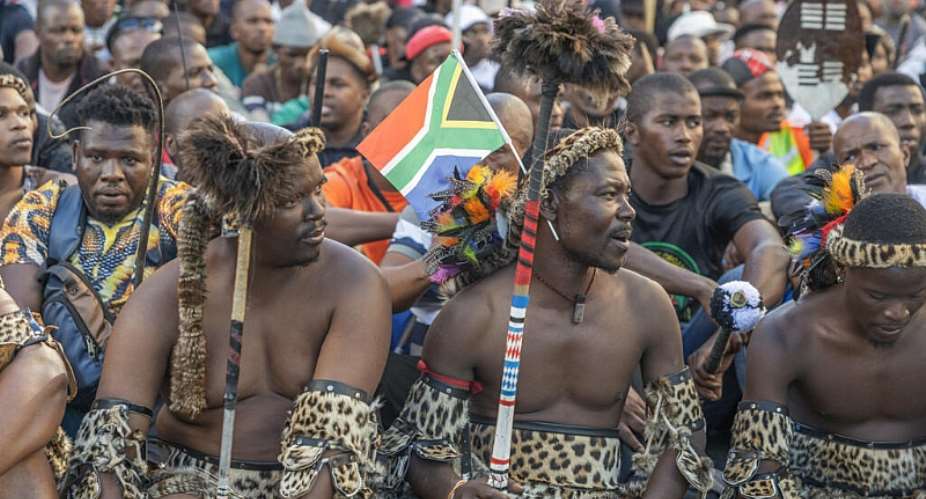
In recent weeks, demonstrations targeting foreign nationals have erupted in several major South African cities, at times turning violent.
The unrest has prompted concern from countries including Nigeria, Ghana and Mozambique, while United Nations secretary-general Antonio Guterres has also voiced alarm.
Speaking at a press briefing this week, presidential spokesperson Vincent Magwenya insisted that South Africa should not be labelled xenophobic, arguing that the protests reflect broader tensions surrounding migration, crime and economic pressures rather than hostility towards foreigners as a whole.
“South Africa is not xenophobic. South Africans are not xenophobic,” Magwenya said. “What is happening is that we have several pockets of protest, which is permitted under our Constitution. We must also take into account the fact that the issue of immigration is a source of tension.”
South Africa remains the continent's most industrialised economy and a major destination for migrants seeking work and stability. According to the national statistics institute, the country is home to more than 3 million immigrants.
South African president Ramaphosa slams anti-immigrant protests
Calls for continental dialogue
The South African government has acknowledged growing unease in other African countries over the situation. Nigeria, in particular, has reacted sharply after reports of attacks against its citizens and businesses.
Magwenya said criticism from African governments should open the door to a broader discussion about migration pressures across the continent.
“The condemnations we have received from various countries on the continent should not be limited to mere condemnation, but should also be accompanied by a willingness to engage in constructive dialogue on the problems and factors driving people to leave their home countries,” he said.
The comments reflect Pretoria's attempt to reframe the crisis as part of a wider African challenge linked to unemployment, insecurity and uneven economic development, rather than solely as a domestic issue.
However, the recent demonstrations have highlighted long-standing frustrations inside South Africa, where high unemployment, rising living costs and crime have frequently fuelled resentment towards migrants. Similar outbreaks of anti-immigrant violence have occurred several times over the past two decades.
Nigeria repatriates first group of nationals fleeing South Africa
Nigerians request repatriation
There have been a number of violent incidents involving Nigerian nationals in South Africa in recent weeks.
Abuja summoned South Africa's acting ambassador on 4 May to explain what it described as the “mistreatment of Nigerian citizens and attacks on their businesses”.
Nigeria's Minister of Foreign Affairs, Bianca Odumegwu-Ojukwu, said two Nigerians had recently died in separate incidents involving South African security personnel. According to the minister, one man was allegedly “beaten by soldiers” in Port Elizabeth on 25 April, while another was found dead in Pretoria following “an alleged interaction with members of the Metropolitan Police”.
“These crimes are absolutely reprehensible and unacceptable,” Odumegwu-Ojukwu said in a situation report published on X (formerly Twitter).
Buhari weighs response to Ramaphosa's apology for xenophobic attacks
The minister also warned Nigerians living in South Africa to remain vigilant, as further protests are expected this week.
At least 130 Nigerians have now requested voluntary repatriation, according to the Nigerian government. Abuja has organised evacuation operations during previous waves of anti-immigration violence in South Africa.
Despite the tensions, Nigerian officials have sought to underline the importance of maintaining diplomatic ties between Africa's two largest economies.
Odumegwu-Ojukwu praised South African political leaders for publicly condemning the attacks, while South Africa's foreign minister has held talks with his Nigerian counterpart to reaffirm relations between the two countries.
This article has been adapted from the original version in French by RFI's correspondent in Johannesburg, Joséphine Kloeckner.

 Accra Is Sinking Yet Again — Time to Be Truthful With Ourselves
 Fire guts rubber factory at Circle Odawna as flooding hampers firefighting effor...
 Flooding strands commuters on Winneba Cape Coast Highway
 Three feared dead after electrocution in Alajo flooding incident
 Nine missing after floods hit Awutu Senya East
 'Your mother, I should go to heaven and ask Nebuchadnezzar to stop the rain?' — ...
 Flood victim found dead along Alajo Railway track as rescue operations continue
 GMet warns more rain as flooding disrupts movement across Greater Accra
 'You sit on social media and talk nkwasiasem' — Nigel Gaisie blasts critics over...
 Osahen Afenyo-Markin accuses NDC of using GoldBod to promote illegal mining
