




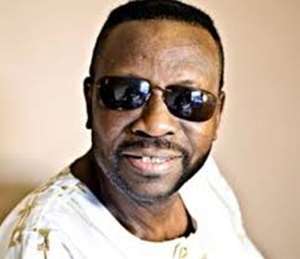
The lady at the party said “You are blessed!”
She could not have known what she was talking about. But it was true all the same.
For within less than 24 hours, I’d sat at the same table as the elected President of Ghana, on two separate occasions.
First, the President was gracious enough to accept – at extremely short notice – my invitation to very kindly grace my 80th birthday celebration, at the Pozzo Restaurant, next door to the Polo Club in Accra.
He arrived without fanfare. And absolutely on time, although he had just returned to an onerous visit to Mali.
Such generosity of spirit. Such an exhibition of sheer graciousness.
Presdent Akufo-Addo immediately showed us why he is such a popular President: almost everyone who wanted to, could take a “selfie” with him; he showed none of the hauteur that film stars and “celebrities” exhibit when people who have seen them on-screen spot them in the flesh and want to get near them.
The amazing thing was that he showed no fatigue whatsoever, although, as I've mentioned already, he'd – just few hours before he showed up – been carrying out the tiresome and boring functions associated with a state visit.
Before Mali, he’d been to Liberia, and there too, of course, speeches, the inspection of a guard of honour, and closed-door discussions, state dinners and other events of welcome would have taken their toll on his mental and physical energies.
I do not think even President Kwame Nkrumah, in his fervent quest for African unity, covered so much ground in
travelling to so many African countries in such a short time as Nana Addo Dankwa Akufo-Addo has done. In the past few weeks, African countries he’s visited include Liberia, Sierra Leone, the Gambia, Guinea Bissau, Burkina Faso, Togo, the Ivory Coast and Mali, .
The good thing about these trips is that they help to establish personal relations at a deep level, with the leaders of other African countries. To be able to pick up the phone and chat over a problem with someone with whom one has lunched or dined – as against met on a cursory basis at, say, an African Union meeting – makes all the difference in the world between being able to contribute to the solution of a problem that has arisen in Africa, and watching the problem get worse by the day.
Ghana, in the recent past, has sometimes retreated into itself, or as the late President John Atta Mills put it, been guided by the Akan maxim, “Dzi wo fie asem!” [Occupy yourself with your home matters]. So our contributions to the resolution of African problems has sometimes been limited to talking at, instead of taking to, those involved in disputes. “Read the speech and go!” is how one diplomat described our recent contributions.
When the President was invited to say a few words to mark the occasion of the birthday of my humble self, he was both witty and ingratiating. He remarked that your columnist – who he’d known for a long time – never left anyone in doubt as to what he thought of a subject he chose to write about. He said a few other things which modesty deters me from quoting – at this time!
While his words at a private party may be considered privileged, mine cannot. I happily recalled that I was editor of the Daily Graphic when his late father, Edward, became President. After Parliament had voted for him, Edward Akufo-Addo’s wife, Adeline, invited me to Peduase Lodge, at Aburi, where she personally served me tea and thanked me for the part the paper I had edited had played in getting her husband elected.
Now, how many Ghanaian “top people”, whether men or women, would take the trouble to do such a thing? It comes with grooming, doesn’t it? Mrs. Adeline Akufo-Addo came from an ahenfie (palace) where the subtle art of making people eat out of one’s hand can be learnt by those willing to do so. For she was the daughter of Nana Sir Ofori Atta The First, King of Akyem Abuakwa, who was knighted by the British, and yet managed to retain, to a large part, the respect and affections of his own people. Nana Addo’s graciousness in office can be directly attributed to the upbringing he too underwent as a child; passed from generation to generation in the Akyem Abuakwa royal household.. Long may it continue, (I said.)
I recalled telling his mother that I supported her husband’s election to the presidency because I was certain he would help to use the powers of government – which are enormous – to “do good”. I expressed the hope that Nana Addo would use his own power to do the same.
In particular, I confessed, I hoped he would “slay the galamsey serpent that’s spewing poison all over Ghana’s fair land and her inimitable Green Forest waters.”
I reminded Nana Addo that our elders warned us that it was “not enough’ just to kill a snake, but to be sure to “cut off its head”. Otherwise, our myths contend, the snake could wake up again and continue injecting deadly poison into people!
My entire family tried to be present at the occasion but not all of them made it. Most of them were caught up in the British Airways mother-of-all-public-relations-horrors that grounded all BA flights throughout the world that weekend of 27-28 May 2017.
My grand-daughter lost her baggage on a flight that never took off. Ever heard such a thing? As for British Airways! It should be renamed “Bungling Airways!”
One part of the family were lucky enough to obtain seats on an Emirates fight and arrived just a few hours before the party began. How their persistence was rewarded. They all took photographs with the President to go home with: to augment their “bragging rights”! How I envied them! To get near a President at age five, seven, nine or even eleven. They were all gob-smacked – as the Brits would say.
Many of the guests made speeches, some of which brought tears to my eyes. Things I thought they had not noticed – or filed away into oblivion – were brought out. I do not exaggerate when I say that I have hardly ever been so moved as on the occasion of my 80th birthday celebration.
Sitting at the President’s side was his younger brother Edward, known to all and sundry as “Bumpty”. Quiet and efficient, Edward bats with amazing skill on behalf of his brother, and I am yet to find the “googly” situation that he cannot coax, or drive straight across the covers, for four. He invited me to the birthday celebration of his beautiful wife, Irene, the next day.
On arriving, I thought I was going to be just a member of the huge crowd that had descended upon their house and made traffic in the vicinity absolutely choked full. But Irene led me straight to the President’s table, where I also greeted his sister, Goldie, whom I hadn't seen for many years.
Again, getting into the presidential presence and table was no big deal. Security was around but like the best, it was invisible. I was welcomed with an unusually delightful drink – coconut milk, poured straight out of the coconut shell!
I had to leave the party early to file this report. And I can conclude it by saying that the Akufo-Addo regime will be remembered, long after it’s gone past its sell-by date, for its style and sheer panache. Ghana is blessed to be experiencing such an enlightened and low-key way of governing, once again.


 KMA reports Police Officer over alleged gun threat during vehicle towing dispute
 President Cyril Ramaphosa sent a delegation to me over South Africa xenophobic a...
 Sweeping South Africa xenophobia under the carpet will not resolve root causes —...
 High Court to rule on former NAFCO CEO's bid to strike out criminal charges
 Stop using entrance exams as admission preconditions — GTEC warns universities
 Finance Minister to present 2026 Mid-Year Budget Review to Parliament today
 ‘I forgive you’ - Bawumia tells police to end prosecution of NDC Agona West Orga...
 NDC suspends Awutu Senya East Constituency Chairman
 Kojo Oppong Nkrumah chases Ato Forson to explain $1.2bn international reserves d...
 FDA closes 44 food production facilities over safety and licensing breaches

