




For the first time, Zambia has explained why negotiations over the US-funded health agreement have stalled.
Foreign Affairs Minister Mulambo Haimbe said the government refused to accept parts of the proposed pact because they included demands for citizens' data and preferential treatment for US mining companies.
“The sharing of data is in violation of our citizens' right to privacy. These matters are the subject of litigation in the Zambian courts and this must be respected,” Haimbe said in a televised address on Monday 4 May.
Haimbe also said Zambia objected to efforts to link the health negotiations to a separate critical minerals deal. He said the government was concerned that the US wanted the two agreements treated as part of the same negotiation.
DR Congo weighs price of security in minerals deal with US
Health and minerals
“A further concern by the Zambian government is the coupling of the proposed agreements and frameworks to one another such that the conclusion of the critical minerals agreement is made conditional to the conclusion of the health MOU <[a href="http://healthgap.org/wp-content/uploads/2026/03/MoU-Zambia.pdf" rel="nofollow,noreferrer,noopener" target="_blank">memorandum of understanding],” he said.
Health activists have also criticised attempts to link healthcare funding to strategic minerals access. “When health becomes a bargaining chip, everyone becomes less safe,” said Asia Russell, executive director of advocacy group Health GAP.
Haimbe said Zambia insisted the two agreements must be treated separately.
Earlier, outgoing US ambassador to Zambia Michael Gonzales rejected the accusations in his farewell speech.
“Any suggestion that the United States would withhold critical life-saving healthcare support from those Zambians whose lives and health depend on it unless we get critical minerals is disgusting and patently false,” Gonzales said on 30 April.
Africans accuse Trump of chasing minerals and mocking their presidents
Mining tensions
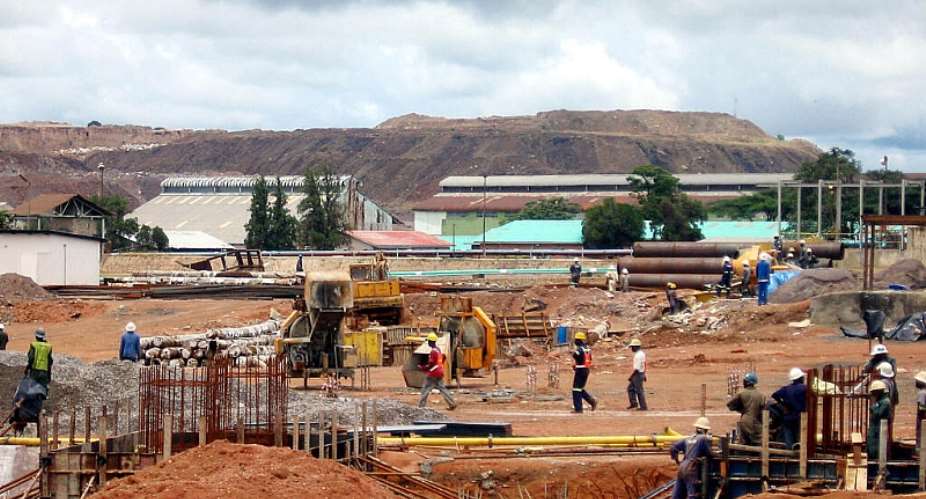
Zambia is Africa's second-largest copper producer after the Democratic Republic of the Congo. It also has large deposits of cobalt, nickel, manganese, graphite, lithium and rare-earth elements.
Haimbe said Zambia's main concern with the minerals agreement was “the insistence on preferential treatment for US companies”.
“The Zambian government rightfully takes the view, first and foremost, that Zambians must have a say on how her critical minerals are used, and second that no one strategic partner is to be treated preferentially to others,” he said.
Chinese companies have long dominated Zambia's copper sector, with major stakes in mines and smelters producing minerals used in power grids, data centres and electric vehicles.
The dispute also exposed wider tensions between Washington and Beijing over influence in Zambia's mining sector.
How Beijing has been recalibrating its expanding influence in Africa
China accusations
Gonzales also accused the Zambian government of covering up an environmental disaster involving Chinese mining company Sino Metals Leach Zambia. He referred to a dam collapse last year that caused toxic waste to spill into rivers used for drinking water.
“While so many American prospective investors leave, put off by bureaucratic inaction and corruption, the Zambian government recently approved Sino Metals to expand its operations,” he said.
Gonzales also accused the Chinese state-owned company of corruption.
“Too many American companies cannot get licences, approvals, or action on basic administrative matters without being shaken down to give the Sino-brown envelopes of cash. The Zambian people suffer the consequences of these dual offenses: exploitation and foregone opportunity,” he said.
Haimbe described Gonzales' remarks as “mischievous” and “deeply regrettable, undiplomatic and inconsistent with the spirit of mutual respect”.
“It is thus mischievous for the outgoing ambassador to imply that the present administration is working against the people of Zambia and their best interests … Zambia will not accept narratives that undermine its dignity, institutions, or leadership,” he said.
Several African countries have rejected or delayed similar US-backed health agreements because of concerns over data sharing.
Zimbabwe withdrew from a $367 million deal, describing it as unequal and raising concerns about privacy and data sharing. Ghana also rejected a proposed agreement over similar concerns. In Kenya, a $2.5 billion deal signed in December has been suspended after a court challenge argued that it violated data protection laws.


 US Treasury bars certain journalists from G20 meeting in North Carolina
 US forces strike Iranian launchers on Larak island in Strait of Hormuz
 Mahama calls for urgent action to strengthen $1bn AU Peace Fund
 Oti Region: One dead, several injured in Abotaose Market fire
 Seven dead, four trapped after galamsey pit collapses at Asaman Tamfoe
 Over 1,000 victims rescued, exploitative street begging networks dismantled — GI...
 Niamey back to normal after soldiers' mutiny
 Bawumia donates GH¢50,000 to support St. Jude Catholic Church at Weija
 N/R: Two arrested over murder of Yidani Chief and son
 How improved roads brought new vehicle options to Tumu-Bolga, Tumu-Tamale, Tumu-...

