




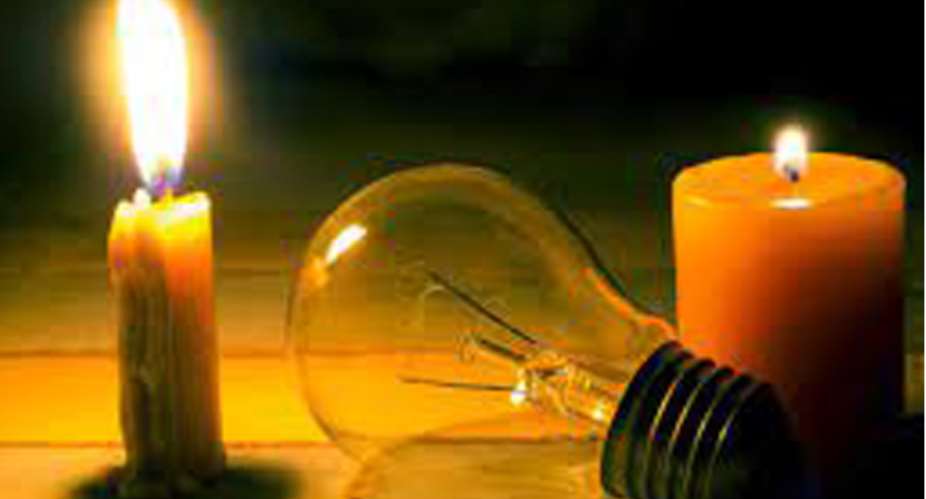
“Very soon they will tell us DUMSOR has created more jobs (electricians, inverter sellers, solar panel installers, and generator mechanics) than TVET,” former Head of Information and Public Affairs, Ghana Embassy, DC, Kofi Tonto, posted on his X page.
As funny as this post reads, it is the reality on the ground, many power bank vendors, especially those along the Kwame Nkrumah Circle stretch, are cashing out by overpricing.
A few days ago, I found myself bargaining for a MagPower 15 (10000mAh) power bank that once sold for GH¢180 but was now selling for GH¢250, and I had to buy it for GH¢200.
Meanwhile, on online buying apps, the MagPower 15 10000mAh is selling for GH¢170.00, which was GH¢200.00, and the Power Box 400 Vision 40000mAh 22.5W is GH¢685.00, which was previously selling for GH¢760.00.
Now, on social media, generator operators are running serious promotions on the purchase of generators with the slogan “Buy one generator, get service for free,” making trends.
The question is how many Ghanaians have the financial muscle to patronise a generator in an era where diesel is selling for almost GH¢16.00?
The issues of 'Dumsor' erratic power cuts should be the least happening in Ghana, considering the fact that the country has a President who is bent on running a 24-hour economy powered by a constant electricity supply to ease the burden of unemployment.
This unannounced, frequent, and erratic power supply, which is disrupting business, daily life, and other economic activities, has raised serious questions about whether the John Mahama government meant it when they promised to support and create jobs for the country.
The negative impact of this situation is an increase in operational costs. Businesses spend extra on fuel to power their generators, increasing operational costs. As operational costs rise, businesses look for ways to reduce expenses; hence, staff layoffs.
About 90% of Ghanaian homes don’t have generators, so when Dumsor occurs, the whole area is plunged into darkness, leading to severe socio-economic, safety, and personal consequences.
Total darkness in residential areas often leads to a rise in criminal activity, including robbery, theft, and burglary, as security systems (such as electric fences or exterior lights) fail.
On the domestic side, this dilemma damages home appliances such as refrigerators, television, and fans, causing high repair or replacement costs. Without refrigeration, households lose perishable food items, forcing many to buy food in smaller, more expensive quantities, which exacerbates the financial strain on low-income families.
Recently, a video of some final year students of the University of Ghana studying in total darkness amidst their evening learning ahead of examinations showed how they were forced to use flashlights to study. Many students are unable to study in the evenings, impacting academic performance, particularly in our part of the world, where we totally rely on electricity for reading or when using learning devices.
Well, our President John Mahama and the Energy Ministry have consistently said the recent outages are not a return to Dumsor but part of planned system upgrades.
In his own words, “The outages you are facing are not Dumsor. It is to enable you to get better quality and stable power.” Some government communicators also say the current blackouts are due to the recent Akosombo fire emergency and planned transformer/cable upgrades.
They say it's temporary and part of a GH¢4B overhaul to end persistent power issues, not a return.
On X, NDC commentators tried to find explanations, downplaying the gravity of the situation. “We are not saying there is no Dumsor, but we are telling you the cause because it is not deliberate or the usual reasons for Dumsor.
This is due to the loss of 1000W following the fire outbreak, which led to the collapse of the Akosombo Dam.”
Meanwhile, before the recent fire outbreak, some communities complained of constant power outages.
Power is not a luxury. It is the current on which schools, hospitals, businesses, and digital futures run. Until supply becomes as reliable as the Ghanaian people are resilient, our talk of 24-hour economies and industrialisation will remain in the dark.
Ghana cannot afford to normalise outages. It is time to keep the lights on because a nation that aspires to lead Africa cannot do so in the dark.
By Prince Fiifi Yorke

 Savannah Regional Minister, IGP Yohuno visit Gbindabuor following lynching of po...
 Jehovah's Witnesses make blood component decisions a matter of personal conscien...
 Road contractors fed on contracts for years without completing projects – Alhass...
 Ghana Jollof saga: ‘She has no right to do what she’s doing’ – Inusah Fuseini
 Nigeria's onion dispute with Ghana tests West African free trade
 Uganda suspends military ties with Turkey over extradition of Museveni critic
 US fears wider Middle East escalation after Houthi attack Riyadh
 Pop star Ed Sheeran calls Gaza situation “unjustifiable” amid controversy
 'We have spent 60years arguing about Nkrumah and rather less time doing what he ...
 Judge recounts attempted MoMo scam on him moments after jailing scammer


