




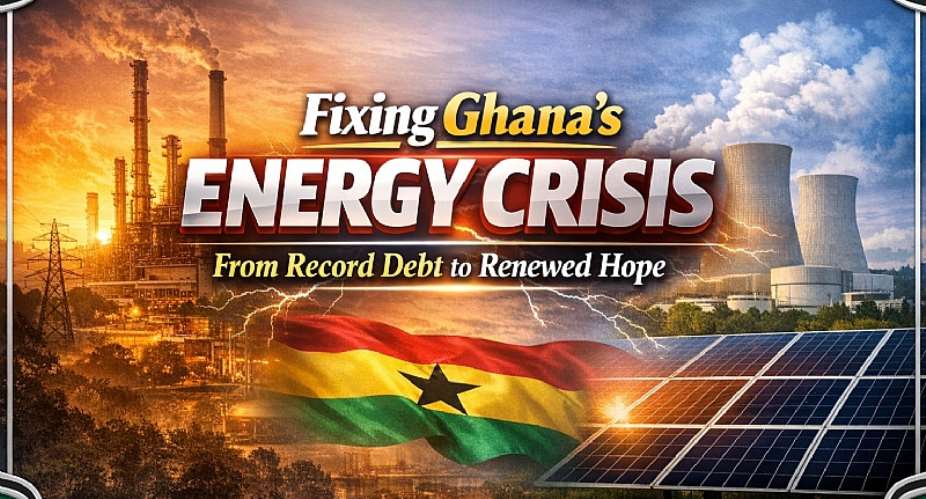
The debate over whether the New Patriotic Party (NPP) “could have done better” in managing Ghana’s power sector remains central to political discourse. Analysts, policymakers, and citizens alike weigh the trade-offs between fiscal stabilization and infrastructure expansion. This article provides a balanced, professional analysis of the NPP’s record from 2017–2024 and the current administration’s reforms under President John Mahama.
NPP’s Record: Stability at a Cost
Technical Reliability
The NPP’s most notable achievement was ensuring eight years of relatively stable electricity supply, ending the daily outages of the mid-2010s.
This stability was largely sustained by capacity added under the previous NDC administration rather than new large-scale investments.
Financial Erosion
By December 2024, the energy sector’s debt had ballooned to GH₵70 billion.
Tariffs were kept low for political reasons, while generation costs rose, creating a structural imbalance.
Transmission and distribution infrastructure lagged behind demand growth, leaving the grid vulnerable to shocks.
ESLA and ECG Losses
The Energy Sector Levy Act (ESLA) generated over GH₵45 billion but was used as collateral for loans rather than clearing debts.
The Electricity Company of Ghana (ECG) recorded cumulative losses of GH₵24.63 billion between 2017 and 2023, with technical and collection losses reaching 40%.
Renewable Energy Efforts
The NPP commissioned solar plants in Kaleo and Lawra, but renewables accounted for only 0.8% of the national mix by 2024.
Heavy reliance on thermal plants persisted, leaving the sector exposed to fuel shortages.
The Current Administration’s Reset
Financial Reforms
In January 2026, the government settled $1.47 billion in arrears with Independent Power Producers (IPPs) and fuel suppliers.
Renegotiation of IPP agreements saved over $250 million and restructured GH₵1.1 billion in obligations.
ECG’s monthly revenues rose from GH₵900 million to GH₵1.7 billion through aggressive collection drives.
Operational and Technical Measures
Nationwide “All Must Pay” campaign enforces timely payments and combats illegal connections.
Procurement of 1 million smart meters aims to reduce commercial losses.
A $278 million emergency program is injecting 2,500 new transformers into the grid.
Long-Term Energy Independence
Construction of a second gas processing plant (GPP II) is expected to save $1 billion annually.
Ghana’s first nuclear power plant site has been selected at Nsuban in the Western Region.
A Green Transition Blueprint targets 15% renewable energy share by 2030.
Comparative Summary
Strength of NPP: Maintained power supply stability, supporting business and social growth.
Weakness of NPP: Left behind record debt and under-invested in infrastructure.
Strength of Current Administration: Aggressive debt clearance and operational reforms.
Challenge Ahead: Achieving long-term sustainability while modernizing the grid.
The NPP’s tenure delivered technical stability but at the cost of financial sustainability. The current administration faces the difficult task of dismantling the debt legacy while modernizing Ghana’s power sector. Success will depend on balancing fiscal discipline with infrastructure expansion, ensuring that Ghana’s energy future is both reliable and financially sustainable.
✍️ Retired Senior Citizen
For and on behalf of all Senior Citizens of the Republic of Ghana 🇬🇭
Teshie-Nungua
[email protected]

 Police arrest two as search intensifies for missing couple
 Three Akosombo units restored after fire incident — Energy Ministry
 'Weep not for rude CEOs, weep for your dying nation' – Kwesi Yankah tells Julius...
 UCC lecturer, TA die in accident
 Malaria deaths fall by 98% since 2011 – GHS
 Two-month salary arrears for newly recruited nurses paid — Health Ministry
 'We'll complete all Big Push projects on schedule' — Roads Minister assures
 Voltaian Basin Project: GNPC Explorco engages Yaa Naa, stakeholders ahead of dri...
 Senyo Hosi praises Ayine’s role in OSP creation, urges broader policy approach t...
 PUWU condemns ECG staff transfers, reassignment


