




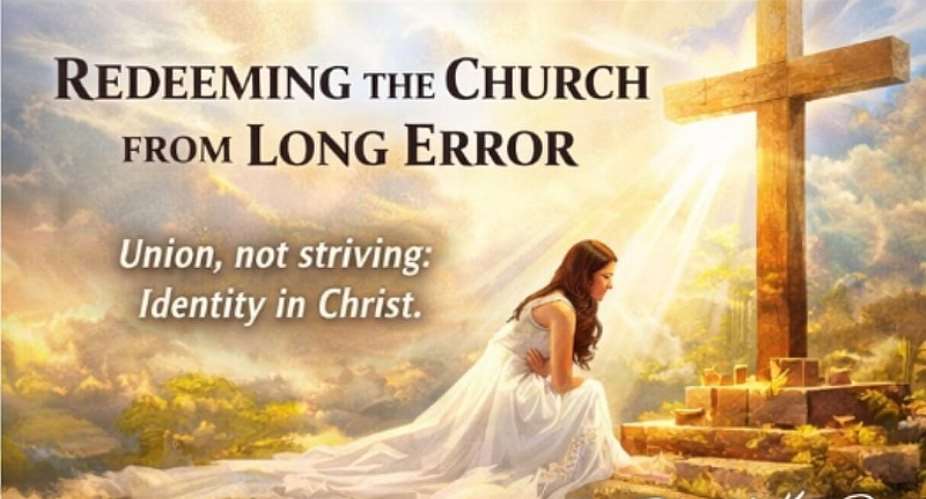
When Faith Forgets Its Foundation
Across many modern Christian communities — particularly in vibrant charismatic movements — spirituality is often expressed through intense emotional experience.
Worship gatherings pulse with music, prayer meetings swell with fervor, and believers frequently measure spiritual depth through visible manifestations of faith.
While passion has always been part of Christian devotion, a growing number of theologians argue that the modern church may sometimes confuse spiritual intensity with spiritual identity.
The distinction matters.
If the central promise of Christianity is union with Christ, then the foundation of faith rests not in emotional expression but in covenant relationship — a truth deeply embedded in the biblical narrative.
Recovering that perspective may be essential for the Church’s spiritual maturity.
Where the Church Sometimes Lost Its Way
Over time, certain patterns have emerged within contemporary Christian practice that risk obscuring the deeper architecture of faith.
| First, covenant language has often been reduced to romantic imagery alone, particularly when passages such as Genesis 2:24 are confined exclusively to marriage teaching.
| Second, emotional experience has at times taken precedence over theological clarity, encouraging believers to pursue spiritual feelings rather than spiritual formation.
| Third, visible manifestations of faith — prophetic utterances, ecstatic worship, or dramatic spiritual encounters — can sometimes be treated as the primary evidence of divine presence.
None of these practices are inherently problematic. Christian history is rich with emotional devotion and spiritual expression.
But when experience replaces identity as the center of faith, the theological balance shifts.
The New Testament consistently points believers back to something deeper.
In 1 Corinthians 6:17, the Apostle Paul writes:
“He who is joined to the Lord is one spirit with Him.”
The statement reframes salvation in strikingly relational terms.
Union with Christ is not the reward of spiritual intensity.
It is the foundation of Christian identity.
Covenant Before Experience
Within this framework, covenant precedes experience.
The believer’s relationship with Christ is not something achieved through effort, emotion, or religious performance. It is something declared through the work of Christ.
The New Testament repeatedly emphasizes this point.
In Ephesians 1:13–14, Paul describes the Holy Spirit as a seal — the divine confirmation of a reality already accomplished through Christ’s redemptive work.
In other words, the Spirit does not create the union between Christ and believers. The Spirit confirms and secures it.
Identity therefore comes before manifestation.
Experience flows from belonging, not the other way around.
The Implications for the Church
When this perspective is applied to the broader life of the Church, the implications are significant.
If Genesis 2:24 ultimately points to the covenant union between Christ and His people, then the Church’s identity is not something it must constantly strive to achieve.
It is something it already possesses.
The Book of Revelation describes the Church symbolically as the Bride, a community prepared for divine union. The imagery reinforces the idea that the relationship between Christ and His people is covenantal rather than conditional.
This understanding reshapes several aspects of Christian practice:
Worship becomes an expression of relationship rather than an attempt to secure divine approval.
Holiness emerges from identity rather than fear or insecurity.
Spiritual growth becomes participation in Christ’s life rather than a competition for religious achievement.
The trajectory moves from striving to belonging.
From Sensation to Structure
For many charismatic communities, this shift may represent a natural stage of spiritual maturation.
Early Christian history itself followed a similar pattern: from the dramatic experiences of Pentecost to the theological reflections that later defined Christian doctrine.
Movements often begin with energy and revival. Over time, they develop structure, clarity, and theological depth.
The charismatic tradition may now be entering a similar moment of reflection — one that does not abandon spiritual vitality but grounds it in enduring theological identity.
Passion remains important. But passion anchored in covenant becomes far more stable than passion driven solely by momentary experience.
Reflections
“The Church does not fast its way into union, shout its way into acceptance, or strive its way into Christ. It awakens to what was architected before the foundation of the world.”


 Trump targets tax-free diesel as Republicans approach midterms
 Govt releases GH¢9.1 billion covering six quarters of DACF to MMDAs - Ayariga
 Manhyia South MP charged over alleged GH¢9.85m loss to SIC Life
 'I didn’t know the process would be that fast' – Nana B explains missing NPP swe...
 'Who is Karbo to defy my orders?' – Buttey fumes over NPP conference clash
 'Kojo Bamba can’t stop NDC' – Gbande warns NPP against shielding anyone from arr...
 Mahama pardons 863 convicted persons, 11 from death sentence
 National Cathedral site reverts to government as Attorney-General reviews audit
 NDC confirms Dzifa Gunu’s disqualification from La Dadekotopon constituency secr...
 Nigeria's Tinubu confirms 32 dead after military plane crash


