




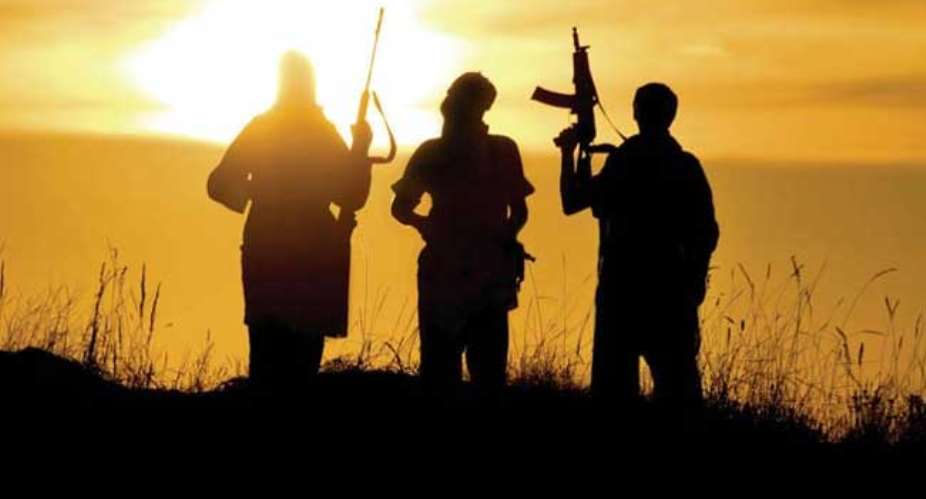
What Is Lakurawa?
Lakurawa is an armed extremist group active primarily in north-west Nigeria, especially in Sokoto and Kebbi states near the Nigeria–Niger border. The name “Lakurawa” comes from a Hausa adaptation of the French phrase les recues (“the recruits”) and the group is widely considered part of the broader Islamic State Sahel Province (ISSP) network with possible links to Islamic State West Africa Province (ISWAP).
In January 2025, a Nigerian court officially proscribed Lakurawa as a terrorist organization, recognizing its activities including raids, kidnappings, and attacks on officials and civilians as acts of terrorism.
How It Started From Vigilantes to Extremists
Lakurawa began in the late 2010s with a very different purpose:
Origins as a local self-defence group: Around 2016-2018, it emerged in rural Sokoto as a community defence force offered by nomadic herders and local youths. Communities, frustrated by rising banditry and cattle rustling, welcomed the group to help protect villages when government security forces were absent or ineffective.
Radicalization and evolution: Over time, Lakurawa became radicalized and oppressive. Its members grew in number reportedly from fewer than 50 initially to hundreds and the group began enforcing its own strict version of Islamic law in areas where it operated.
Shifting identity: What began as a community defence initiative gradually transformed into a militant extremist group with ideologies blending Salafi-jihadism and local grievance-based mobilization. It took advantage of weak governance, porous borders, and existing Islamist insurgencies in the Sahel.
Formal recognition as a threat: By late 2024 and early 2025, Nigerian authorities and courts labeled Lakurawa a terrorist organization, underscoring its transformation from militia to insurgent actor.
Geography and Presence
Lakurawa’s activities are concentrated in several border areas of north-west Nigeria, especially:
Sokoto State particularly Tangaza, Gudu, Illela, Binji, and Silame local government areas.
Kebbi State with periodic raids and clashes recorded near the border with Niger. The group also has cross-border origins and reach into Niger and Mali, exploiting the weak control of remote Sahel regions and historic migration routes.
How Has Lakurawa’s Violence Unfolded?
Lakurawa’s attacks have varied in scale but show a clear escalation in lethal violence and coercion:
Types of Violence
Attacks on Villages: Villages in Sokoto and Kebbi have been raided, burned and looted. For example, Lakurawa linked militants attacked Kwallajiya village in July 2025, killing 15–17 villagers during harvesting and prayers.
Targeted Killings: Community leaders and residents who resist the group’s control have been assassinated in night raids.
Extortion and Social Control: Lakurawa has imposed illegal taxation and enforced rigid social and religious rules, effectively controlling economic and social life in certain areas.
Kidnapping and Banditry-Style Crimes: The group engages in cattle rustling, kidnappings for ransom, and other criminal activities that blur the line between insurgency and organized crime.
Casualties and Broader Impact
Estimates vary, but credible reports indicate:
In the first half of 2025, Lakurawa-linked violence reportedly accounted for dozens of deaths across Sokoto and Kebbi, including civilians, vigilantes and security forces.
Attacks have displaced entire communities and disrupted livelihoods, especially in remote farming and pastoral areas where residents fear reprisals from militants.
Link to Larger Regional Conflict
Lakurawa’s rise reflects the broader destabilization of the Sahel and Nigeria’s borderlands. Analysts suggest it functions as a connector group between Sahelian extremist factions and local insurgencies, potentially linking ISSP and ISWAP networks that operate across West Africa.
The group has even been cited in multinational insecurity discussions involving Mali, Niger and Burkina Faso illustrating how local armed groups can have regional implications.
Government and Legal Action
Nigeria has proscribed Lakurawa as a terrorist organization, giving security forces greater legal grounds to pursue and prosecute its members.
The Guardian Nigeria
Military Efforts
The Nigerian military and allied forces have launched operations to push back Lakurawa and other militant groups, sometimes with cross-border cooperation and external assistance focused on counterterrorism.
International Attention
International actors including the U.S. have conducted targeted strikes against suspected Lakurawa and other extremist positions in north-west Nigeria, particularly around Sokoto State, as part of broader efforts to curb the insurgency.
Why Lakurawa Matters
Lakurawa is not just another bandit group: it represents:
Hybrid Extremism: A blend of religious extremism, socio-economic predation and criminality.
Regional Linkages: Possible ties to Islamic State affiliates and transnational insurgent networks.
Impact on Civilians: Direct threats to rural livelihoods, safety and community governance in a fragile border region.
Strategic Threat: A potential bridge between Sahelian and Nigerian extremist theatres that could destabilize wider West African security.
Conclusion
The Lakurawa insurgency emerging out of local self-defence dynamics has evolved into a serious extremist and insurgent threat in north-west Nigeria. Its growth underscores the challenge of state absence in remote regions, the fluid nature of armed groups, and the way local security vacuums can feed broader regional insurgencies. Confronting Lakurawa involves not just military force but deeper strategies to address governance deficits, economic marginalization, and cross-border co-ordination.
Mustapha Bature Sallama.
Medical/ Science Communicator,
Private Investigator, Criminal investigation and Intelligence Analysis.
International Conflict Management and Peace Building.USIP
[email protected]
+233-555-275-880

 Site for Adaklu District 24-hour economy market handed over to contractor
 Govt to complete over 1,000MW power expansion in Kumasi — John Jinapor
 Amin Adam made co-chair of Buwumia's Finance and Economy Committee
 NPP appoints Akosua Manu as spokesperson for gender and social protection commit...
 GHS activates national surveillance following hantavirus outbreak on Cape Verde ...
 South Africa denies xenophobia claims as Ghana pushes AU action
 Kennedy Agyapong rejects co-chair appointment by Bawumia
 Police arrest six suspects over alleged child trafficking syndicate in Kasoa
 Former Deputy AG urges GJA to resist return to ‘Culture of Silence’
 Four killed in Savannah Region road crash involving tipper truck


