




Historical background
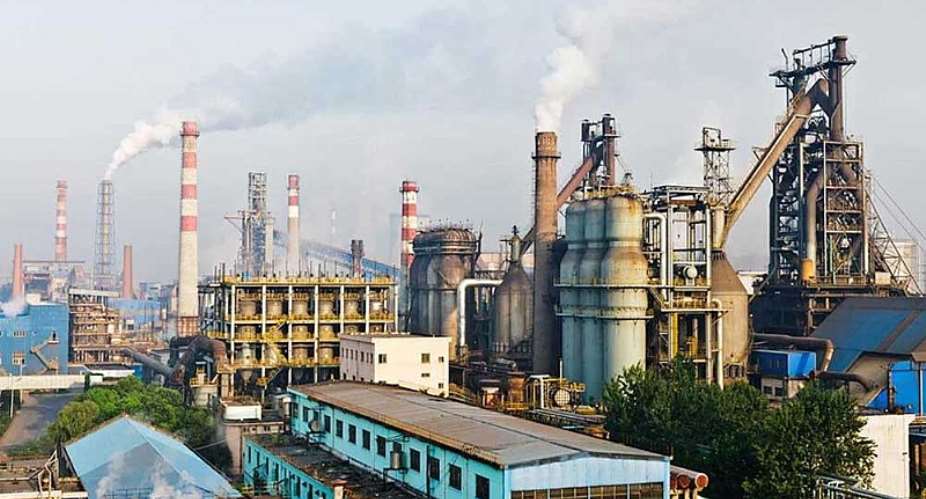
The Ajaokuta Steel Complex (ASC), in Kogi State, Nigeria, was conceived during the 1970s, with Soviet (Russian) assistance. It was meant to be an integrated steel plant covering everything from iron ore mining, coke ovens and blast furnace to rolling mills, supporting Nigeria’s push toward industrialization.
Construction began around 1979. By the early 1980s, much of the infrastructure was in place: by 1983–84, the project was declared about 95‑98% complete in many of its structural bits.
However, critical components especially the blast furnace, coke ovens, and related steel‑making shops remained uninstalled, uncommissioned, or nonfunctional.
What Went Wrong
Over the decades, the Ajaokuta project has suffered multiple recurring problems. These include:
- Policy inconsistency & political instability
Every change in government (military, civilian) has brought shifts in policy, priority, funding, and ownership/concession strategy. Projects have been started, abandoned, re‑concessioned, litigation ensued, etc.
- Underfunding & poor financial planning
Although large sums have been spent over decades, funds have often not been sufficient, not released on time, misallocated, or used for non‐core purposes. Maintenance neglected; some parts deteriorate.
- Contract & concession issues
The complex was concessioned at various times (e.g. to Global Infrastructure Nigeria Limited / Global Steel Holdings, with Indian investor Pramod Mittal) in attempts to revive it. These attempts often failed. There have been allegations that these concessions involved asset stripping (removal of spare parts, equipment), breach of contract, poor performance, and that terms were sometimes structured in ways unfavorable to the Nigerian government.
- Technical and infrastructural gaps
The requisite supply chain (mining, raw materials, iron ore beneficiation) has in many cases been nonfunctional or slow to develop. E.g. the National Iron Ore Mining Company (NIOMCO) at Itakpe has had its own operational issues.
- External infrastructure (roads, rail, and power) needed to support raw material transport and supply has either been missing, delayed, or not properly maintained. Without good roads, reliable power, the plant cannot run at scale.
- Corruption, mismanagement, and lack of accountability
Several reports point to contract inflation, misappropriation of funds, irregular or opaque dealings, and neglect of oversight. Some senior officials, and concessionaires, have been accused of diverting assets or letting parts decay.
- Obsolescence of technology & delays in modernization
Some of the equipment and designs, even when completed, are considered outdated. Decades of dormancy have meant that what was built ages, needs overhaul, certain critical plants like the blast furnace had never been fully tested, etc.
- Legal disputes and settlement costs
Because of failed concession agreements, government has had to settle claims (for example, with Global Steel Holdings) to regain control, at large cost.
How Far Along Is It?
According to sources, ~98% of the plant’s physical structures were completed by the mid‑1980s (or early 1990s for some parts).
But those few remaining components (the ~2%) are extremely critical: as long as they are not working (e.g. blast furnace, coke ovens) the plant cannot produce steel from raw materials.
Some light mills, rolling mills, and smaller scale fabrication have been made to operate in recent years, but full integrated steel production (from ore to finished steel products) has never been achieved.
Who’s Responsible?
Assigning fault purely to one actor would be too simplistic; this has been a multi decade, multi actor failure. But responsibility can be discussed across different layers:
- Federal/National Governments (successive administrations)
For changing priorities, failing to ensure consistent funding.
For poorly drafted concession agreements.
For lack of oversight and letting corruption go unchecked.For failing to ensure that supporting infrastructure (power, transport, and mining) was in place.
- Concessionaires / Private Firms
Firms that were given concession (e.g. GIHL / GSHL) have been accused of failing to deliver, under investing, removing parts, not fulfilling performance obligations. Some may have leveraged contractual loopholes or weak enforcement to avoid responsibilities.
- Technical planners / Contractors
Possible design flaws or over‑reliance on foreign technologies, which Nigeria could not maintain or upgrade domestically.
Failure to build in adaptability or stages that could allow partial operations while awaiting full completion.
- Regulatory and institutional bodies
Bureaucracy delays, weak regulatory oversight, lapses in public enterprise management (e.g. the Bureau of Public Enterprises in Nigeria) have played a role. Implementation agencies not always given sufficient autonomy or technical capacity, or held accountable.
- External factors
Global economic downturns, oil price fluctuations, political regime changes outside Nigeria, shifts in foreign policy and aid, etc. Changing market conditions, inflation, exchange rates, which increase cost of parts, importation, etc.
Fault of Whom? Where the Majority of Blame Lies
While multiple actors share blame, the weight seems most heavily on:
The successive Nigerian governments, for failing to sustain political will i.e., making it a priority across administrations in terms of budget, oversight, support infrastructure. Without this consistency, the project could never fully launch.
Failures in contracting and concessioning: Concession agreements that lacked enforceable performance guarantees, or that allowed concessionaires to extract benefit without delivering results.
Mismanagement and corruption: Embezzlement, asset stripping, contract inflation, no delivery of contracted obligations.
Neglect of supporting infrastructure: Even if the plant is built, rail, power, raw material sources must work. These have lagged, and their failure has undercut the plant’s viability.
Thus, responsibility is layered: you cannot pin it on just the foreign partner, nor solely on local government; it is a systemic failure.
Why It’s Called “Longest Uncomplicated Project”
People sometimes call Ajaokuta “longest uncomplicated project” or similar phrases to highlight how it has been largely complete physically, but never truly functional. The “uncomplicated” part is ironic: while the structure seems (visually) almost there, the operational, technical, legal, and supply components have not been put in place so the plant works. So the project’s biggest complexity has been turning “built structure” into “operating plant.”
Current Status & Efforts at Revival
In 2022, the Nigerian government paid US$495‑496 million to Global Steel Holdings to settle claims and regain control over Ajaokuta.
There are more recent (2024‑2025) initiatives: MoU’s with foreign partners (including Russian firms, original builders), audits, plans for new investment and private partner involvement. Stakeholders express cautious optimism but warn that unless past flaws (policy inconsistency, corruption, incomplete infrastructure, contractual clarity) are addressed, revival efforts may also stall.
Lessons & Implications
Large, capital‐intensive industrial projects need continuous political commitment over many years; weak commitment undermines them.
Infrastructure is system wide: plants don’t work in isolation; rail, power, supply chains are essential. Contracts must be well designed with accountability, enforceable performance metrics, and transparency.
Corruption and mismanagement, if allowed, will eat up the potential benefits and resources. Technology chosen must be maintainable locally or with predictable support; obsolescence is a risk when projects stall.
Conclusion
The Ajaokuta Steel Complex remains a tragic emblem of missed industrial opportunity in Nigeria and, arguably, in West Africa. It had tremendous potential, ambitious design, and large investment; yet, despite decades of work and substantial funds, it still has not fulfilled its core purpose.
Blame is not singular but collective governments past and present, private concessionaires, technical/contracting partners, oversight/regulatory institutions, and even the broader system (financial, political, and infrastructural) that failed to support it.
If the project is ever to truly deliver, its revival must not just refurbish physical assets but address legal, institutional, technological and infrastructural gaps, curb corruption, and maintain consistent political will.
By Mustapha Bature Sallama
Medical / science communicator
International Conflicts management and Peace building
Alumni Gandhi- King Global Academy, United State Institute of Peace USIP
[email protected]
+233-555-275-880

 Site for Adaklu District 24-hour economy market handed over to contractor
 Govt to complete over 1,000MW power expansion in Kumasi — John Jinapor
 Amin Adam made co-chair of Buwumia's Finance and Economy Committee
 NPP appoints Akosua Manu as spokesperson for gender and social protection commit...
 GHS activates national surveillance following hantavirus outbreak on Cape Verde ...
 South Africa denies xenophobia claims as Ghana pushes AU action
 Kennedy Agyapong rejects co-chair appointment by Bawumia
 Police arrest six suspects over alleged child trafficking syndicate in Kasoa
 Former Deputy AG urges GJA to resist return to ‘Culture of Silence’
 Four killed in Savannah Region road crash involving tipper truck


