




The AfricaNenda report on the State of Inclusive Instant Payment (SIIP) in Africa for the year 2023 indicates that as of June this year, instant payment systems (IPSs) in Africa recorded 32 billion transactions valued at a whopping US$1.2 trillion.
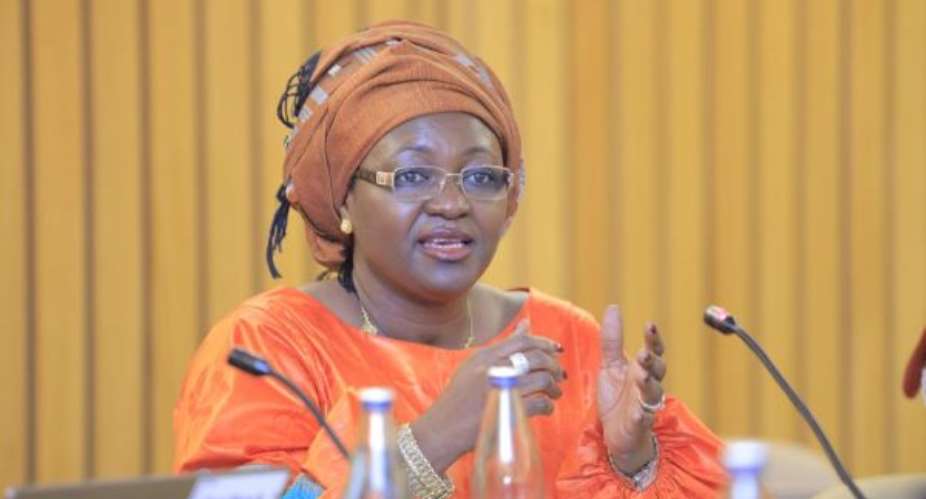
Ahead of the launch of the report in Addis Ababa, Deputy Chief Executive of AfricaNenda, Sabine Mensah told journalists in Addis Ababa that the figures were conservative because they were based on data from only 22 out of 32 countries that have active instant payment systems on the continent to date.
She noted that as of June 2023, when the report was finalized, there was an average of about 30 percent depreciation of currencies in Africa against the US dollar, so if the value of transaction was based on the exchange rates prior to June 2023, the value of transaction would have far exceeded US$1.2 trillion.
Sabine Mensah said the availability of data from central banks and payment switches in Africa is still a challenge, explaining that out of the 22 countries that made data available, only five were directly from the respective central banks, while 17 were bits and pieces of information gathered from the internet.
She also stated that out of the 32 active IPSs, 29 are strictly domestic and only 3 facilitate cross-border payments, adding that even out of the 32, not all are inclusive.
"Inclusivity is a spectrum – it means the system must be relevant to all – save time – save money – ensure easy payment (interoperable) – facilitates relevant use cases – the most basic phone should have access to all use cases – send money – receive money – pay to government – receive government support (social payments) – that way the value proposition is compelling enough to drive wide usage," she said.
Currently, instant payment systems on the continent have reached various levels of inclusivity - some are basic, some are at advanced levels but none is at the mature level yet - where the safety of the individual is absolutely assured.
According to the AfricaNenda Deputy CEO, the 32 active IPSs are located in only 21 countries, because 7 of the countries have multiple IPSs.
Meanwhile, some 17 countries are also at various stages of planning to launch IPSs and there are 3 regional IPSs at the planning stage as well.
"Currently there are 27 African countries which still don't have IPSs - that is half of the continent, indicating that there is still a very long way to go from a digital economy that leaves no one behind.
Indeed, over 400 million African adults are still financially excluded, even though Africa has one of the biggest mobile penetrations in the world. Part of the problem is also to do with lack of connectivity, and even there is connectivity, safety and security as well as cost and lack of digital skills stand in the way of people taking the digital route into the financial sector.
According to Sabine Mensah, the report also captures some details on Consumer Research in five countries where barriers in the areas of access to infrastructure, devices, connectivity, as well as issues of trust, fraud and affordability, stood in the way of efforts to make digital do better than cash.
Again, an earlier SMEs research by AfricaNenda found that there were no real services answering the needs of SMEs on the continent, particularly regarding the turnaround time for payment confirmation, lack of interoperability across borders, how to confirm payments actually reached the intended recipient, poor or lack of connectivity, and costly service.
The disparities in regulation across borders was also identified as one challenge that stood in the way of seamless flow of funds – varied licensing regimes is an issue – and there is also a gap in the confirmation of identity between sender and receiver countries.
"We at AfricaNenda are very willing to provide the technical and capacity building assistance to bridge the gap, but we need data to do the analysis that will drive the ecosystem towards impactful inclusion for all Africans," she said. "We make the information available and share best practices in the hope that African countries are able to learn from that instead of seeking to reinvent the wheel."
Regarding best practices, Sabine Mensah mentioned India's UPI and Brazil's PIX, which are examples African countries can learn from and push the boundaries of inclusive instant payments on the continent.
Sabine Mensah believes that media advocacy is critical to driving the ecosystem at both the regulator and operator levels towards ensuring that African countries establish interoperable, safe, affordable, friendly and inclusive instant payment systems that engender consumer confidence and promote cross-border trade within the context of AfCFTA.
The full report is due to be launched today, November 8, 2023, in collaboration with Co-Develop, the World Bank and the UN Economic Commission for Africa (UNECA).

 How eight 'A's WASSCE graduate from Wesley Girls killed by speeding motorcycle w...
 GTEC freezes new PhD admissions nationwide pending audit of doctoral programmes
 NATO faces sovereignty dilemma as militaries rely on private tech, AI
 Afenyo-Markin demands answers over poor water quality in Central Region
 Mahama says Mayweather’s Ghana visit will boost tourism, boxing
 Police to develop human rights manual to strengthen professionalism and public t...
 How Korle Bu surgeons fixed back man's penis cut off whiles attempting to sit on...
 German President to visit Ghana for talks on trade and skills development
 Madina Court remands man over alleged GH¢18,500 theft from girlfriend
 Akufo-Addo left Mahama govt GH¢680bn debt bill for 2027-2030 — Isaac Adongo


