




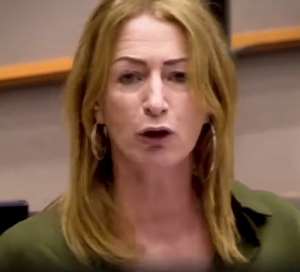
When former Irish Member of the European Parliament, Clare Daly, stood before the European Parliament and declared that Africa needed saving from Europeans "offering help," many dismissed her remarks as political rhetoric. Others applauded her courage. But beneath the controversy lies a question far more uncomfortable than the speech itself:
What if some of the deepest criticisms of Europe's relationship with Africa are not coming from Africans, but from Europeans themselves?
And perhaps an even more unsettling question:
Why does it often take a European voice for the world to pay attention to what many Africans have been saying for decades?
Who Is Clare Daly and Why Is She Speaking Like This?
Clare Daly is an Irish politician known for challenging Western foreign policy, military interventions, and what she considers modern forms of imperialism. Throughout her time in the European Parliament, she repeatedly questioned the role of European powers in Africa, the Middle East, and other parts of the Global South.
Her comments regarding Africa were directed particularly at the Horn of Africa, where she criticized the concentration of foreign military bases in Djibouti and questioned whether European involvement genuinely serves African interests. She argued that military expansion often benefits foreign powers more than local populations.
Whether one agrees with her or not, she is forcing a conversation that many political leaders avoid.
The Horn of Africa: Protection or Strategic Control?
Djibouti, a small nation in the Horn of Africa, hosts military installations from France, Italy, Germany, the United States, China, Japan, and others because it sits near one of the world's most important maritime trade routes.
The official explanation is straightforward:
Foreign military presence helps combat piracy, terrorism, and instability while protecting international trade.
But here is the question few ask:
If decades of foreign military presence bring stability, why do many communities across the region still struggle with poverty, insecurity, unemployment, and humanitarian crises?
If military bases are symbols of security, why do many Africans see them as symbols of dependency?
If the continent is supposedly becoming more secure, why does Africa continue to be viewed primarily through the lenses of conflict, aid, and intervention?
These questions do not automatically prove Daly correct.
But they deserve answers.
Has Colonialism Really Ended?
Most African nations gained political independence between the 1950s and 1970s.
Flags changed.
National anthems changed.
Governments changed.
But did power truly change?
Many African economies still export raw materials and import finished products. Minerals leave Africa. Oil leaves Africa. Cocoa leaves Africa. Gold leaves Africa.
Then finished products return at significantly higher prices.
The structure often looks remarkably similar to the colonial economic model.
The uncomfortable question is:
Can a nation be politically independent but economically dependent?
If foreign corporations control extraction, financing, insurance, logistics, technology, and global market access, who truly captures the value?
Political independence is important.
Economic sovereignty may be even more important.
Europe Needs Africa More Than Many Europeans Admit
Europe remains Africa's largest trading partner. Trade between the two regions reached hundreds of billions of euros annually, and European investments across Africa are extensive.
Yet another uncomfortable reality exists:
Africa possesses many of the resources required for modern industrial civilization.
These include:
- Cobalt
- Lithium
- Gold
- Copper
- Rare earth minerals
- Oil and gas
- Agricultural resources
- A rapidly growing consumer market
Without African resources, many global industries would face severe disruptions.
So a critical question emerges:
If Africa is so important to Europe, why is Africa often treated as a recipient rather than an equal partner?
Why do discussions about Africa frequently focus on aid instead of value creation?
Why are African countries praised for exporting raw materials but criticized when they seek to process them locally?
The Trade Question Nobody Wants to Touch
Daly's second major criticism concerns trade.
The European Union argues that it supports African economic development and has invested heavily in initiatives that promote trade and integration, including support for the African Continental Free Trade Area (AfCFTA).
Yet critics point out another reality.
Africa still trades more with external powers than with itself.
Intra-African trade remains significantly lower than trade within Europe or Asia.
This raises an explosive question:
Who benefits when Ghana trades more easily with Europe than with neighboring African economies?
And perhaps the most important question:
Would Africa be wealthier if African countries traded more with each other before exporting to the rest of the world?
These questions sit at the heart of Africa's future.
What Africans Are Saying
African opinions are far from uniform.
Some Africans agree strongly with Daly.
They see foreign military bases, unequal trade relationships, debt arrangements, and resource extraction as evidence of modern-day neo-colonialism.
Others disagree.
They argue that Africa's greatest problems are not European policies but corruption, weak institutions, poor governance, conflict, and leadership failures.
Both perspectives contain elements of truth.
It is easier to blame outsiders.
It is also easier to ignore the role of local elites.
The harder task is confronting both realities simultaneously.
Is Europe Learning?
There are signs that Europe is beginning to recognize that old approaches no longer work.
European leaders increasingly speak about "partnership" rather than "aid."
They emphasize investment, infrastructure, and economic cooperation.
The EU has also pledged significant funding for African development and integration initiatives.
Yet many Africans remain skeptical.
Why?
Because promises have been heard before.
The question is no longer what Europe says.
The question is what changes on the ground.
Is Africa Learning?
This may be the most important question of all.
For decades, Africa has discussed dependency.
For decades, Africa has discussed resource exploitation.
For decades, Africa has discussed unfair trade.
Yet many African economies remain heavily dependent on exporting raw materials.
The critical question is not whether Europe will change.
The critical question is whether Africa will.
Will Africa industrialize?
Will African governments strengthen institutions?
Will African businesses build continental supply chains?
Will African leaders prioritize long-term development over short-term political gains?
No foreign power can answer these questions.
Only Africans can.
Can Europe Survive Without Africa?
Not comfortably.
Africa provides resources, markets, strategic geography, labor potential, and future economic opportunities.
But another question deserves equal attention:
Can Africa continue to prosper without engaging Europe?
Probably not.
The future is unlikely to be separation.
The future is likely to be negotiation.
The issue is not whether Africa and Europe should cooperate.
The issue is whether that cooperation is balanced.
The Final Question
Perhaps the most uncomfortable question Clare Daly's speech forces us to confront is this:
If Africa is truly independent, why are so many of the continent's most important economic, security, financial, and development decisions still influenced by actors outside Africa?
And if Europe genuinely believes in partnership, another question follows:
Would Europe accept the same relationship if the positions were reversed?
Until those questions are answered honestly, the debate over colonialism, neo-colonialism, trade, military influence, and African sovereignty will continue.
Clare Daly may not have all the answers.
But she is asking questions that many powerful people would rather avoid.
And sometimes, history changes not because someone provides the answers, but because someone dares to ask the questions.
By:
Patrick Belebang Yagsori
+233240292413
[email protected]
 Tension at Bantama NPP office as chairman accuses Asenso Boakye of political mac...
 Korle Bu succesfully performs first two off-pump heart bypass surgeries
 Disability Act lacks teeth, must be strengthened — Annoh-Dompreh
 Mental health, drug tests now mandatory for firearm licences — Interior Minister
 GoldBod directs licensed buyers to report gold purchases within five minutes
 Action will be taken on viral video showing SHS student assaulting a junior — Dr...
 NDC promised to ease cost of living yet increasing utility tariff — Kofi Tonto
 NDC is a useless govt – Miracles Aboagye fumes
 Govt eyes 1,012km rail corridor to boost trade, transform cargo transport from T...
 SHS graduation was never part of the GES calendar – Kwadwo Poku


