




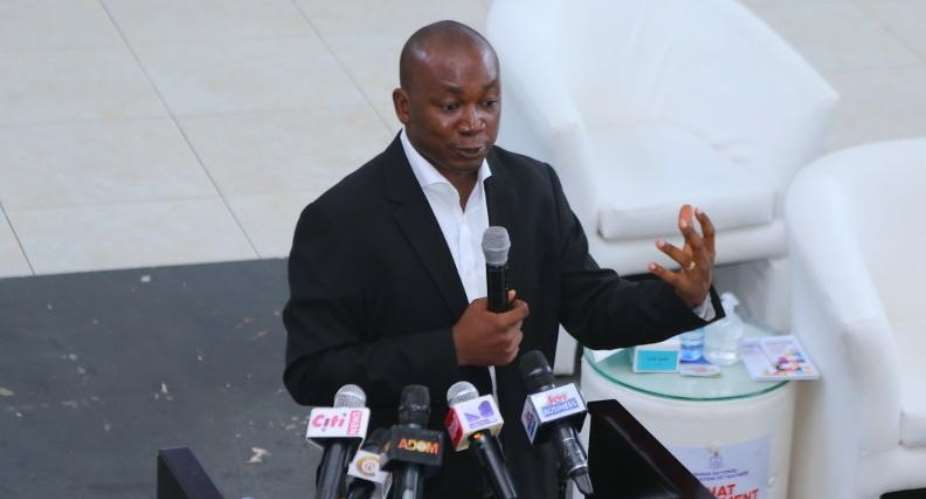
Economist and University of Ghana professor, Prof. Godfred Bokpin, has cautioned that losses recorded by the Bank of Ghana (BoG) under the Domestic Gold Purchase Programme (DGPP) could eventually place an additional financial burden on taxpayers through the need to recapitalise the central bank.
Prof. Bokpin said while the losses may be described as transaction costs associated with the gold purchase programme, they still constitute accounting losses that have weakened the Bank of Ghana’s equity position.
Speaking on Channel One TV’s The Point of View on Wednesday, August 19, he said the financial implications of the programme should not be overlooked despite its contribution to formalising gold trading and increasing foreign exchange inflows.
“So we recognize that these losses are quite huge for us. And remember, whilst you say that this is a transaction cost, this is an accounting loss. It is manifesting in a draft equity position of Bank of Ghana, which requires you and I as taxpayers to recapitalize the central bank,” he said.
According to Prof. Bokpin, the benefits of bringing more gold-related activities into the formal economy should not distract from the substantial financial cost associated with the intervention.
“The fact that it has helped to crowd in gold-related efforts, should not cause us to lose sight or conscious of the fact that it has also come at a certain huge cost that we should be able to address,” he added.
Concerns Over BoG’s Balance Sheet
Prof. Bokpin also raised concerns about what he described as the increasing use of the Bank of Ghana’s balance sheet to undertake quasi-fiscal activities.
“My position on this one has been that the way and manner we are systematically sacrificing the balance sheet of Bank of Ghana through quasi-fiscal activities is not helpful,” he said.
His comments come amid an intensifying debate over the financial performance of the DGPP and the role of the Ghana Gold Board (GoldBod) in the programme.
An International Monetary Fund (IMF) assessment reported that the DGPP recorded losses of about US$1.7 billion in 2025, equivalent to 1.5 per cent of Ghana’s Gross Domestic Product (GDP).
The programme was introduced to increase Ghana’s gold reserves, boost foreign exchange accumulation and formalise gold trading, with authorities also linking it to efforts to curb gold smuggling.
Prof. Bokpin, however, maintained that the programme’s economic benefits must be weighed against its full financial cost, particularly the impact of the losses on the central bank’s balance sheet and the potential implications for taxpayers.
 GoldBod losses is accounting loss manifesting in draft equity position of BoG – ...
 Kessben Group CEO Stephen Kessben dies at 68
 AMA bans Aboboyaa from using inner lanes in Accras
 AMA refunds driver’s money, sanctions City Guard over alleged extortion
 How boys aged 15 to 19 are denied condoms and described as being ‘too young to b...
 Stay away from drugs and protect your future — NACOC boss tells youth
 “You can’t claim the gains and deny the losses” – Former Suame MCE to Sammy Gyam...
 Akosombo-Volta line fault cause of power disruption in parts of the country — GR...
 Nationwide blackout: We're working to restore full power supply — GRIDCo assures
 Accountability cannot be answered with insults

