




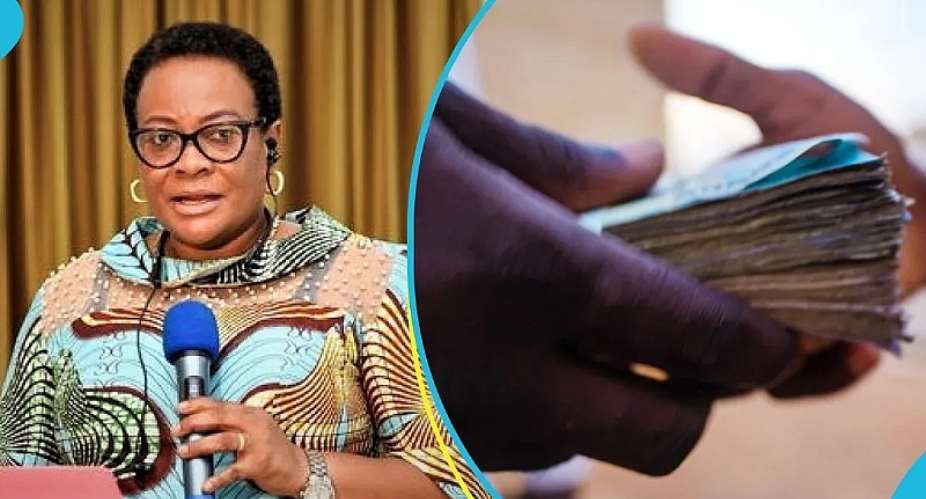
Transparency International Ghana (TI Ghana) has stated that corruption continues to pose a major threat to effective governance and sustainable development in the country, despite the existence of legal and institutional frameworks designed to combat it.
According to the organisation, persistent weaknesses in enforcement, transparency, accountability, and institutional capacity continue to undermine progress in the fight against corruption.
“Across public administration, deficits in transparency, accountability and oversight continue to create opportunities for the abuse of power for private gain,” the Executive Director of TI Ghana, Mrs Mary Awelana Addah, said.
She noted that recent governance assessments, audit reports, public financial management reviews, and diagnostic studies had consistently identified vulnerabilities in areas such as procurement integrity, political financing transparency, enforcement of asset declaration laws, and regulatory oversight.
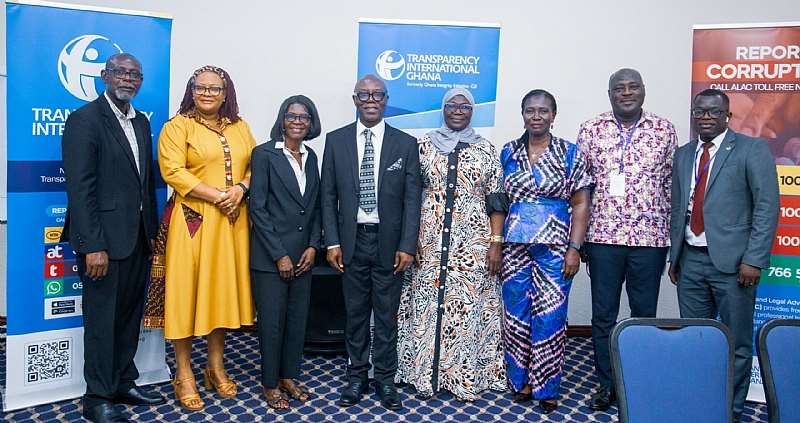
Mrs Addah made the remarks during the launch of the Governance and Integrity Policy Dialogue Series (GIPDS), a new anti-corruption initiative introduced by TI Ghana to promote accountability, strengthen governance systems, and deepen public understanding of emerging integrity and governance issues.
The initiative is expected to serve as a platform for sustained policy dialogue and coordinated advocacy aimed at reinforcing integrity, transparency, and accountability within Ghana’s governance structures.
She stressed that although Ghana has relatively strong accountability laws, integrity challenges remain deeply rooted due to institutional weaknesses, limited technical capacity, political pressures, and inadequate public scrutiny.
“When corruption infiltrates public decision making, it leads not only to financial losses but also undermines democratic legitimacy, weakens public institutions and erodes citizens’ trust in the state,” she stated.
Mrs Addah identified several persistent gaps in the anti-corruption framework, including the absence of an enforceable code of conduct for public office holders, weaknesses in the asset declaration regime, poor compliance with procurement laws, limited transparency in political party financing, weak regulatory enforcement, and inefficiencies in public service delivery.
She emphasised that promoting integrity in governance requires continuous dialogue, informed analysis, coordinated advocacy, and practical action.
Speaking on the objectives of GIPDS, she explained that the initiative would strengthen TI Ghana’s leadership role in anti-corruption advocacy while enhancing member participation and policy engagement.
According to her, the dialogue series would provide a platform for experts and stakeholders to contribute evidence based policy alternatives for government consideration and help keep members informed on emerging governance challenges.
The Executive Director said the platform would bring together professionals, academics, legal experts, governance practitioners, civil society actors, and policy analysts to support the development of credible and practical policy solutions.
She added that while TI Ghana’s membership represents a significant pool of expertise for advancing reforms, there has been a need for structured and sustained engagement mechanisms to harness that potential effectively.
“The GIPDS is therefore designed to address this gap by providing a consistent, inclusive and strategic forum for dialogue,” she explained.
Launching the initiative in Accra, the Board Chair of TI Ghana, Reverend Emmanuel Ansah, said the dialogue series would focus on policy discussions within Ghana’s legal and institutional framework and generate practical recommendations to strengthen the organisation’s advocacy agenda.
He explained that the series would serve as a platform for rigorous, evidence based discussions capable of transforming governance research and policy analysis into actionable reform proposals.
“These engagements will directly support TI Ghana’s advocacy and policy engagement with government and other stakeholders while drawing on the diverse expertise of members to generate practical, evidence based policy alternatives,” he said.
The maiden presentation, delivered virtually by Mr Azeem, was moderated by TI Ghana’s Fundraising Manager, Mr Michael Kwame Boadi.
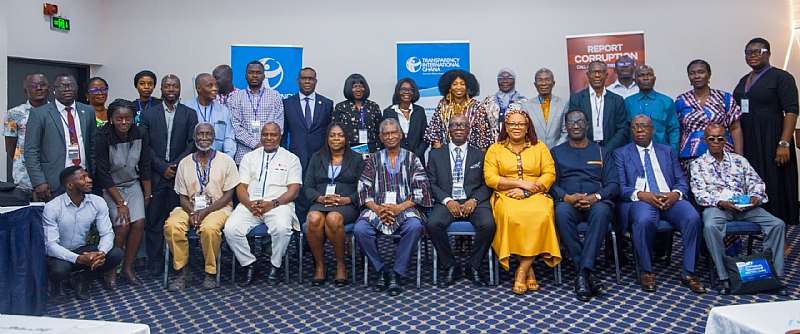
The event attracted participation from TI Ghana members, civil society organisations, governance institutions, faith based groups, academia, the media, and other stakeholders committed to promoting transparency and accountability in public life.
 EOCO declares three women wanted
 Four killed in Savannah Region road crash involving tipper truck
 Mali junta says will not talk with 'terrorist' groups
 Ho Central Mosque tension persist as court bonds rival Imam factions for peace
 Landlords could face GH¢3,000 fine or jail term for failure to register tenancy ...
 IGP special operations team seizes drugs worth GH¢200,000
 Toyota Voxy driver convicted over dangerous driving on Kumasi-Accra highway
 South Africa xenophobic attacks a setback to African solidarity — Zanetor
 GTA intensifies enforcement against illegal hostels around Legon and UPSA
 'You will be arrested' — Police warns individuals engaging in criminality under ...


