




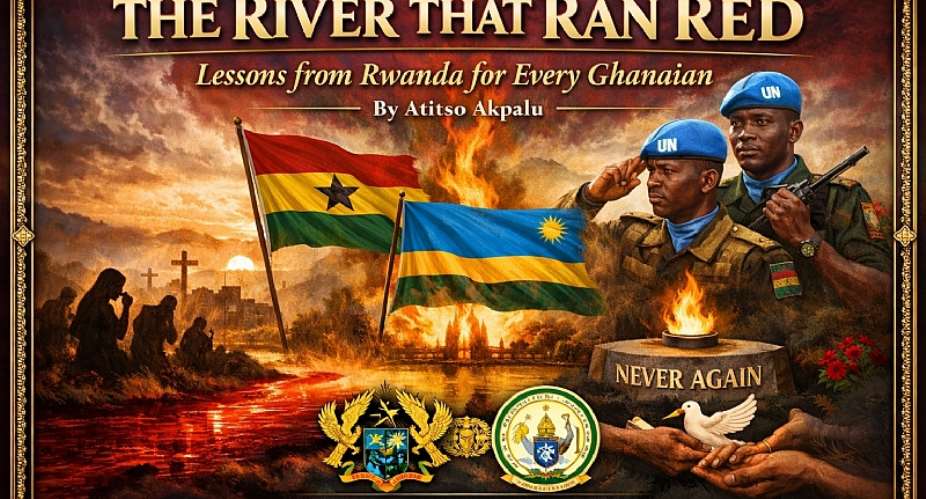
History is a silent river; calm on the surface, yet beneath it flow powerful undercurrents of memory, pain, and unresolved truths. Thirty-two years ago, Rwanda endured a tragedy so swift and systematic that it shook the foundations of our shared humanity. In just 100 days, the land of a thousand hills became a land of a thousand graveyards.
As Ghanaians—a people known for hospitality and peace—we must look into this mirror of history. Peace is not merely the absence of war, but the presence of justice and the rejection of division before it takes root.
The Spark and the Planned Fire
- April 6, 1994: The shooting down of President Juvénal Habyarimana’s plane was the match that lit a forest already soaked in ethnic extremism.
- The Myth of Spontaneity: The genocide was not a sudden eruption of tribal hatred; it was a meticulously planned state operation.
- Weaponized Identity: Colonial-era identity cards turned neighbors into executioners.
- The Media’s Poison: RTLM radio broadcasted “hit lists,” proving that words can kill long before machetes are raised.
The World That Watched (And the Ghana That Stayed)
- International Failure: Despite urgent warnings from UN Commander Roméo Dallaire, the UN Security Council ordered peacekeepers to withdraw as killings intensified.
- The Ghanaian Exception: More than 400 Ghanaian peacekeepers, led by General Henry Anyidoho, refused to abandon Rwanda. With little food or ammunition, they stayed—and saved an estimated 30,000 lives.
Why "Never Again" Must Be More Than a Slogan
- Reject “Us vs. Them”: Guard our national discourse against rhetoric that divides Ghanaians by tribe or origin.
- Accountability: Rwanda’s Gacaca courts remind us that reconciliation requires facing the truth, however painful.
- Vigilance: We must be keepers of our brothers and sisters, ensuring the silent river of history never again overflows with blood.
A Global Legacy: From Kigali to World Leadership
- Redefining Ghana’s Role: The refusal of Ghanaian soldiers to abandon Rwanda redefined our national identity and military doctrine.
- Top-Tier Contributor: As of 2025, Ghana ranks among the top 10 troop-contributing countries worldwide, with 2,600 personnel serving in South Sudan, Lebanon, and beyond.
- Leading in Gender Equality: Ghana exceeds UN targets with over 24% female peacekeepers. In 2024, Squadron Leader Sharon Mwinsote Syme was named UN Military Gender Advocate of the Year.
- Hub for Excellence: The Kofi Annan International Peacekeeping Training Centre (KAIPTC) in Accra now trains peacekeepers globally, sharing the Ghanaian model of principled leadership.
- Monument of Gratitude: Rwanda plans a permanent monument at Burma Camp, Accra—an enduring symbol of Ghana’s commitment to shared humanity.
Rwanda’s story is a scar on Africa’s soul, but its recovery is proof of resilience. Let these words serve as a lighthouse. Let us embrace Ndi Umunyarwanda—the spirit of oneness—and apply it to our own One Ghana. History has spoken; the lesson is clear. The responsibility to ensure “Never Again” rests with us.
A Prayer for the Silent River
Divine Architect of Peace,
- May the souls of the departed find rest in the soil they once tilled.
- May the undercurrents of old hatreds be washed away by tides of forgiveness.
- Keep our tongues from the poison of division and our hands from tools of destruction.
- Let the river of our shared history flow with clear water of truth, never again broken by the cry of the innocent.
Never again. Never again. Never again.
✍️ Retired Senior Citizen
For and on behalf of all Senior Citizens of the Republic of Ghana 🇬🇭
Teshie-Nungua
[email protected]

 'Don't underestimate NPP's comeback power' — Anthony Karbo tells NDC
 NSA sets August 14 deadline for defaulters, private candidates to apply for serv...
 Category A schools to receive GHS250 million infrastructure boost under 2027 GET...
 Bono REGSEC seizes galamsey equipment
 'We remain grateful for the enduring legacies they left behind' — Families of he...
 ‘The street is for Bawumia now’ - Aggrieved Ghanaians join NPP 'Democracy Under ...
 Kwame-Danso Police Station closed after attack on police and judicial staff
 'The impression is simply false' - Kwaku Azar rejects claims Chief Justice handp...
 Franklin Cudjoe appointed to Ghana’s Joint National-United Nations Steering Comm...
 Government holds national inter-faith memorial service to mark one year since Au...

