




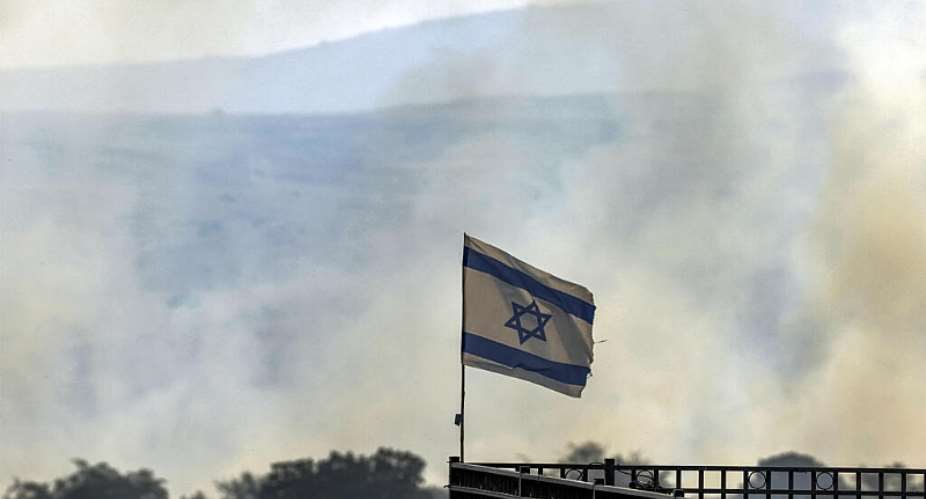
A new Israeli plan to invest $334 million in expanding settlements in the occupied Syrian Golan Heights marks a major escalation in a broader pattern of territorial expansion – on land the United Nations still regards as Syrian.
The five-year project, approved on 17 April, would bring some 3,000 new Israeli families to the territory and expand the Katzrin settlement into what Israeli officials describe as the Golan's “first city” – with housing, infrastructure, public services, university facilities and specialised medical centres.
The move came the same day Syria's new leadership publicly signalled interest in talks over Israeli withdrawal from territory that was occupied beyond the 1974 ceasefire line.
“Israel is violating the 1974 disengagement agreement, and we are working to reach a security agreement that guarantees its withdrawal from the territories it occupied after the fall of the regime and its return to the 1974 lines,” Syrian President Ahmed al-Charaa said.
Israel seized most of the Syrian Golan, around 1,000 square kilometres, during the 1967 war and annexed it in 1981.
Since 7 October, 2023 – when Hamas attacked Israel and triggered the war in Gaza – it has taken control of a further 400 square kilometres of Syrian land.
Turkey warns it could be Israel's 'next enemy' as tensions escalate
Displacement and control
Since the fall of Syrian president Bashar al-Assad in December 2024, Israeli forces have moved into the UN-patrolled buffer zone separating Syrian and Israeli forces under the 1974 disengagement agreement.
Israeli forces have established military positions inside Syria and carried out ground raids and air strikes.
Testimonies gathered by RFI in southern Syria describe deadly shelling, farmland allegedly burned with glyphosate and a growing number of Israeli checkpoints.
Human Rights Watch says residents in newly occupied Syrian villages were forcibly displaced.
Israeli soldiers threatened families with weapons, forced them from their homes without their belongings and bulldozed houses, orchards and gardens, the NGO said.
Israeli society has 'allowed trauma to take over' and 'cares only about revenge'
War crime warning
Several days after the settlement plan was approved, around 40 Israeli activists from the pro-settlement group Bashan Pioneers crossed into Syrian territory, according to Israeli public broadcaster Kan.
The group, which advocates Israeli settlements in southern Syria, posted on X: “Without civilian settlement, the military presence will not hold long-term. We are here until they let our families come live here.”
The Israeli army detained the activists and said it “strongly condemned the incident”.
But the approved plan to expand Katzrin points in the same direction as the settlers' demands: a larger civilian Israeli presence in occupied Syrian territory.
“The Israeli government has just allocated public funds to what would constitute a war crime in Syria,” said Hiba Zayadin, senior Syria researcher at Human Rights Watch.
“A permanent population transfer into Syrian territory would violate international law, and would have serious implications for Syrians displaced for a long time.”
Israeli Prime Minister Benjamin Netanyahu has repeatedly said Israel will not give back the Golan Heights to Syria, declaring in December 2024 that the territory would remain part of Israel “for eternity”.
The United States has been the only country to recognise Israel's annexation of the Golan Heights since 2019.
The European Union and its member states continue to regard it as occupied Syrian territory, under UN Resolution 497.
France denies blocking US flights as Israel cuts defence ties
Beyond the plateau
Elsewhere in the region, Israeli expansion has also intensified.
Israeli Defence Minister Israel Katz said on Tuesday that southern Lebanon was being “treated like Gaza”, while in Gaza itself Israel plans to retain control over around 53 percent of the territory through a permanent buffer zone from which Palestinians will be barred.
In the occupied West Bank, Israel approved 34 new settlements in early April, the largest expansion of its kind to date.
Since the current Israeli government took office in 2022, the number of settlements has risen by 80 percent, from 127 to 229 – in a drive backed by far-right ministers Bezalel Smotrich and Itamar Ben-Gvir, both supporters of annexation.
In mid-April, a European Citizens' Initiative calling for suspension of the EU-Israel association agreement passed 1 million signatures.
Asked in February whether he supported Israeli annexation of the West Bank, US President Donald Trump said: “I'm not going to talk about that.”
Israel's current territory, of around 22,000 square kilometres, is 57 percent larger than the territory of the Jewish state as defined in 1947.
“The Israeli plan of 17 April [in the Golan] is the predictable result when an occupying power is convinced its impunity will persist,” Human Rights Watch said.
The United Nations has repeatedly condemned Israeli settlement expansion as illegal and a major obstacle to lasting peace.
This article has been adapted from the original version in French by Anne Bernas.
 Massive reactions as woman allegedly snatches her daughter’s boyfriend
 Chinese factory gutted by fire in Prampram
 2026 May Day: I will let the economic growth filter down to your pockets – Maha...
 Police kill 2, arrest 4 in Upper East robbery gang bust
 China opens tariff-free trade to nearly all African countries
 UG, KNUST and UCC lecturers to withdraw services over unpaid promotion arrears
 "24-hour economy markets will transform the economy" — Hon Jerry Ameko
 Mahama begins Eastern Region tour with May Day address and key projects
 Free Zones boss alleges political sabotage in Akosombo sub-station fire
 Akosombo substation fire an opportunity to modernise power infrastructure — Maha...


