




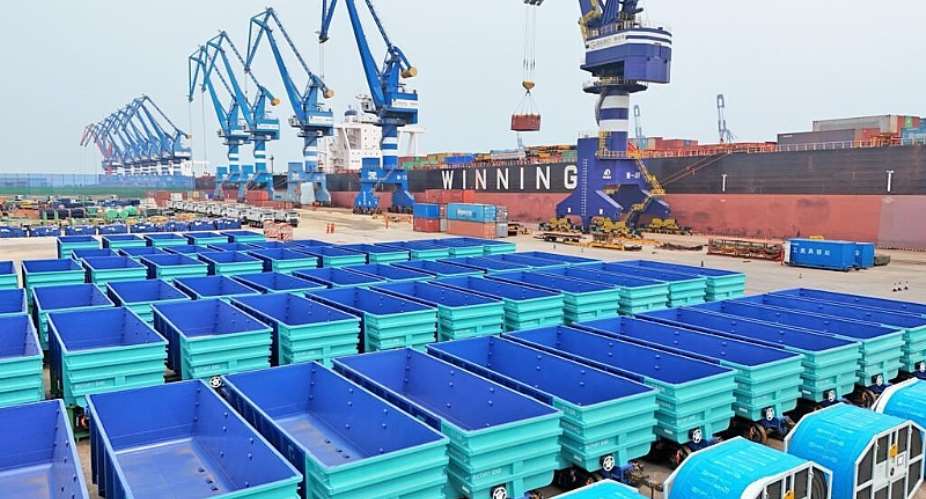
China will extend zero-tariff treatment to all African countries with diplomatic ties from Friday, in what Beijing called a “significant measure” to deepen China-Africa trade and investment ties.
China's State Council tariff commission said earlier this week that the zero-tariff treatment will run until 30 April 2028. The move expands an earlier policy in force since 1 December 2024 by adding 20 African countries to the 33 already covered, bringing the total to 53.
The only condition is that countries must have diplomatic relations with Beijing, leaving Eswatini, which maintains ties with Taiwan, excluded.
China's commerce ministry said the move would help create “development opportunities for African countries” at a time when “unilateralism and protectionism are on the rise”.
How scary is the Chinese Belt and Road Initiative?
Record levels
China-Africa trade reached record levels last year.
China's customs data showed total trade between China and Africa hit about €320.2 billion in 2025, up 17.7 percent year on year, while Africa's trade deficit with China widened to about €93.8 billion.
Chinese exports to Africa rose to about €207.0 billion, while imports from Africa reached about €113.1 billion.
However, the economic impact of Beijing's tariff move is likely to remain limited.
“China already applied zero tariffs to a number of products from which Africa benefited on the same basis as other countries,” said Thierry Pairault, an economist and China specialist at France's social sciences institute Ehess.
“There were preferential tariffs under the WTO and preferential treatment for least developed countries. At least 96 percent of products were already benefiting from zero-customs duties.”
Limited impact
This means the reform affects only a small share of trade. The biggest African exports to China are raw materials that were already low-tax or untaxed.
“For crude oil, it is the same – the gain is nil,” Pairault said, adding that the same was true for minerals.
“This removal of customs duties is fairly limited, since African products going to China were already lightly taxed,” Émilie Laffiteau, a researcher at Iris, a Paris-based international relations think tank.
There may be some limited gains for processed or agricultural goods, but obstacles remain substantial. China has “an emerging chocolate industry that is highly protected”, Pairault said, while “sanitary and administrative barriers” could still block exports.
He estimated the potential gains at “between €92 million and €276 million at most”, far from enough to close Africa's trade deficit with China.
But Beijing's main goal is also to send a message.
“If on one side you have the United States saying I am increasing, and on the other saying I am lowering, it is obvious that China's brand image improves,” Pairault said.
This story has been adapted from the original version in French by Alexis Bedu and edited for clarity
 Massive reactions as woman allegedly snatches her daughter’s boyfriend
 Chinese factory gutted by fire in Prampram
 2026 May Day: I will let the economic growth filter down to your pockets – Maha...
 Police kill 2, arrest 4 in Upper East robbery gang bust
 China opens tariff-free trade to nearly all African countries
 UG, KNUST and UCC lecturers to withdraw services over unpaid promotion arrears
 "24-hour economy markets will transform the economy" — Hon Jerry Ameko
 Mahama begins Eastern Region tour with May Day address and key projects
 Free Zones boss alleges political sabotage in Akosombo sub-station fire
 Akosombo substation fire an opportunity to modernise power infrastructure — Maha...


