




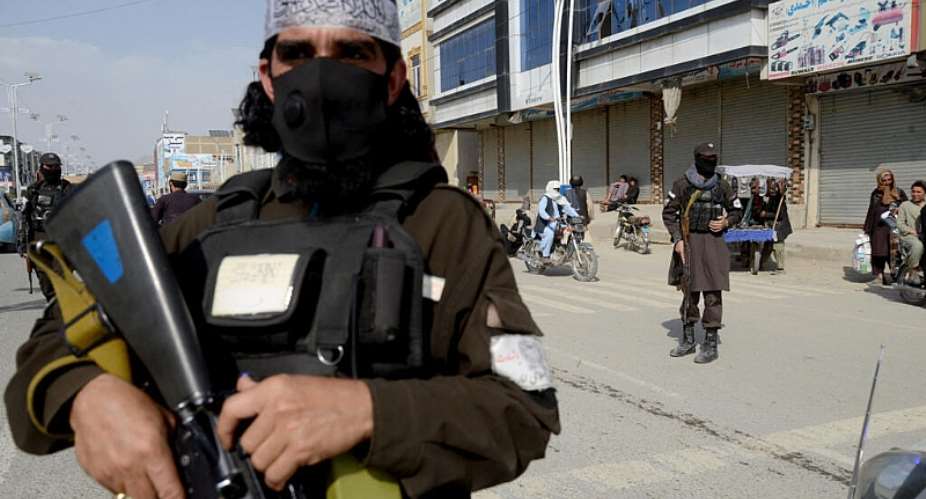
Brussels is bracing for a political storm as European Union officials consider hosting Taliban representatives in the Belgian capital for talks on returning Afghan nationals living in Europe, a move that critics say risks legitimising Afghanistan's hardline regime.
The Belga news agency on 23 April reported a potential visit to Brussels by Taliban officials.
It quoted “European officials” as saying “a mission in Brussels is expected before the summer, after a first technical visit to Kabul in January involving European representatives and Belgium's Immigration Office".
In January, an EU delegation led by Freddy Roosemont, head of Belgium's Immigration Office, travelled to Kabul for three days of talks with officials from Afghanistan's Interior Ministry, Foreign Ministry and intelligence services.
According to The Brussels Times: "Afghan authorities reportedly expressed willingness to assist with identifying their citizens living in Europe without legal stay permits.”
EU confirms 'contact' with Taliban in Afghanistan over migrant returns
'Rise in violent incidents'
The outreach stems from a push by several EU member states to step up deportations of Afghan nationals.
On 16 October, 2025, ministers from 20 EU countries wrote a joint letter to EU Commissioner Magnus Brunner and the bloc's foreign policy chief Kaja Kallas, citing a rise in violent incidents involving Afghan nationals in some countries.
They called for priority to be given to returning individuals deemed a threat to public order or national security.
The letter said that in 2024, 22,870 Afghan nationals were issued return decisions in the EU, but only 435 were returned – a rate of just 2 percent.
It proposed a more centralised approach to returns, potentially involving the EU's border agency Frontex, and suggested a joint mission to Afghanistan to explore returns, in coordination with the European Commission and the EU's diplomatic service.
Critics alarmed
The initiative was spearheaded by Belgian Asylum and Migration Minister Anneleen Van Bossuyt.
She has said that “Afghans who were not granted protection or residence must return whenever possible" – while stressing that any returns must comply with Article 3 of the European Convention on Human Rights, which prohibits torture and inhuman treatment.
She described the planned Brussels meeting as “an important and necessary step” towards a coordinated European approach “without recognising this regime".
Taliban govt says Afghans in Qatar can return 'with full confidence'
However, the prospect of direct engagement with the Taliban has alarmed critics in the European Parliament.
Saskia Bricmont, a Belgian MEP from the Greens/EFA group, told RFI that negotiating what she described as a “readmission agreement” would amount to “a profound violation of asylum law, international law, [and] respect for fundamental rights".
Her colleague Tineke Strik warned that any form of cooperation risks “normalising” the Taliban, who seized power in Afghanistan in 2021 and remain internationally isolated.
The EU does not formally recognise the group, referring to it as "Afghanistan's de facto authorities".
Fifty years of conflict
Human rights organisations have also raised concerns.
Amnesty International has condemned returns to Afghanistan, citing “widespread and systematic” violations against women, girls and dissenting voices. It noted that 2.6 million people were expelled from Iran and Pakistan in 2025 alone, 60 percent of them women and children.
Some EU countries have already carried out deportations independently. Germany, for example, has returned more than 100 people to Afghanistan since 2024, outside any coordinated EU framework.
'All they dream of is leaving': the reality of life for women under the Taliban
The Taliban have not publicly commented on the reported Brussels talks, although spokesperson Zabihullah Mujahid has previously downplayed concerns, claiming conditions in the country have improved for returnees.
Afghans remain one of the largest groups seeking asylum in the EU. According to the UN's refugee agency, the UNHCR, 23.7 million people in Afghanistan – more than half the population – require humanitarian assistance after almost five decades of conflict, while 5.8 million Afghans are displaced globally.
No date has been set for the Brussels meeting.
With newswires, and partially adapted from this article by RFI's French service.
 Massive reactions as woman allegedly snatches her daughter’s boyfriend
 Chinese factory gutted by fire in Prampram
 2026 May Day: I will let the economic growth filter down to your pockets – Maha...
 Police kill 2, arrest 4 in Upper East robbery gang bust
 China opens tariff-free trade to nearly all African countries
 UG, KNUST and UCC lecturers to withdraw services over unpaid promotion arrears
 "24-hour economy markets will transform the economy" — Hon Jerry Ameko
 Mahama begins Eastern Region tour with May Day address and key projects
 Free Zones boss alleges political sabotage in Akosombo sub-station fire
 Akosombo substation fire an opportunity to modernise power infrastructure — Maha...


