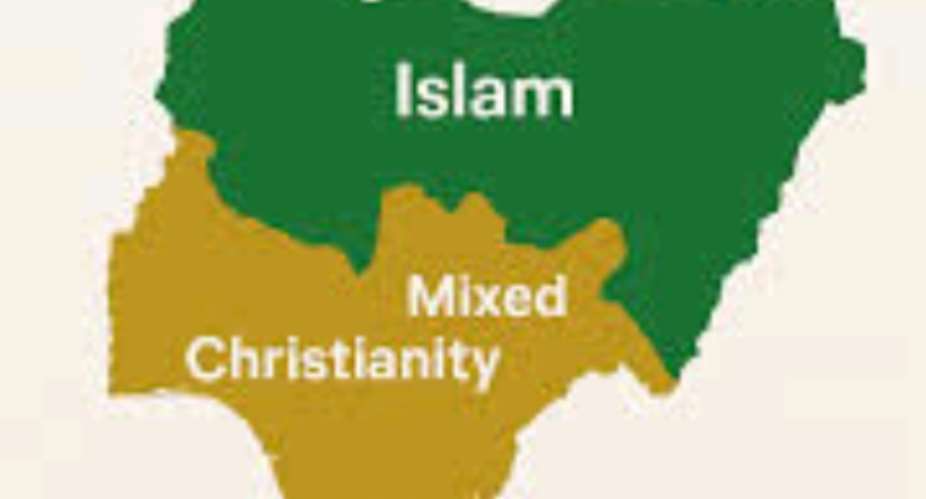
Nigeria’s political history is deeply intertwined with religious identity. Christianity and Islam represented in part by organized structures such as the Christian Association of Nigeria (CAN) and various Muslim networks often loosely grouped under Muslim Associations of Nigeria (MAN) have shaped civic life, public morality, and political mobilization.
Following the transition from military rule in 1999, Nigeria experienced an upsurge in violent conflicts. These crises were widely described as “religious,” yet historical evidence shows the majorities were rooted in ethical, socio-economic, and political tensions, with religion functioning as a symbolic marker rather than the core cause.
This analysis traces the historical evolution of religious actors in Nigeria, clarifies the post-1999 crisis narratives, and explains why the deeper issue was ethical governance rather than religious doctrine.
Religious Identity in Nigeria Before 1999
Pre-colonial and Colonial Roots
Religious communities in Nigeria have long interacted sometimes competitively, often cooperatively. Pre-colonial trade networks between Muslim Hausa states, Yoruba kingdoms, and forest-zone communities created a multi-religious cultural fabric long before the British arrived (Falola, 1998).
Colonial rule intensified religious categorization by introducing Western education through Christian missions while recognizing Muslim authorities in the north. This policy entrenched regional religious identities but also sparked inter-religious negotiations and coexistence (Kukah, 1993).
Post-Independence and Civil War Era
After independence in 1960, religious institutions gradually expanded their participation in national politics. The Christian Association of Nigeria was formed in 1976, partly as a counterweight to the political influence of northern Muslim elites (Kukah, 1993; Ostien, 2007).
Muslim organizations from Jama’atu Nasril Islam (JNI) to local Shura councils likewise developed networks influencing governance and social welfare.
Despite tensions, many conflicts during this era (e.g., the 1967–70 Civil War) were ethnic and political, not religious.
The 1999 Democratic Transition and the Crisis Narrative
- Return to Civil Rule
Nigeria’s return to democracy on 29 May 1999 ended 16 years of continuous military rule. While this transition brought hope, it also opened spaces for suppressed grievances to erupt.
- Why Conflicts Were Labeled Religious
Between 1999 and the mid-2000s, several outbreaks of violence occurred in places like Kaduna, Jos, and parts of the northeast. Media outlets at the time frequently framed these as “Muslim-Christian clashes.”
However, as scholars such as Higazi (2011) and HRW (2001) show, the conflicts were actually triggered by:
Political competition and elections
Indigene settler struggles
Land disputes
Resource allocation tensions
Ethnic rivalries
Corruption and institutional failure
Religion became a powerful identity marker, but not the root cause. - The Shariʿa Debate (1999–2001)
The introduction of Shari’a criminal law in twelve northern states between 1999–2001 intensified national tension. Yet researchers note that the movement was driven more by political legitimacy and public demand for ethical governance, not purely religious ideology (Last, 2008; Kane, 2003).
Citizens expressed frustration at corrupt elites and saw Shariʿa as a moral corrective. Thus again, ethics not theology were at the center.
The Ethical Dimension: Why the Crisis Was Not Truly Religious
Governance Failures
Post-1999 Nigeria suffered from fragile institutions, an unsteady judicial system, and intense corruption. These failures created frustration across religious lines (Smith, 2007). Both Christian and Muslim actors sought moral authority in a context where the state struggled to deliver justice or security.
Manipulation of Identity
Political actors frequently instrumentalized religious identity for:
Electoral advantage
Patronage networks
Mobilization of youth
Legitimating of violence
This manipulation allowed elites to disguise ethically driven conflicts as religious ones.
Social and Economic Inequalities
Resource distribution conflicts especially in the Middle Belt were framed religiously but rooted in indignity laws, unemployment, and land scarcity (Danfulani, 2006). Thus, the crises represented deeper fractures in ethical leadership and equitable distribution.
Religious Actors as Stabilizers: CAN, MAN, and Others
Despite the divisive narratives, religious institutions often played constructive roles:
Interfaith Dialogue
Both CAN and prominent Muslim associations engaged in joint peace committees, especially in Kaduna and Plateau States.
Peacebuilding and Moral Advocacy
They advocated:
Anti-corruption agendas
Reconciliation and forgiveness
Humanitarian aid for displaced persons
Ethical behavior in public office
Religious leaders repeatedly emphasized that violence contradicted their doctrines, underscoring that the crisis was misbranded.
Conclusion: “Together You Stand, Divided You Fall”
The post-1999 era demonstrates how fragile states can misinterpret or weaponries religious identity. Yet the historical evidence is clear:
Conflicts were political, economic, and ethical not theological.
Religion served as a symbol, not a cause.
Weak governance magnified grievances.
Religious actors were often voices of peace, not drivers of violence.
Nigeria’s stability therefore depends on ethical leadership, inter-religious cooperation, and recognition that unity not division is the path to national strength.
Mustapha Bature Sallama
Medical Science communicator.
Private Investigator and Criminal
Investigation and Intelligence Analysis,
International Conflict Management and Peace Building. Alumni Gandhi Global Academy United States Institute of Peace.
[email protected]
+233-555-275-880

 AG withdraws charges against former buffer stock CEO Hanan and wife as EOCO re-a...
 Images and videos of military clearing lands for Accra–Kumasi expressway project
 What should give you satisfaction is that your work has helped saved Ghana from ...
 ECG announces emergency maintenance in Ashanti, Western Regions today
 Police arrest two cocoa purchasing clerks for allegedly short-changing farmers i...
 Korle-Bu doctors strike suspended, OPD services resume Tuesday
 May 5: Cedi sells at GHS12.15 on forex market, drops to GHS11.23 on BoG interban...
 NAiMOS cracks down on multinational galamsey syndicate in Mankraso
 Amin Adam runs to IMF to take action on BoG recapitalisation, gold sales and mon...
 PNDC era second gravest crime against humanity after slavery — Miracles Aboagye