




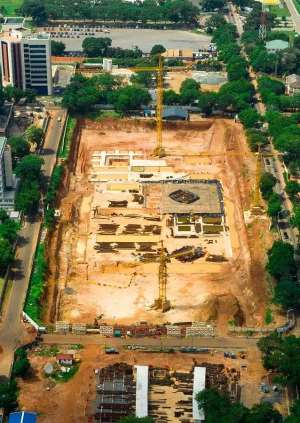
In recent years, some scholars have advanced the thesis of Ghana as a “soft theocracy,” using it to describe the growing force of Christian-Pentecostal nationalism in the country’s politics and public life.
From presidents seeking blessings at crusades to pastors advising governments, and projects like the National Cathedral blurring the line between faith and state, the influence of Pentecostal-Charismatic Christianity on national affairs is unmistakable.
Yet the question remains: Is Ghana really sliding into a theocracy, even a soft one, through the influence of a Christian elite? Or does the everyday pragmatism and pluralism of ordinary Ghanaians tell a more complex story?
What is “Soft Theocracy”?
Theocracy refers to direct rule by a religion, as seen in Iran. Ghana is far from that. But a “soft theocracy” implies that religion, particularly Christianity, shapes the moral and political climate in informal but still powerful ways. The phrase applies most clearly to the rise of Pentecostal and Charismatic churches.
While Ghana has traditionally been a religious country, it is the Pentecostal boom since the 1980s that has significantly reshaped public life. Today, the most powerful pastors, from Mensa Otabil to Dag Heward-Mills, from Eastwood Anaba to the new wave of “prophets”, command huge congregations, media platforms, and direct access to the presidency.
Indeed, since the inception of the Fourth Republic, every president has sought to cultivate Christian legitimacy. John Atta Mills wore his faith openly and controversially banned libation at state functions. John Mahama cultivated church ties, while Nana Akufo-Addo launched the National Cathedral as a supposed “thank you to God.” Pastors frequently advise governments, and national events often open with Christian prayers.
Doctrinal vs. Cultural Christianity
To judge the strength of the “soft theocracy” thesis, we must first distinguish between two kinds of Christianity: doctrinal and cultural.
Doctrinal Christianity entails strict adherence to biblical teachings and the authority of the church. A doctrinal Christian would order every aspect of life, including political choices, social behaviour, and family relations, around scripture. In such a society, pastors would hold enormous sway, because people would follow their directives as binding commands.
Cultural Christianity, by contrast, is about identity and belonging. Many Ghanaians identify as Christian because they were born into church-going families or because Christianity is associated with social respectability. However, they do not always adhere to biblical discipline. Instead, they mix and match religious practices.
A Ghanaian may attend church on Sunday, pour libation at a funeral, and consult a shrine when faced with misfortune. Religious commitment is pragmatic, not doctrinal.
Most Ghanaians are cultural rather than doctrinal Christians. This matters because it means church leaders cannot automatically dictate political behaviour. Their influence is partial, not absolute.
Cultural Christianity and political power
If Ghana were a nation of doctrinal Christians, the “soft theocracy” thesis would be much stronger. In that scenario, voters might treat elections as a religious duty, following clergy endorsements faithfully. But the evidence suggests otherwise.
The clearest example is the backlash against President Akufo-Addo’s National Cathedral. Despite strong support from pastors and government rhetoric framing it as a sacred obligation, ordinary Ghanaians pushed back, saying jobs and food mattered more. Religious symbolism hit a wall when it collided with bread-and-butter concerns.
The Evangelical parallel in the US
A helpful comparison is with Evangelical Christians in the United States. Unlike most Ghanaians, Evangelicals are largely doctrinal. They are bound by strict biblical authority, “born again” identity, and clear moral codes on issues like abortion, same-sex marriage, and education.
Over decades, they have built a disciplined voting bloc that politicians, especially in the Republican Party, cannot ignore. Their steadfast support for Donald Trump, despite his personal flaws, showed the power of doctrinal loyalty when tied to the defence of “Christian values.” Evangelical influence in the US extends beyond political rhetoric to shape legislation, judicial appointments, and party platforms.
In Ghana, Pentecostal-Charismatic leaders aspire to similar authority, but the difference lies in the grassroots. Most Ghanaians are cultural rather than doctrinal Christians. They respect their pastors, but they also navigate between church, mosque, and shrine depending on need. This fluidity makes it harder for religious leaders to command the electorate as a bloc.
In short, Evangelical power in the US is more programmatic and doctrinal, whereas Ghanaian Christianity is more pragmatic and culturally oriented.
If even the United States, with its powerful Evangelical bloc, is not called a soft theocracy, why should Ghana, with its more fluid and cultural Christianity, carry that label?
The resilience of pluralism
Ghana’s pluralism also tempers elite Christian influence. Islam, especially in the north, continues to shape education, politics, and community life. African Traditional Religion, though sidelined at state functions since the Atta Mills era, remains vital in everyday practices such as libation, funerals, and festivals. Ordinary Ghanaians often navigate between these traditions with pragmatism. This lived pluralism ensures that no single religion, not even Christianity, can steamroll society.
Comparisons in Africa
Ghana is not alone in walking this fine line. In Nigeria, Pentecostal pastors and Muslim clerics both wield influence, yet citizens frequently defy them at the polls. In Kenya, presidents campaign from church pulpits, but economic grievances often overshadow clerical endorsements. In Uganda and Zambia, political leaders have wrapped themselves in Christianity, while in Senegal, Islam provides moral legitimacy. Across Africa, religion and politics intermingle, but always in ways mediated by popular pragmatism.
Rethinking the thesis
The “soft theocracy” thesis captures something fundamental: the growing symbolic power of Christian elites in Ghanaian politics. But it risks exaggeration if we take it as the whole story. Ordinary Ghanaians are not doctrinal Christians blindly obeying pastors. They are cultural Christians who live their faith flexibly, mixing traditions and prioritising survival. They may respect their clergy, but when it comes to voting, they often choose independently.
Safeguarding pluralism
Ghana’s democracy is shaped by religion, but not wholly defined by it. Christian elites wield influence, but it is negotiated, not total. The real power still lies with the electorate, and ordinary citizens show again and again that bread-and-butter concerns outweigh elite religious projects.
The deeper question is whether this balance will last. If economic hardship pushes people further into the arms of churches, will Christian elites gain more sway? Or will Ghana’s pluralism continue to provide natural checks?
One thing is clear: Ghana must deliberately safeguard its pluralism. That means recognising Islam and African Traditional Religion as public traditions with a rightful place in national life. Including them in state ceremonies and public discourse would strengthen Ghana’s democracy and prevent any single religious elite from monopolising moral authority.


 Household waste fees could fall to GH¢50 every two weeks under new system — Ayar...
 Tamale: Three missing children found dead inside parked vehicle at Koblimahagu Z...
 Kojo Bamba’s election projects mindset of violence, it’s backward politics – Mus...
 'You can expose corruption without insulting people's humanity' — Agyinasare on ...
 Prof Mike Ocquaye backs Kojo Bamba’s Vice Chair election, cites need to protect ...
 I was not part of any negotiation to swap NPP vice chair positions with Bamba – ...
 NPP is not putting ‘old wine in new bottles’ – Ibrahim Adjei on new executives
 John Boadu comes nowhere near Asiedu Nketiah in terms of pedigree, gravitas, val...
 Gov’t renames 24-hour economy markets as District Economy Markets, targets 100% ...
 BoG, Police arrest 7 in Accra over alleged use of cedi notes for money bouquets,...


