




‘ The restitution of those cultural objects which our museums and collections, directly or indirectly, possess thanks to the colonial system and are now being demanded, must also not be postponed with cheap arguments and tricks.’ — Gert v. Paczensky and Herbert Ganslmayr, Nofretete will nach Hause,1984.
The French Minister of Culture, Rachida Dati, presented a legislative text on 30 July to the French Cabinet. This bill intends to facilitate the restitution of artefacts in French museums by derogating from the principle of inalienability. (1) As readers know, this principle requires that for every restitution, there has to be a legislative authorization, derogating from the principle of inalienability. This was done in restitution of twenty-six artefacts to the Benin Republic, and a sword to Senegal. (2) More recently, Djidji Ayôkwé, the talking drum, was restituted to Côte d'Ivoire by a specific law derogating from this principle. (3)
The bill concerns cultural objects reclaimed by States because of illegal acquisition between 1815 and 1972, acquired through stealing, looting or gifts made under constraint or with violence or by a person who had no authority to dispose of them. Although the text would apply as a matter of priority to African States, its application would be universal. It would apply to States in Asia, Latin America and elsewhere that make the demand for the restitution of an artefact acquired by violence or constraint.
This new bill would continue the implementation of the promise made by President Emmanuel Macron in his famous speech at Ouagadougou on 28 November 2017. The new bill, which will go to the Senate on 24 September for a vote, would allow restitution without the need for a specific legislative act. Instead of a legislative act for every restitution, it is proposed that a decree from the Conseil d’État and documented evidence of the illicit acquisition would be enough. If necessary, a bilateral commission consisting of French experts, historians, and experts from the demanding State will be associated with the process.
The limitation period stated by the bill is 1815, when the first European restitution rules were made after the Napoleonic confiscations and 1972, when the 1970 Convention on the Means of Prohibiting and Preventing the Illicit Import, Export and Transfer of Ownership of Cultural Property entered into force.
The present restitution bill is a second attempt by the government, following a previous bill rejected by the Conseil d’État because the reason advanced for seeking a general exception to the rule against the principle of inalienability, namely the cultural relations with former colonies, was judged insufficient for such an exemption to a rule established to protect State property and collections. (4)
Following the recommendations of the Sanchez Report, France adopted in 2023 a law facilitating restitution of property confiscated by the Nazis between 1933 and 1945, the Law of 22 July 2023 and a second law concerning human remains in public collections. After criticisms, the government withdrew the third proposed law on restitution of colonial acquisitions. However, the need for a new general loi-cadre was emphasized during the parliamentary approval of the restitution of the Djidji Ayôkwé (5)
The new draft law would create a derogation to the principle of inalienability from public collections foreseen by an article of the code of patrimony, ArticleL. 451-5 du code du patrimoine.
The draft bill provides for a direct insertion of a new exception to the principle of inalienability for objects illegally appropriated between 1815 and 1972 through theft, looting, gifts secured through constraint or violence or by a person without the right to dispose of the object. Only States whose present territory constitutes the origin of artefacts could be claimants and recipients of such artefacts.
The draft law sets time limits for restitution under the new law, namely 10 June 1815-date of the Final Act of the Vienna Congress and 23 April 1972, the date of entry into force of the 1970 UNESCO Convention on Illicit, Importation, exportation, and transfer of cultural property which will be applicable independent of the date of ratification of the Convention by the State concerned. France ratified the Convention in 1997.
The date of 1815 was chosen not for the reason advanced by the text, that it was the beginning of attempts at elaboration of rules on restitution, but because by 1815, the Napoleonic confiscations, which the Vienna Congress sought to reverse, had been completed. Any seizure before 1815 would not qualify for restitution under the proposed law. There are arguments that International Law had by 1815 sufficient rules prohibiting the seizure of enemy cultural property during wars. This historical context is crucial to understanding the limitations of the proposed law.
Under the proposed law, as emphasized by the Conseil d’État, a demand for restitution is only possible from a State whose present territory the artefacts originated in. Restitution cannot be made in favour of other persons or groups who wish to prevail as legitimate proprietors. What does this mean for ethnic groups, chiefs, the Oba of Benin, or the Asantehene? France will not need to apologize or compensate the successors of those who lost properties under French colonial rule. Europeans thus escape confrontation with descendants of the expropriated and deprived African peoples or their representatives.
A severe limitation in the proposed draft law is the exclusion of particular objects from the application of the new law, namely, 'archaeological objects that result from the sharing of excavations or the exchange of objects for scientific study. Also excluded are objects seized by military forces which, by their nature, their destiny or use, have contributed to military activities and so must be considered as military goods.' (6)
Donations by third parties are also excluded from restitution unless the donors consent expressly to the donations being made subject to restitution. Thus, many donations of objects made to museums by third parties, even if they had been looted or stolen, are inalienable once they enter the state property category. The new law that provides a general exception for cultural objects from the prohibition of inalienability excludes donations unless the donor agrees. The French legislator is ready to protect the rights of donors against the rights of Africans who have been robbed. Would Gou be considered as a donation made by French colonel, Eugene Fonssagrives, who brought the sculpture to the Musée de l'Ethnographie du Trocadéro in 1894, alleging it had been abandoned, after the defeat of the Dahomeyan army by French troops?
The new law requires that the demanding State present serious and precise evidence that the object was taken between 10 June 1815 and 23 April 1972 through stealing, with violence or donated by someone without authority to do so. The claimant State must also prove that the object is not the subject of a previous agreement with France before the new law. Thus, the three Nok sculptures in the Pavillon des Sessions that are there through a post facto consent by Nigeria after France had purchased the illegally exported objects do not come under the new law. If two States reclaim the same object, the two States must determine which one will claim the object from France.
The Ministry of Culture will examine demands for restitution. A scientific commission shall be established in consultation with the demanding State if necessary. A decision on demand is issued by a decree of the Conseil d’État, which will also set rules concerning time limits and conditions for applying this new law, as well as the joint scientific commission.
This recent attempt by the French government to create a general exception to the rule of inalienability has been generally welcomed in the hope and belief that it will facilitate the restitution of looted artefacts. We also share this hope, but we must warn that it will not likely lead to a rush of restitutions from France. Excluding archaeological materials, military materials, and public records eliminates many objects. Archaeological finds from Egypt, Mali, and other African countries, such as those on the ICOM Red Lists, would be excluded. (7)
Another severe limitation is that only States can request restitution. Thus, nations and peoples like the Asante, Kingdom of Benin(Nigeria) or the Fon, Yoruba, and Igbo could not apply directly to the French government for restitution of looted artefacts. Could the State pass on restituted objects to ethnic groups or nations without being accused of a breach of promise, as happened in Nigeria when the late President Buhari reiterated by decree the rights of the Oba of Benin in the Benin artefacts looted from his palace in 1897? Ironically, the African cultural objects that the new law deals with have all been created within entities that do not correspond to the modern States. What does this imply for the future development of African culture?
One can see the advantages for France and other Western States for not dealing directly with the representatives of the peoples they massacred and violated with unspeakable violence. They would not need to apologize and ask pardon for their heinous crimes and pay compensation for their wanton destruction.
The explanatory note, Étude d'impact, attached to the French Government's proposal (attached here in annexe I below), reveals the intentions and plans of the French Government. The note declares that by the procedures in the bill, an investigation will be made, especially for those general requests that need to be more specific before being studied on their merits and forwarded to the Conseil d’État. Due to the time spent on research and consultations after the French government has received demands, referrals to the Conseil d’État to verify the compliance of the demand with the requirements of the law, which will include the objects to be returned, country by country, will be limited in number each year.
So, the proposers of the new law do not envisage any rapid consideration of the demands for restitution and are relying on the delay that provenance research will cause. The French have thus adopted provenance research as a delaying mechanism. Readers will recall that until relatively recently, only the Germans attached importance to provenance research because they miraculously and allegedly did not have information about the many colonial items that Felix von Luschan and colleagues, excellent and productive scholars, left in German museums.
The Sarr-Savoy report had categorically stated that there was no need for research on most of the looted artefacts in the Musée du Quai Branly and recommended:
'Restitution in a swift and thorough manner without any supplementary research regarding their provenance or origins, of any objects taken by force or presumed to be acquired through inequitable conditions:
a. through military aggressions (spoils, trophies), whether these pieces went on directly to France or whether they passed through the international art market before then finding their way to being integrated into collections.
b. by way of military personnel or active administrators on the continent during the colonial period (1885-1960) or by their descendants.
c. through scientific expeditions prior to 1960.
d. Certain museums continue to house pieces of African origin that were initially loaned out to them by African institutions for exhibits or campaigns of restoration but were never given back. These objects should be swiftly returned to their institutions of origin.' (8)
The new proposed law has adopted the recommendations of the Jean Luc Sanchez report, which we have described as a pre-announced burial of looted African artefacts in France. (9)
General and non-precise requests will also cause delays. Rachida Dati stated that Ethiopia has requested the restitution of all looted artefacts from Ethiopia, but the claimant State has been asked to be more precise. This is interesting. Do the French not know what was stolen from Ethiopia by the Mission Dakar Djibouti? Those who stole our artefacts and have kept them for a century now ask us for details and precision, while they still keep the archives and records of the period.
Who can better tell which artefacts in French museums came from the Mission Dakar-Dibouti intervention or other robbery? How would Ethiopians know where their looted artefacts are in France, where they are denied a visa for visits? As we have often stated, the African peoples and States do not know precisely where in Europe our looted objects are.
Western Governments and museums should finally stop playing the shameful game of ignorance and innocence when it comes to restitution of looted artefacts. Pleading ignorance about African or other artefacts after you have kept them for a hundred years does not look edifying. How would a judge react if a thief of jewels, ordered to return the jewels he stole from a specific place on a particular day, were to request more details or specifications before he could return the objects? What is the use of the various exhibition catalogues and books produced by Western museums and scholars? Do they not help us at least to identify the looted objects that are exhibited? Musée du Quai Branly- Jacques Chirac has published excellent catalogues and books on African art. (10).
Before the French created the Musée du Quai Branly in 2006, the objects that were transferred later to the new museum from Musée de l'Homme and Musée des Arts Africains et Océaniens had been classified.Even if Ethiopia presents a demand in general terms, why can the French not restitute those objects that they can immediately determine came from Ethiopia? Michel Leiris, Afrique Fantôme (Edition Gallimard, 1934 ), furnishes enough information on the looting during the Dakar-Djibouti Mission. The loot of three thousand objects from the notorious expedition had always been identified. Claire Bosc-Tiessé and Anais Wion offer in their well-known book, Peintures sacrées d’Éthiopie, Collection de la Mission Dakar-Djibouti (2005), detailed information on the loot of religious objects in Ethiopia by the notorious mission.
The use of the excuse of provenance research to delay restitution must also be rejected.
There have been many restitutions without any specific provenance research. There was no particular research before France returned twenty-six artefacts to the Republic of Benin and a sword to Senegal because there was already enough information on the provenance of those objects, as well as the remaining looted objects in France, at least in the Musée du Quai Branly-Jacques Chirac.
The limitation of the new law to the period of 1815 to 1972 excludes cases relating to events outside this period, i.e. before 1815 or after 1972. We note that the Conseil d'Etat chose the date the UNESCO Convention entered into force, not 7 April 1999, when France ratified the Convention and became applicable to France. There were several lootings of artefacts from 1973 to the present,2025. Cases based on periods outside the stipulated period would have to be pursued through civil action and not as restitution cases. The new law thus excludes several decades of history. From its purview.
For example, the Afghan Soviet war from 1979 to 1998 permitted several artefacts to be smuggled to Pakistan and sold on the free market. The Gulf War in 1991, Iraq encouraged looting. The war in Bosnia and Herzegovina in 1992-1996 caused the looting of Orthodox, Catholic and Islamic artefacts. Genocide and the looting of artefacts occurred in 1994 in Rwanda. There was looting of artefacts in the Democratic Republic of Congo from 1997 to 2003. 2001 saw the looting of the Kabul Museum under the Taliban. There was the looting of 15,000 artefacts from the Iraq National Museum in 2003, and in 2012, the conflict in Timbuktu entailed the looting of ancient manuscripts.
One statement that is worrying is the declaration by the Conseil d’État that no norm of international law obliged France to restitute looted objects:
'The Council of State found that no norm of international law binding on domestic law was applicable to the project concerned. The Council can only reiterate this observation.' (11) This seems to suggest that France has no international law obligation to restitute looted cultural artefacts. The Conseil d’État also refers to its opinion relating to previous restitution to Benin and Senegal. Restitution, then, is entirely dependent on the goodwill of France. The various United Nations resolutions urging restitution of colonial property are discounted, as well as the Declaration of the Rights of Indigenous Peoples, which provides in its article 11 as follows:
Article 11
1. Indigenous peoples can practise and revitalize their cultural traditions and customs. This includes the right to maintain, protect and develop the past, present and future manifestations of their cultures, such as archaeological and historical sites, artefacts, designs, ceremonies, technologies and visual and performing arts and literature.
11 2. States shall provide redress through effective mechanisms, which may include restitution, developed in conjunction with indigenous peoples, with respect to their cultural, intellectual, religious and spiritual property taken without their free, prior and informed consent or in violation of their laws, traditions and customs. (12)
The new proposals on restitution contain the usual paternalism and condescension. Demanding States appear as if begging for aid from France for what they would otherwise not be entitled to. An uninformed person might not realize that they are seeking the return of their artefacts that France had illegally seized with violence and kept for over a hundred years. The request for restitution will be examined and approved or disapproved as one would examine students' work. Those who have stolen our artefacts now sit in judgment over our demands for restitution and determine under which conditions we may recover our stolen properties and even use them. They even decide who may make the request for restitution and exclude the original owners, people and communities, in favour of the States the colonialists left us in Africa. They even tell us we must publicly display objects some of which initially may not have been made for public view. Is this not a total victory of Western colonialism over Africa?
Have the African governments done enough to remind the French government of the pending restitution issues? We note, for instance, that since the Sarr-Savoy published in 2018, indicating, country by country, the number of African objects in the Musée du Quai-Branly Jacques-Chirac, very few countries have submitted requests for restitution. (13) Is this complaisance or complicity? We know from Annexe I below that the following African states have asked France to restitute artefacts: Algeria, Benin, Côte d'Ivoire, Ethiopia, Madagascar, Mali, Senegal and Chad. What about the rest of the African countries listed in the Sarr-Savoy report? They are all undoubtedly aware of this report.
We were surprised to read that only twenty-five objects, plus Djidji Ayôkwé, had been requested by Côte d'Ivoire and not 148 objects as had been widely reported in the press. (14) Was the list of 148 submitted or not? Probably, the French rejected the original list of 148 that the Ivorian experts had carefully selected. A significant difference exists between a list of 148 items and a list of 1 plus 25. This amounts to a total rejection. If we send someone with a list of 148 items to be collected from a depot and he comes back with only one item and a promise of a list of twenty-five items, we will surely raise questions. Should the Ivoirian authorities not inform the public of such a change? Or was this one of the usual humiliations that African authorities hide from their public? It reminds us of Nigeria's arrangements with German authorities about the Benin artefacts. Both sides agreed to a transfer of legal rights in 1130 of the Benin artefacts to Nigeria. Twenty-two were physically returned to Nigeria. The agreement further provided two annexes. Annexe I lists the artefacts to be loaned to Germany. Annexe II lists the artefacts to be returned to Nigeria, but would, for a while, remain in Germany until Nigeria is ready to collect them. Neither annexe has been made available to the public. Should the Nigerian government, represented by the National Commission on Museums and Monuments(NCMM), not inform the public and scholars about this?
Recent restitutions from Western States and museums have demonstrated beyond all reasonable doubt that the West is not willing and ready to return our treasures looted with violence during the colonial period. All sorts of ridiculous excuses are advanced for not returning treasures the West stole from African colonies. The Dutch have restituted Benin bronzes to Nigeria. We do not hear about other African treasures in Dutch museums. Germans have done well in returning legal rights in 1300 Benin bronzes, but actual physical transfers of Benin objects do not exceed twenty-two. Germans have not returned many Cameroonian artefacts; forty thousand, they looted. But who cares about the mathematics of restitution? As for the British Museum and the British government, they do not even want to discuss restitution. British Museum has not returned a single one of the 1000 Benin bronzes it holds.They do not wish to follow Britain's sister imperialist, France, which returned twenty-six artefacts to Benin. But what about the other five thousand objects the Republic of Benin requested, including the statue of the god Gou? The expectations raised by the famous Ouagadougou Declaration of French President Emmanuel Macron in 2017 are far from being fulfilled.
But will African States and peoples draw the obvious lessons and conclusions from all this? Have the approaches adopted till now generally failed, and should we rethink and reconsider our approaches?
We may congratulate President Emmanuel Macron on his efforts to bring about restitution. However, this comes after more than one hundred years of colonialism and after decades of unsustainable arguments by the West, resisting restitution and the need for reparative justice. Macron has admitted the heinous nature of colonial crimes, which he described as 'crimes against humanity.' (15)
The horrific nature of colonial crimes are such that when descendants of the original perpetrators do not accept historical responsibility, they shudder at the thought of accepting fully the consequential implications; they may deplore the inhumane acts, but none has been willing to apologize fully and accept to make payment for the loss of lives and properties involved in their invasions and massacres on our continent. Their wanton destruction in places like Benin City and Kumase is often silently passed over.
The new French bill, which the French Senate will vote on 24 September, will certainly hasten and facilitate the restitution of looted artefacts. Still, the period limits of the law and the exclusion of archaeological materials, military objects, public archives, and donations to public institutions will seriously reduce the number of restitutions per year, as the French government indicated in its Impact study to the Conseil d’État. The Conseil d’État emerges as the most decisive institution in the restitution process in France.
Previously, it was alleged that the rule of inalienability was the main obstacle to restitution of looted artefacts, now, it will be the Conseil d’État that prevents restitution. Legal sophistication should not be allowed to pass for justice and to replace morality.
The new law, more inspired by the Jean-Luc Sanchez report than the Sarr-Savoy report, has the underlying motto: keep pretending you have no knowledge about items and insist on further precision but don’t let any object leave France.
There is no ground for optimistic expectations for restitutions but rather reasons for continued and intensified pressure on France to return the artefacts she stole from her colonies more than a hundred years ago. French laws are made to protect French interests but are we Africans bound by a French law which manifestly turns stolen goods into protected property and mocks legitimate owners? Donors of looted artefacts to museums can prevent restitution of the objects if they do not agree with the proposal to restitute even though the objects have long ceased to be private properties and are protected by the rule against inalienability. France shows here clearly her contempt for her former colonial subjects.
As French senator Pierre OUZOULIAS stated, ’France has not yet finished its process of coming to terms with its colonial past. ’That's one of the challenges of restitution". Indeed, France like other former colonial powers, is far from being ready to relinquish the privileges and advantages of having power and influence over areas and peoples in Africa with enormous resources.
‘Colonisation is part of French history (...). It is part of this past that we must face up to and also apologize to those against whom we committed these acts.
Emmanuel Macron.’ (16)
‘For centuries, Europeans dominated the African continent. The white man arrogated to himself the right to rule and to be obeyed by the non-white; his mission, he claimed, was to "civilize" Africa. Under this cloak, the Europeans robbed the continent of vast riches and inflicted unimaginable suffering on the African people.’
Kwame Nkrumah. (17)
NOTES
1.https://www.france24.com/fr/france/20250730-restitutions-objets-coloniaux-france-projet-loi-patrimoine
Projet de loi relatif à la restitution de biens culturels provenant d’États qui, du fait d’une appropriation illicite, en ont été privés (MICB2517755L)
https://www.legifrance.gouv.fr/dossierlegislatif/JORFDOLE000052008327/
2. K. Opoku, Restitution Day 2024: Remembrance and Reckoning
https://www.modernghana.com/news/1355754/restitution-day-2024-remembrance-and-reckoning.html
3. K. Opoku, France Returns Djidji Ayôkwé to Côte d’Ivoire. Will Britain Return The Pokomo Drum To Kenya? https://www.modernghana.com/news/1420912/france-returns-djidji-aykw-to-cte-divoire.html
4. K. Opoku, Do French Museums Still Need To Study Looted African Treasures?
https://www.modernghana.com/news/1315012/do-french-museums-still-need-to-study-looted-afric.html
La Croix, Marianne Meunier, Restitutions d’œuvres d’art : le projet de loi à nouveau reporté https://www.la-croix.com/culture/restitutions-d-ouvres-dart-le-projet-de-loi-a-nouveau-reporte-20240402
5. K. Opoku, France Returns Djidji Ayôkwé to Côte d’Ivoire. Will Britain Return The Pokomo Drum To Kenya? https://www.modernghana.com/news/1420912/france-returns-djidji-aykw-to-cte-divoire.html
6. . Even James Cuno, a leading opponent of restitution, seems to recognise the unfair nature of the partage system. James Cuno, Who Owns Antiquity? Princeton University Press, Princeton and Oxford, 2008.p.14.
“The history of archaeology in Iraq has always been closely linked to the cultural and political ambitions of its governing authorities. During the late Ottoman period, Iraqi archaeology was dominated by teams of Europeans and North American excavators working on pre-Islamic sites at Babylon, Khorsabad, and Nippur. They had been drawn to the area intent on confirming the historical existence of Biblical events and places and with the view that the ancient history of what they called Mesopotamia was in fact part of the West’s subsequent Graeco-Roman and Judeo-Christian history. The term Mesopotamia itself was a classical Greek term used by Westerners to mark the lands known locally since the advent of Islam as al-’Iraq in the north and al-Jazira in the south. Its use by Orientalists has been interpreted politically as a “reconstructive act severing ‘Mesopotamia’ from any geographical terrain in order to weave it into the Western historical narrative”: Mesopotamia as a pre-Islamic source for Western culture; Iraq as an Islamic, geographically determined – and thus limited – construction.
Under the British Mandate, from 1921 to 1932, archaeology in Iraq was dominated by British teams – including the British Museum working with the University of Pennsylvania at Ur, the fabled home not only of Sumerian kings but also the Biblical Abraham – regulated by British authorities. The Oxford-educated, English woman Gertrude Bell, who had worked for the British Intelligence in the Arab Bureau in Cairo, was appointed honorary Director of Antiquities in Iraq by the British-installed King Faysal in 1922. A most able administrator, having served as the Oriental secretary to the High Commission in Iraq after the war, Bell was responsible for approving applications for archaeologists, and thus for determining where in Iraq excavators would work. She was also a major force behind the wording and passage of the 1924 law regulating excavations in Iraq, a result of which was the founding of the Iraq Museum and the legitimization of partage’.
7. ICOM Red Lists, https://icom.museum/en/ressource/red-list-of-west-african-cultural-objects-at-risk/
https://icom.museum/en/red-lists/
8.https://web.archive.org/web/20190328181703/http://restitutionreport2018.com/sarr_savoy_en.pdf p.61
K. Opoku, Do French Museums Still Need To Study Looted African Treasures?
https://www.modernghana.com/news/1315012/do-french-museums-still-need-to-study-looted-afric.html
9. Patrimoine partagé : universalité, restitutions et circulation des œuvres d’art,
ttps://www.modernghana.com/news/1230672/does-the-martinez-report-constitute-a-pre-announce.html
10. Catalogues of exhibitions and other publications are mostly published by the museum and are easily available at the museum’s bookshop. Examples of such publications are : Dogon, Statues, Les maîtres du Désordre, D’un regard à l’autre, Nigeria, L’invention des arts primitifs, Musée du Quai Branly -La Collection
13. K. Opoku, France Returns Djidji Ayôkwé To Côte d’Ivoire. Will Britain Return The Pokomo Drum To Kenya? https://www.modernghana.com/news/1420912/france-returns-djidji-aykw-to-cte-divoire.html
https://www.revueakofena.com/wp-content/uploads/2024/06/11-J12v06-33-Ernest-KPAN_119-128.pdf
Art Daily, Ivory Coast calls on France to return 148 artworks
https://artdaily.cc/news/110039/Ivory-Coast-calls-on-France-to-return-148-artworks
Le Journal des Arts, La Côte d’Ivoire réclame à la France 148 œuvres
https://www.lejournaldesarts.fr/actualites/la-cote-divoire-reclame-la-france-148-oeuvres-142314
15. Le Monde, En Algérie, Macron qualifie la colonisation de « crime contre l’humanité », tollé à droite https://www.lemonde.fr/election-presidentielle-2017/article/2017/02/15/macron-qualifie-la-colonisation-de-crime-contre-l-humanite-tolle-a-droite-et-au-front-national_5080331_4854003.html
https://www.bbc.com/news/articles/cly39dd36epo
16. ‘La colonisation fait partie de l’histoire française (…). Ça fait partie de ce passé que nous devons regarder en face en présentant aussi nos excuses à l’égard de celles et ceux envers lesquels nous avons commis ces gestes’ https://www.lemonde.fr/election-presidentielle-2017/article/2017/02/15/macron-qualifie-la-colonisation-de-crime-contre-l-humanite-tolle-a-droite-et-au-front-national_5080331_4854003.html
17. The Autobiography of Kwame Nkrumah (1957), p. x.
ANNEX I
Requests for restitution received by France (some of which may be regulated by law subject to the adequacy of its provisions and the results of the examination of the files) Appropriations occurring between 10 June 1815 and 23 April 1972 falling within the provisions of Article 1 Situations of illicit origin (theft, looting, illegal export) since 24 April 1972 falling within the provisions of Article 2 https://www.legifrance.gouv.fr/contenu/Media/files/autour-de-la-loi/legislatif-et-reglementaire/etudes-d-impact-des-lois/ei_art_39_2025/ei_micb2517755l_cm_30.07.2025.pdf
| Country | Objects concerned | Museum/Venue | Date of application | Legal status | Remarks |
| Algeria | Object and personal effects of Emir Abd El Kader, burnous, cannon The Consular/Baba Merzoug | Musée de l'Armée, commemorative column in Brest | 2021 (burnous), 2022 (canon) | Restitution requested | |
| Benin | Fa calendar, statue of the god Gou, two objects of the Amazons | MQB-JC | Follow-up to initial applications | ||
| Côte d’Ivoire | Talking drum Djidji Ayokwe des Ebriés, 25 other items | MQB-JC | 2019 | Restitution effected, law adopted and promulgated on July 16, 2025 | Material handover to be arranged within one year |
| Ethiopia | Not specified | 2019 | General request | Needs to be specified | |
| Italy | 7 archaeological objects | Louvre | 2018, 2022 | Probably looted, restitution possible if evidence is provided | Acquired between 1982 and 1998 |
| Nepal | 2 Nepalese sculptures | Guimet | For several years | Request to the museum | Acquired in 1985 and 1986 |
| Country | Object(s) | Museum/Institution | Date of application | Status/Remarks |
| Kazakhstan | Candlestick element made in the fourteenth century to order from Emperor Tamerlane | Louvre | 2020 | 2020 Application |
| Madagascar | Decorative element in the form of a crown of the canopy of Queen Ranavalona III (+ other Malagasy property) | Musée de l'Armée | 2020 | Deposit pending restitution since 2020, upcoming meeting of the joint committee |
| Mali/Senegal | Objects from the Ségou Treasure, taken in 1890 | MQB-JC, musée de l’Armée, muséum du Havre, BnF | Senegal: 2019, Mali: 2022 | Included in the 2019 Senegal and Mali 2022 request |
| Mali | Objects from the Dakar-Djibouti ethnographic mission of 1931 | MQB-JC, other museums? | 2022 | 2022 Application |
| Poland | Dutch painting by Van Goyen that disappeared from the Wroclaw Museum during the Second World War, acquired by bequest in 1997 | Louvre | 2021 | 2021 Application, Documented |
| Chad | Not specified | Not specified | 2019 | Generalist request that needs to be specified |
After an investigation in accordance with the procedures provided for in the bill, these requests will give rise, in whole or in part, in particular for very general requests that need to be clarified and more targeted before being studied on the merits, to a response from the State. In view of this time spent on research and prior consultation after receipt of requests, referrals to the Council of State, in order to verify the compliance of the file with the requirements of the law, will include as far as possible the objects to be returned country by country and should therefore be limited in number each year.
(French original) ‘Après une instruction selon les modalités prévues par le projet de loi, ces demandes donneront lieu, complètement ou partiellement, notamment pour celles très généralistes qui demandent à être précisées et davantage ciblées avant d’être étudiées au fond, à une réponse de l’État. Compte tenu de ce temps de travail de recherche et de concertation préalables après réception des demandes, les saisines du Conseil d’État, pour vérifier la conformité du dossier avec les prescriptions de la loi, regrouperont dans la mesure du possible les objets appelés à être restitués pays par pays et devraient donc être en nombre limité chaque année’.
https://www.legifrance.gouv.fr/contenu/Media/files/autour-de-la-loi/legislatif-et-reglementaire/etudes-d-impact-des-lois/ei_art_39_2025/ei_micb2517755l_cm_30.07.2025.pdf
IMAGES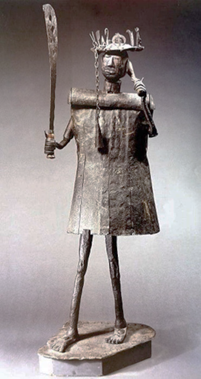
Will the new French law on restitution bring him back to Republic of Benin or will he continue imprisoned in the Pavillon des Sessions, Paris, France? Will the new law prevail over the notion of mutation of African artefacts in France? Can Looted African Art Remain in France Because Of Alleged ‘mutation’? Will Gou be considered a donation excluded from restitution under the new law?
https://www.modernghana.com/news/1404322/can-looted-african-art-remain-in-france-because.html
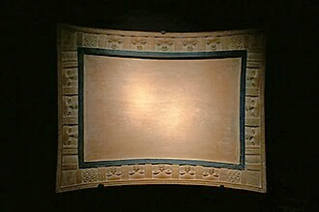
Divination plate of Guédégbé ,Fon, Republic of Benin. President Talon has requested the restitution of this plate which is of great significance for the history of Benin. Guédégbé was the chief diviner of the Dahomeyan King Behanzin.
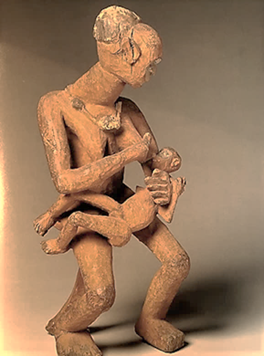
Kwakye. Mother and Child, Bamileke, Cameroon, now in Musée du Quai Branly-Jacques Chirac, Paris, France.
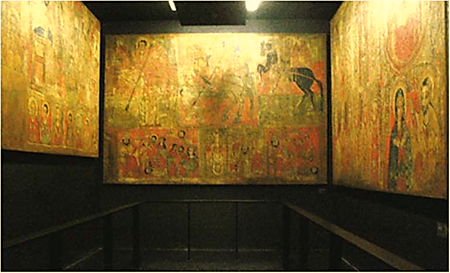
Canvas paintings from the Church of Abbas Antonios, Gondar, Ethiopia, now in Musée du Quai Branly -Jacques Chirac ,Paris, France.
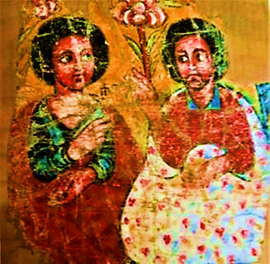
Adam and Eve, from the Church at Däbrä Giyoris, Metcha region, Ethiopia, acquired by the Dakar-Djibouti Mission at Gondar in 1932,now in Musée du Quai Branly-Jacques Chirac, France.
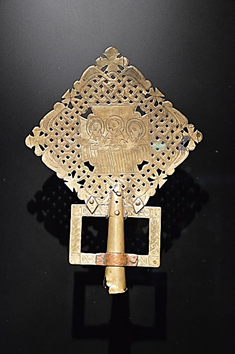
Processional cross ,Ethiopia, Amara, Shewa Region, now in Musee du Quai Branly-Jacques Chirac Paris, France.
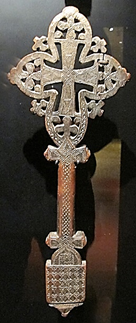
Processional cross, Ethiopia, now in Musee du Quai Branly-Jacques Chirac ,Paris, France.
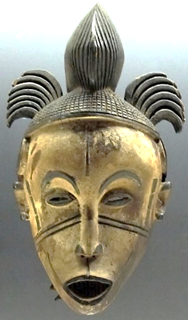
Igbo/Idoma mask, Nigeria, now in Musée du Quai Branly, Jacques Chirac, Paris, France.
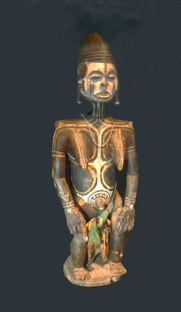
Seated female mask, Idoma, Nigeria, now 8 o in Musée du Quai Branly-Jacques Chirac, Paris, France.
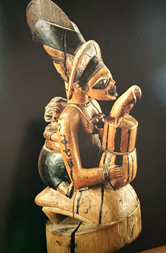
Maternity sculpture ,Yoruba ,Nigeria ,now in Musée du Quai Branly- Jacques Chirac, Paris ,France.

Igbo/Idoma mask, Nigeria, now in Musée du Quai Branly-Jacques Chirac, Paris, France.
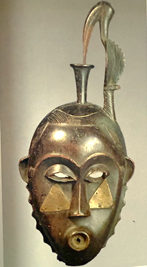
Yohoure mask, Côte d’Ivoire, now in Musée du Quai Branly-Jacques Chirac, Paris, France.
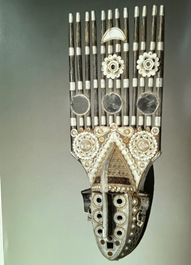
Anthropomorphic initiation mask, Malinké, Guinée, now in Musée du Quai Branly-Jacques Chirac, Paris, France.
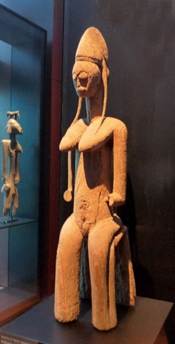
Seated female statue, Bamana, Mali, now in Musée du Quai Branly-Jacques Chirac, Paris, France.
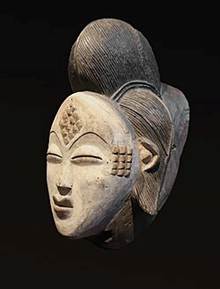
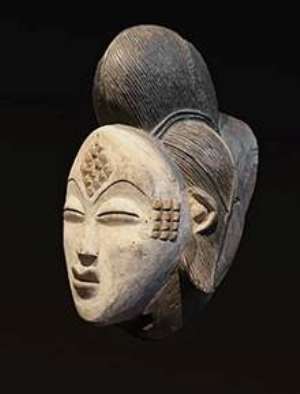
Anthropomorphic Okuyi mask, Punu, Gabon, now in Musée du Quai Branly- Jacques Chirac, Paris, France.
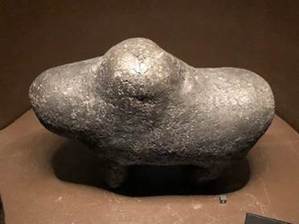
This is one of the three Kono that Marcel Griaule and his team stole from Dogon villages during the infamous Dakar-Djibouti Mission; It is now in the Musée Quai Branly Jacques Chirac, but the visitor is not informed how such a powerful and religious object reached Paris from Mali.
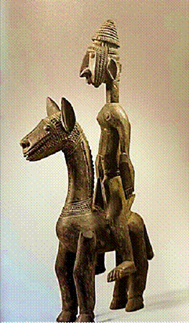
Equestrian figure, Bamana, Mali, now in Musée du quai Branly-Jacques Chirac, Paris, France.
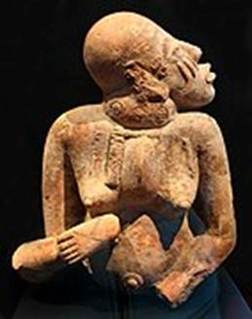
Djenne female figure, Mali, now in Musée du Quai Branly-Jacques Chirac, Paris, France. Would this figure come within the purview of the new law, or will it be considered an exempted archaeological object?


 New DStv sports package will save subscribers over Ghc500 monthly – Sam George
 Your past prescriptions never helped developing countries - TOR MD tells IMF
 Crude Distillation Unit turnaround was funded from TOR's internally generated fu...
 Trump offers $1 million for tipoffs leading to vote fraud conviction as midterms...
 UN cites 'ethnic cleansing' concerns around Israel's Palestinian displacement op...
 UCC-UTAG demands clearer boundaries for GTEC’s regulatory role to avoid interfer...
 Mahama congratulates Lula da Silva on ‘well-deserved’ re-election as Brazil Pres...
 Mahama arrives in Moscow to push for Russia-Ukraine ceasefire at Russia–Africa S...
 'Irresponsible media coverage is hurting Obuasi SHTS abuse probe' – Gender Minis...
 Foreign Affairs Ministry seeks names of evacuees allegedly shortchanged in GH¢5,...


