




The French National Assembly has finally approved on 7 July 2025 the restitution to Côte d'Ivoire of the talking drum Djidji Ayôkwé, which the French Army stole from the Ebrie people in 1916. (1) The ten-foot-long and 430- kilogram drum was used to send messages from one area to another, for example, about the movement of the French Army. Ivory Coast asked for the return of this drum, along with 148 other looted items, in 2018, but the demand for the return of this communication and spiritual instrument goes as far back as 1960. (2) France delayed the restitution because of the French rule of inalienability, which prevented returning objects in state possession without a specific legislation authorising an exception to the general ban. (3)
During the discussions before the unanimous vote of the law in the French Assembly on 7 July 2025, authorising an exception to the rule of inalienability for the Djidji Ayôkwé, several speeches were made, underscoring the importance of the event. It is worth reading these speeches, especially the speech of the ecologist Member of Parliament since they demonstrate the undeniable link between restitution and colonial history. It was the brutal colonial regime that made it possible to loot on a large scale a cultural object of the African people, such as the Djidji Ayôkwé, a talking drum ten feet long and weighing 430 kilograms. Just imagine the coordination needed to lift the drum from its original location and transport it to a port in Abidjan for further transport by ship to Paris. We have collected some of the statements made in Annex I below (4)
Various speakers called out for a general law, which will dispense with the need to seek legislation every time the restitution of an artefact comes up. President Macron promised this general law long ago and had entrusted Jean-Luc Martinez with this task, who delivered his report, on which three proposed laws were submitted to the Conseil d’État
The National Assembly passed two proposed laws on human remains, and the Conseil d’État rejected Nazi confiscations. But the third proposed law on restitution was denied because the reasons advanced by the government, the relations between France and the former French colonies, were judged insufficient to justify a general exception to the principle of inalienability.
The Minister for Culture, Rachida Dati, informed the National Assembly that the government would present its proposals before the end of July 2025 and a
first reading in autumn. The minister expressed the hope that the text should not serve for ideological repentance and warned against the instrumentalization of debates.
Frédéric-Pierre Vos, Member of Parliament from Le Rassemblement national (RN), indicated he would vote for the text but without moraline and without repentance. (5) This is not the first time that support for restitution has been coupled with denial of repentance. I first heard of the word repentance in this context from comments made by Stephane Martin, former director of the Musée du Quai Branly, in his remarks on the Sarr-Savoy report that he described as 'self-flagellation' and ‘repentance.' (6) So, what did the Rassemblement national Member of Parliament do by voting for the law without moraline or repentance? 'Moraline designates, in a polemical and pejorative way, easy moralising speech, right-thinking, ready-made moralising ideas. It seems that in the majority of cases, the term moraline is used by right-wing individuals to discredit a moralising discourse of left-wing individuals on subjects of usual confrontation, such as immigration, taxation, environmental protection, etc. (7)
More often used in the debates on restitution is 'repentance.' We understand repentance to mean that the person making the restitution feels remorse and regrets that the object was ever looted; she may apologise for the injustice involved in the wrongful and forceful seizure of the object and hopes or promises that such an act would not be repeated. In recent restitution debates, however, those who argue that morality has no role in such matters
and that the law and legal provisions are the decisive elements in the question of restitution of artefacts. Such is usually the position of institutions such as British Museum that immediately invoke the British Museum Act 1963 as prohibiting acts of restitution (8)
Similarly, French museums such as Louvre or Musée de Quai Branly-Jacques Chirac, would invoke the long-established rule in French law of the rule against inalienability that forbids the removal or of state property without a specific legislative authorisation as has now been granted in case of the Ivoirian drum.
However, recent restitutions have shown the significant role of considerations of morality. (9)
Those who support restitution without repentance or expressions of remorse deny essential aspects of restitution. Those taking such a position often deny the need for apology or compensation. Restitution usually implies repentance, a remorse for past acts of deprivation and injustice; otherwise, we have to find other reasons for returning objects stolen and kept for a hundred years by Western countries, refusing to return them despite constant demands by African peoples and nations. Without such an expression of remorse, there cannot be
any hope for better future relations between Western states and African states. There can also be no realisation of the new ethical relations, much publicised by the Sarr/Savoy report, whose subtitle is 'Toward a New Relational Ethics.' (10)
The restitution of the Djidji Akôkwé throws a revealing light on the claim by supporters of the Western Museums that they take great care of the objects under their control. Once France and Côte d'Ivoire agreed that the talking drum would be returned, it took time to repair the looted object before it could be finally packed for return to Abidjan. The colonial commander who ordered the seizure of the spiritual drum kept it in his garden for 15 years, exposed to the vagaries of the weather and tropical insects. (11)
France has shown with the restitution of the Djidji Akôkwé to Côte d'Ivoire that, despite its internal difficulties and obstacles (which are not our concern as outsiders), and the extraordinarily slow pace of French restitution, the restitution of looted African artefacts is on course. Compare this with the British attitude of defiance and provocation, as the British Museum director displayed in his recent interview with The Times. (12) The disdain of the Bloomsbury museum for Africans is demonstrated by the behaviour and attitude of that museum in connection with the quest for restitution of the Ngadji drum by the Pokomo people from Kenya. (13)
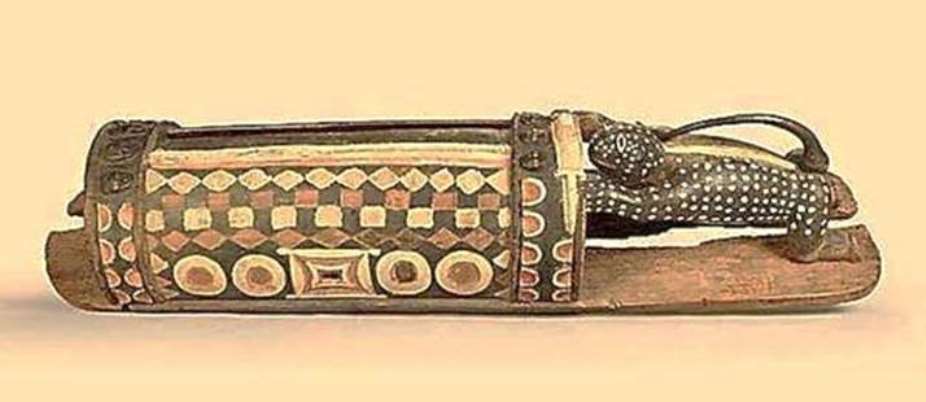
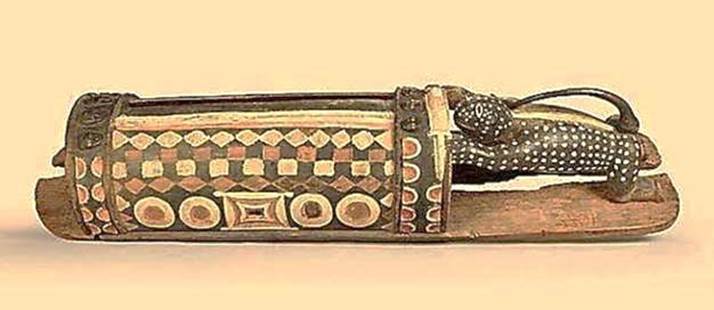
The Pokomo people of Kenya regard the Ngadji as a sacred object, a source of inspiration for their survival as a group and their traditions and governance. The call from this huge drum was used for spiritual gatherings and traditional ceremonies. In 1902, the British colonial masters seized the drum in applying the principle of divide and rule, seeking to break the unity of the Pokomo people. In 1908, Alfred Claud Hollis, an administrator, donated the drum to the British Museum, which placed he drum in storage. All attempts to recover the Ngadji drum have failed.
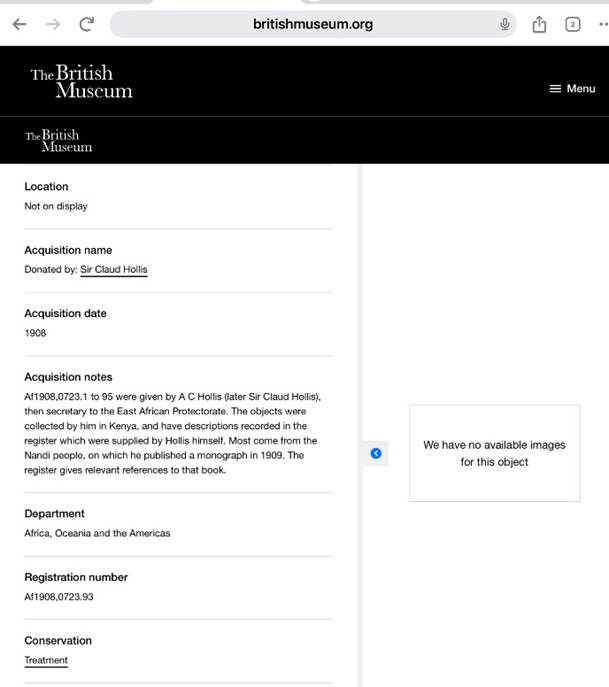
"The British Museum takes its commitment to being a world museum seriously.' was the answer given by a British Museum spokesperson in response to demand by Pokomo (Kenya) for the return of their looted ancestral drum. We also read from a British Museum digital page that the museum has no image of the drum. (Annex III)
How cynical can a Western Museum when confronted with demands by an African people seeking the return of a spiritual object that the museum has been illegally holding for hundred years? To add insult to injury, people are informed that the museum does not even have an image of the object. Could Western museums not spare Africans the insults they hurl at us once we start asking for our treasures they stole long ago
France has done well in returning Djidji Ayôkwé to Côte d'Ivoire and preparing a new general law, loi-cadre, to facilitate more restitutions. However, we should not forget that there are still 147 looted artefacts on the list that Côte d'Ivoire submitted in 2018 to France for restitution. At the rate of one artefact every seven years, how long will it take France to return 147 artefacts to Côte d'Ivoire? (14) We should also remember that there are thousands of looted African artefacts in France. (15)How long shall we wait whilst France displays these objects in museums such as the Palais des Sessions as her achievements, whilst many African museums do not have such splendid African artefacts to show? Those who stole our artworks with violence can exhibit them with pride. At the same time, we, the owners, are turned into spectators who may see such exhibitions if we are lucky enough to obtain a visa to visit Belgium, Britain, France, Germany, and the Netherlands.
NOTES
1. https://www.lemonde.fr/en/culture/article/2025/07/07/france-mps-approved-the-returning- of-colonial-era-talking-drum-to-cote-d-ivoire_6743122_30.html https://www.lemonde.fr/afrique/article/2025/07/07/le-parlement-autorise-la-restitution-du- tambour-parleur-djidji-ayokwe-a-la-cote-d-ivoire_6619670_3212.html https://www.msn.com/en-gb/news/world/france-moves-to-return-colonial- era-talking- drum-to-ivory-coast/ar-AA1I8fAc
https://www.france24.com/en/france/20250707-france-moves-to-return-colonial-era-talking- drum-to-ivory-coast
https://incotedivoire.net/article- flash/Restitution%20of%20the%20Djidji%20Ay%C3%B4kw%C3%A9%20Drum:%20Frenc h%20National%20Assembly%20Unanimously%20Approves%20the%20Bill
2. https://www.franceinfo.fr/monde/afrique/cote-d-ivoire/la-cote-d-ivoire-reclame-a-la-france- la-restitution-de-148-oeuvres-d-art_3109361.html https://www.youtube.com/watch?v=_Zh44NkBc7s https://www.lejournaldesarts.fr/actualites/la-cote-divoire-reclame-la-france-148-oeuvres- 142314
https://www.jeuneafrique.com/1704492/culture/restitution-du-patrimoine-africain-le- tambour-parleur-va-etre-remis-a-la-cote-divoire/ https://information.tv5monde.com/afrique/video/un-vote-lunanimite-la-france-va-restituer-la- cote-divoire-un-tambour-parleur-vole-il
3. K. Opoku, France moves closer to restitution of artefacts to Benin and Senegal
https://www.modernghana.com/news/1019889/france-moves-closer-to-restitution-of- artefacts.html
4. See annex I below.
5. https://www.assemblee-nationale.fr/dyn/deputes/PA841575
6. K. Opoku, Miracle Abjured: Stéphane Martin Reiterates His Objection to Restitution of Looted African Artefacts. https://www.modernghana.com/news/978035/miracle-abjured-stphane- martin-reiterates-his.html
7. Here is an explanation I found for ‘moraline’ 'Moraline designates, in a polemical and pejorative way, easy moralizing speech, right-thinking, ready-made moralising ideas. It seems that in the majority of cases, the term moraline is used by right-wing individuals to
discredit a moralising discourse of left-wing individuals on subjects of usual confrontation, such as immigration, taxation, environmental protection, etc. The morality thus denigrated would then be concerned with supporting its struggles with "moral commitments". Anyone
who denounces morality would be making a paradoxical and courageous speech, but one that would be closer to the harsh reality. In other words, morality would be the soothing and easy discourse to hold, but without a grip on reality.' https://www.laculturegenerale.com/moraline- definition-exemples-nietzsche/The word ‘moraline’invented by Friederich Nietzsche seems to be aimed at criticising bourgeois hypocrisy while at the same time elevating the absence of a controlling or an inhibiting morality as a liberating force. https://www.wikiwand.com/fr/articles/Moraline
For the benefit of those Westerners, from countries that consider Christianity as part of their social fabric and who deny any need for repentance, regrets or compensation in restitution matters, or keep looted artefacts in churches, we recall the following provisions from the Bible:
“If a man steals an ox or a sheep and butchers it or sells it, he shall restore five oxen for an ox and four sheep for a sheep.” – Exodus 22:1
“If he has sinned and is guilty, he must return what he has stolen or taken by extortion, or what was entrusted to him or the lost property he found, or whatever it was he swore falsely about. He must make restitution in full and add a fifth of the value to it.” – Leviticus 6:4-5
“Now I rejoice, not that you were made sorry, but that your sorrow led to repentance. For you were made sorry in a godly manner, that you might suffer loss from us in nothing.” – 2 Corinthians 7:9
“Learn to do good; seek justice, rebuke the oppressor; defend the fatherless, plead for the widow.” – Isaiah 1:17
“He must confess his sin that he has committed, and he shall make full restitution for his wrong, adding one fifth to it, and give it to whom he wronged.” – Numbers 5:7
I may be preaching here but to an audience that does not easily hear the message that has been relayed for over hundred years: return the stolen cultural artefacts stolen from Africa. The late Pope Francisco supported restitution, but we have not heard that the Vatican
museums have returned looted artefacts. K. Opoku, Vatican owes Africa the truth,
Pambazuka, https://www.pambazuka.org/vatican-owes-africa-truth
Would we not expect the churches to be driving force behind the struggle for restitution? Alas! The churches have a good reason for not even wanting to raise the issue. The Christian missionaries were a powerful force behind colonialism and on the issue of African artefacts, they were a major influence in persuading Africans to abandon what were considered pagan objects for destruction. Few objects were burnt in fire before the newly converted Christians, but a large part was quietly transported to Europe where they were sold and often constituted the beginnings of many museums. How do Christian churches justify or tolerate the holding of looted Ethiopian Orthodox Church crosses and other cultural artefacts in public institutions and sometimes in churches? British Museum has twelve taboos stolen from Magdala in the 1860 British invasion of Ethiopia.
K. Opoku, Looted Ethiopian tabot concealed permanently in Westminster Abbey, London. Is there somewhere a minimum sense of shame? https://www.modernghana.com/news/868507/looted- ethiopian-tabot-concealed-permanently-in-westminster.html
8. K. Opoku, Once in the British Museum always in the British Museum: Is the de-accession policy of the British Museum a farce? https://www.pacma.org.uk/ligali/pdf/dr_kwame_opoku_analysis_of_british_museum_de_acc ession_policy_110508.pdf K. Opoku, Will Museums Be The Last Bastions Of Western Imperialism And Racism? https://www.modernghana.com/news/1260142/will-museums-be- the-last-bastions-of-western-imper.html
9. K. Opoku , Have Ethical Considerations Returned To Restitution For Good? Smithsonian Adopts A Policy On Ethical Returnshttps://www.modernghana.com/news/1162776/have-ethical- considerations-returned-to-restitutio.html
10. Felwine Sarr and Bénédicte Savoy, The Restitution of African Cultural Heritage. Toward a New Relational Ethics, November 2018
11. Côte d’Ivoire : le tambour parleur ébrié pourrait avoir besoin d’une petite restauration https://www.rfi.fr/fr/afrique/20211129-c%C3%B4te-d-ivoire-le-tambour-parleur-
%C3%A9bri%C3%A9-pourrait-avoir-besoin-d-une-petite-restauration
https://www.lemondeactuel.com/avant-son-voyage-de-paris-a-abidjan-le-tambour- parleur-djidji-ayokwe-fait-peau-neuve/
12. K. Opoku, Defiant And Provocative British Museum https://www.modernghana.com/news/1408424/defiant-and-provocative-british- museum.html
13. Washington Post, Kenya’s Pokomo people ask the British to return what was stolen: Their source of power https://www.washingtonpost.com/world/2019/08/09/kenyas-pokomo-people- ask-british-return-what-was-stolen-their-source-power/
https://openrestitution.africa/case-study/the-return-of-ngadji-a-sacred-drum-stolen-from-the- pokomo-people/
https://www.msingiafrikamagazine.com/2020/05/the-ngadji-the-pokomo-sacred-drum/
14. But who is interested in the mathematics of restitution ? France has 95,000 looted artefacts African artefacts of which 70,000 are in Musée du Quai Branly, British Museum has 70,000 or 200,000 depending on how you define Africa, including or excluding Algeria, Egypt, Tunisia, and Morocco. Sarr-Savoy, (Restituer le patrimonies africain, p.31.) mentions 69,000 for British Museum, Weltmuseum, Vienna, has 37,000, Africa Museum, Tervuren, Belgium, has180,000, Humboldt Forum, Berlin has 75,000 . The Vatican Ethnology Museum has 70,000 objects. In addition, there are various missionary museums in Germany, Netherlands, France, Austria, Belgium, Italy, Spain and Switzerland. One cannot trust completely figures Western museums give about their looted African objects.
Vatican owes Africa the truth, Pambazuka News https://www.pambazuka.org/vatican-owes- africa-truth
Wikipedia, African art in Western collections https://www.wikiwand.com/en/articles/African_art_in_Western_collections
Issac Samuel, Online resources for African history: links to African collections held at 33
Western Museums https://www.africanhistoryextra.com/p/online-resources-for-african- history Museum Collection Comparison Tool: African Art
Cambridge University institutions are said to hold 350,000 African artefacts in their storage. BBC, Uni finds 350,000 African artefacts in storage https://www.bbc.com/news/articles/ckgzk6q715lo
https://museumsandheritage.com/advisor/posts/vast-colonial-era-african-artefacts-identified- at-cambridge-university-museums/
K. Opoku, Will provenance research delay restitution of looted African artefacts? https://www.modernghana.com/news/1067847/will-provenance-research-delay-restitution-of- loot.html
15. See annex IV for list of number of African artefacts, per country, in Musée du Quai Branly.
ANNEX I
https://www.assemblee-nationale.fr/dyn/17/comptes-rendus/seance/session-extraordinaire-de- 2024-2025/premiere-seance-du-lundi-07-juillet-2025#3834647
During the discussion on the bill, the President of the Commission of Cultural Affairs and Education, Mrs. Fatiha Keloua Hachi (PS) declared: 'As President of the Committee on
Cultural Affairs and Education, I want to salute the depth of this act, which goes beyond the legal framework alone: it is a gesture of reparation, recognition and dialogue, which gives substance to France's strong commitment to its African partners. It is also a gesture towards our own historical memory, a clear recognition of a history of colonial violence,
dispossession and cultural erasure, and a sign, I hope, of a turning point in our relationship with the colonial legacy.
"Today, this drum is coming back, and with it, a little dignity, a little memory, a little justice. Its presence in French collections is the result of a dispossession, of a painful colonial episode. The restitution that we are voting on today is not a favour, it is a reparation. It is
time to teach colonial history in all its complexity, in all its brutality, and above all, its truth. For a republic that refuses to assume its historical responsibilities is a republic that renounces its own promise of equality."
M. Bertrand Sorre, Rapporteur of the Commission of Cultural Affairs and Education said: "The return of the drummer Djidji Ayôkwê to Côte d'Ivoire will help to repair an extortion committed during the colonial era, but it will be much more than that. It will be the witness of our awareness of the symbolic value of this object and will allow us to retie broken threads when it was torn from its community. It will demonstrate our willingness to contribute to the rediscovery and reappropriation of their history by Ivorians. To quote again the inspiring words of Ambassador Maurice Bandaman, "it is the soul of the Elders, carried by this drum, which returns to accompany the Ivorian youth".
Ms. Sabrina Sebaihi (EcoS)
This debate is part of a huge project, that of the consequences of colonisation, which is too often ignored in the construction of our national narrative. With the return of the drum Djidji Ayôkwê, we affirm that France cannot be proud of its hundreds of national collections, built on violence and the dispossession of peoples. This drum is not a trophy, nor a museum piece, but the symbol of a community that has been deprived of memory. This gesture must be read at its proper level: it is not the restitution of a curiosity, but the return of a looted good to a people. This requirement is not limited to Côte d’Ivoire but runs through the entire colonial history of the Republic. In Algeria, for example, a mixed commission demanded the return of Abdelkader's personal belongings: sword, burnous, manuscripts, objects stolen in 1843 after the capture of the emir's smalah, after a bloody conquest. These pieces of immense symbolic value are locked up in our museums, which are still inaccessible to their people of origin, because they are blocked by the unshakeable principle of the inalienability of collections.
Throughout Africa, these questions are piling up: Senegal, Benin, Madagascar, Cameroon, Algeria, all are waiting for France to stop symbolic diplomacy, parsimonious donations and distinct loans, to build a real policy of restitution. From the Maghreb to Indochina, from the West Indies to West Africa, French colonisation was an organised crime, punctuated by looting, destruction and massacres. It was a crime against humanity. In Senegal, as early as 1857, the treasures of the Takrur were plundered. In Madagascar, relics and sacred objects were taken away after the repression of 1947. In Cameroon, the bodies of resistance fighters were exhumed to study them. In Indochina, pagodas were ransacked, and in Algeria, libraries were emptied, and manuscripts and archives were taken away. The proud display of these treasures in our national museums must be seen as the remains of an empire of violence. While the memory of peoples is put under glass, the Republic too often continues to lecture and drape itself in universal virtues, without recognising the colonial basis of its power. In this organized silence, the implacable words of Kery James resonate: "To all these racists with hypocritical tolerance, who have built their nation on blood, now set themselves up as lecturers, plunderers of wealth, killers of Africans, coloniser’s, torturers of Algerians." These verses tell everything that official history has wanted to hide and everything that our museums do not tell. They remind us that domination does not disappear over time and that it is perpetuated j it is not recognised, repaired and restored. On the model of Aimé Césaire, I reject France, which considers itself a civilising power. Colonisation was a crime; This crime has been denied, embellished. Today, it is still too often reduced to a regrettable, worse, life- saving episode. The drum must return to Côte d'Ivoire – an act of right, of truth. Everything that has been looted and stolen must be returned, as tangible proof that France knows how to look its past in the face. (Mr Frédéric Maillot applauded.) It is not a question of giving gifts, but of respecting the peoples who have been despoiled, humiliated for the first time, and then
a second time by our inertia. We must vote in favour of the text, but this vote, which, once again, is a good thing, will only be effective if it constitutes the starting point for a future framework law putting an end to the structural colonial system in our heritage, recognising that memorial justice cannot be dealt with case by box, drum by drum, sword by sword. A legislative break must put an end to this inevitable hypocrisy. Aimé Césaire wrote that a civilisation that does not remove its chains is a civilisation that buries itself; by refusing to return what it stole, France continues to forge its chains. Let us break with this logic: we must go further, with force, with this feeling of history intact. Colonisation is over, not only in its speeches, but in its actions. We will vote in favour of this bill; we will continue until every drum, every sword, every stolen manuscript finds its people, for there is no fraternity without justice, no common memory without truth, no dignified Republic without
reparation. (Applause from the benches of the EcoS, LFI-NFP, SOC and GDR groups.)
Frédéric-Pierre Vos, Member of Parliament from Le Rassemblement national (RN), indicated he would vote for the text but without moraline and without repentance.
ANNEX. II
https://www.assemblee-nationale.fr/dyn/17/textes/l17t0160_texte-adopte-provisoire.pdf We reproduce here the single article text of this important law for the benefit of students of
Comparative Law. This shows that legislation must not always be long and complicated. The style of writing legislation depends on the legal tradition in which one is working.
(S1) Article unique
By way of derogation from the principle of inalienability of French public collections enshrined in Article L. 451-5 of the Heritage Code, as of the date of entry into force of this Law, the talking drum known as Djidji Ayokwè kept in the national collections under the custody of the Musée du Quai Branly-Jacques Chirac, the reference to which is set out in the annex to this Law, ceases to be part of these collections. The administrative authority has, from the same date, a period of one year to transfer this property to the Republic of Côte
d'Ivoire.
Deliberated in public session, in Paris, on July 7, 2025. The President, Signed: YAËL BRAUN-PIVET
Annex III
British Museum has no image of Ngandji, Spiritual Drum of the Pokomo, Kenya. Readers must judge for themselves if a statement by a museum that it has no image of a precious spiritual and cultural object of a people looted by colonial masters, is acceptable in our days. The so-called ‘universal museums’ have always prided themselves of showing looted objects to the enormous number of visitors. But what about cases where they are not even showing the object at all and keep it in a storage? Why keep an object you cannot display when the owners are asking for its return?
Annex IV
List of African Artefacts in Musée du Quai Branly-Jacques Chirac Published in Sarr Savoy Report on Restitution, pp.128-129.
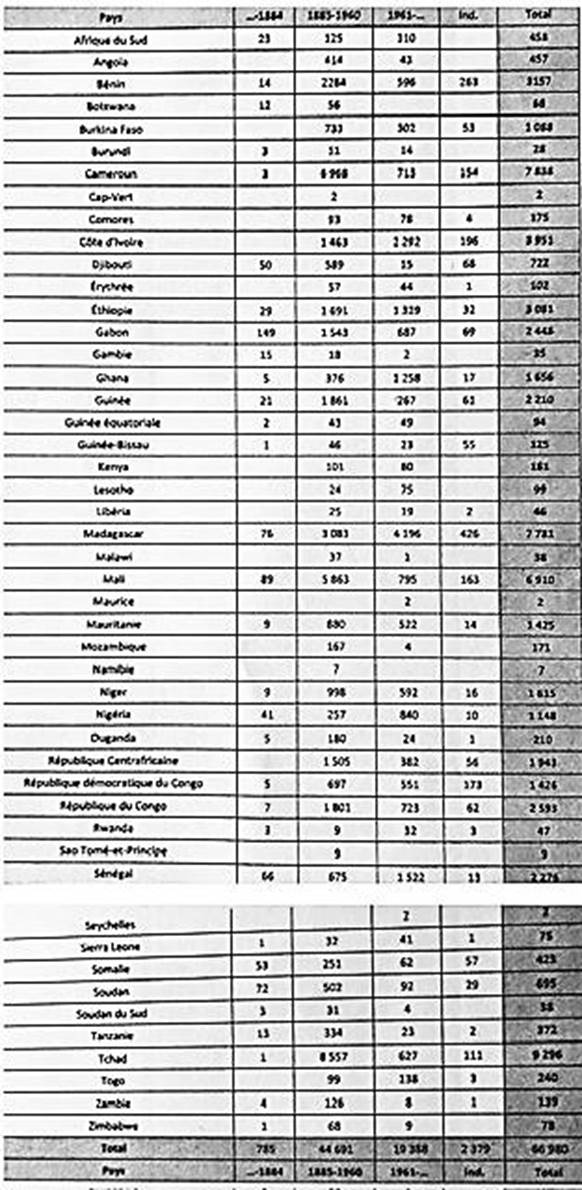
The column ‘undetermined ‘ concerns objects where the inventory number does not include the year of registration.
IMAGES
Djidji Ayôkwé, Côte d’Ivoire, talking drum, seized by the French in 1916 and kept in various museums, recently in Musée du Quai Branly-Jacques Chirac, Paris. Despite several demands from Cote d’Ivoire for the return of this spiritual drum especially since 2018, it was only on
7July 2025 that the French National Assembly passed a law authorising restitution of this ten feet long g and 430 kilograms drum as an exception to the French rule of inalienability.
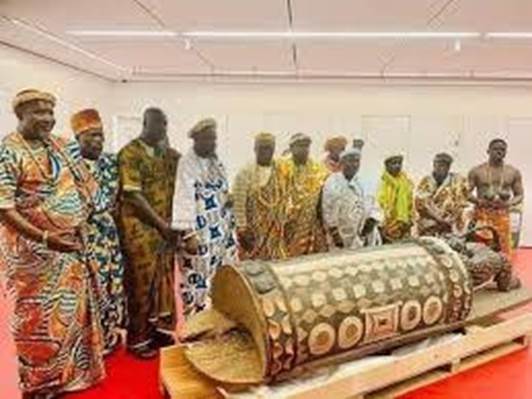
Ceremonies of purification before the transport of Djidji Ayôkwé to Abidjan, Côte d’Ivoire.
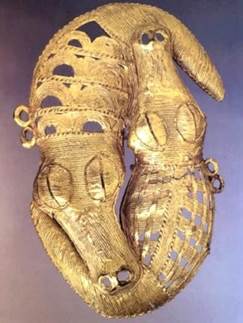
Gold jewel of two crocodiles, Baulé, Côte d’Ivoire, now in Musée du Quai Branly-Jacques Chirac, Paris, France.
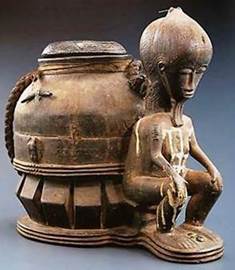
Divination container with mouse, Côte d’Ivoire, now in the Musée du Quai Branly-Jacques Chirac, Paris, France.
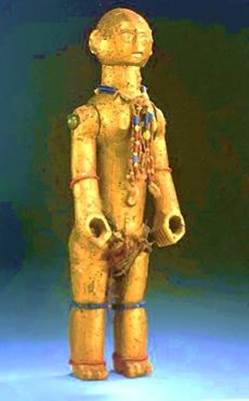
Female statue, Abouré /Akan, Côte d’Ivoire, now in Musée du Quai Branly, Paris, France,
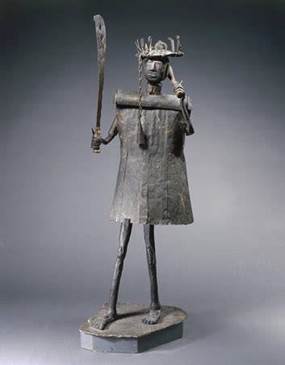
Statue of the god, Gou, Benin, now in Musée du Quai Branly-Jacques Chirac, Paris, France. Will the proposed general law on restitution result in the restitution of Gou to Benin despite the theory of mutation of African artefacts?
https://www.modernghana.com/news/1404322/can-looted-african-art-remain-in-france- because.html
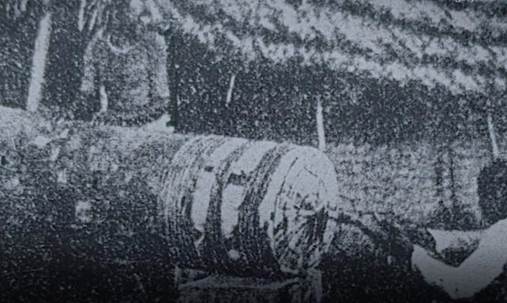
Pokomo Sacred Drum, Ngadji, seized/stolen by a British colonial official in 1902 and donated to the British Museum in 1908. The drum has remained in the museum despite several demands by the Pokomo people for its return.
https://www.msingiafrikamagazine.com/2020/05/the-ngadji-the-pokomo-sacred-drum/
https://www.dw.com/en/kenyas-pokomo-people-call-for-uk-to-return-sacred-drum/video- 70807264 British Museum states it has no image of this drum -See Annex III.
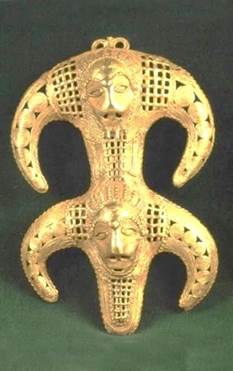
Pendant, Baoulé, Côte d’Ivoire, now in Musée du Quai Branly-Jacques Chirac, Paris, France.
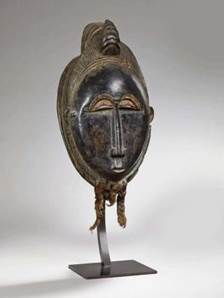
Ndoma anthropomorphic portrait mask, Côte d’Ivoire, Musée du Quai Branly Jacques- Chirac, Paris, France.
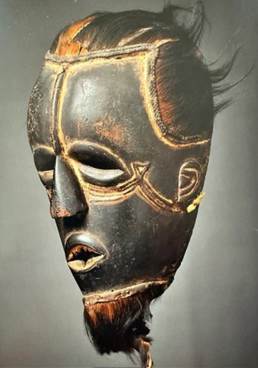
Anthropomorphic mask Gouro, Côte d’Ivoire, Musée du Quai Branly-Jacques Chirac, Paris, France.
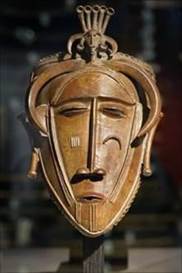
Face mask, Kong region, Côte d’Ivoire, now in Musée du Quai Branly-Jacques Chirac, Paris, France.
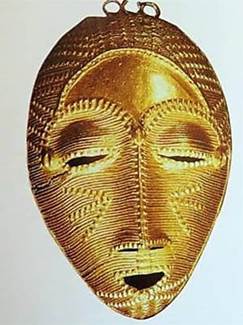
Face pendant, Baule, Côte d’Ivoire, now in Musée du quai Branly-Jacques Chirac, Paris, France.
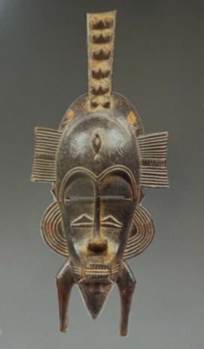
Kpelie mask,Senofou,Côte d’Ivoire,now in Musée du Quai Branly-Jacques Chirac,Paris,France.
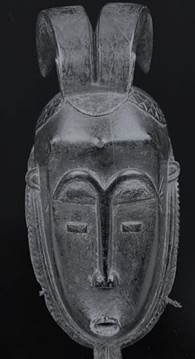
Kpan mask, Baule, Côte d’Ivoire, Musée du Quai Branly- Jacques Chirac, Paris, France.
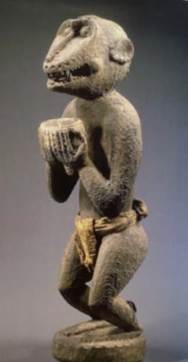
Monkey bearing a bowl, Baule, Côte d’Ivoire, now in Musée du Quai Branly Jacques Chirac, Paris, France.
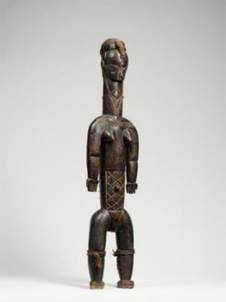
Female statue Béte, Côte d’Ivoire, now in Musée du Quai Branly, Paris, France.
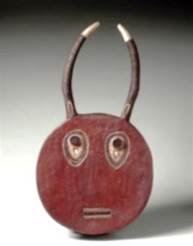
Kplekple mask, Baule, Côte d’Ivoire, now in Musée du Quai Branly-Jacques Chirac, Paris, France.
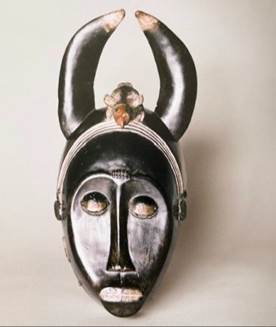
Face mask, Yaure, Côte d’Ivoire, in Musée du Quai Branly -Jacques Chirac, Paris, France. The mask is used during the burial of man of mature age to accompany him to the other world.


 ‘Congratulations!’: World leaders hail Lula’s election victory in Brazil
 'Stop overthinking, Sammy Gyamfi spoke simple language not PhD thesis' — Frankli...
 IMF broadens engagements as first review of Ghana’s PCI enters second week
 Government rejects GH¢873.94m in Treasury bill bids despite strong investor dema...
 Health Ministry to open recruitment portal for 36th batch of medical officers, d...
 President Mahama woos British investors, urges global debt reforms
 Ashanti Regional Minister impressed with progress of 24-Hour Economy model marke...
 GTA issue: Sanction whoever leaked Abeiku Santana’s letter to Tourism Minister –...
 Brazil's President Lula da Silva beats Flavio Bolsonaro to win re-election
 Baaba Cann questions Obuasi SHTS handling of sexual misconduct allegations again...


