




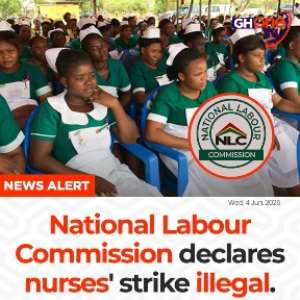
Genesis of the Strike
The Ghanaian nurses’ strike of June 2025 is a direct consequence of delayed commitments and unresolved negotiations. For over a year, the Ghana Registered Nurses and Midwives Association (GRNMA) has engaged in discussions with the Akufo-Addo-Bawumia government over the implementation of the 2024 Collective Agreement, which governs salaries, allowances, and working conditions. However, repeated delays and unmet expectations culminated in the GRNMA’s decision to stage a nationwide walkout.
Despite assurances from the Ministry of Health and the Fair Wages and Salaries Commission, nurses reached their breaking point when proposed adjustments failed to materialize. On June 4, 2025, thousands of nurses abandoned their posts, triggering a widespread healthcare crisis. The National Labour Commission (NLC) swiftly sought a High Court injunction, branding the strike illegal, yet the GRNMA maintains that nothing short of full implementation of the agreement will resolve the impasse.
Singapore’s Model: Workforce Stability and Strategic Planning
Unlike Ghana, Singapore has never experienced a full-scale nurses’ strike, primarily due to structured workforce policies that prevent labor unrest. While it has faced high attrition rates, particularly among foreign nurses, Singapore has consistently adjusted its healthcare workforce strategy to minimize disruptions.
With nursing attrition peaking at 14.8% in 2021, Singapore responded by increasing recruitment and offering permanent residency to over 1,200 foreign healthcare workers annually. In 2023, Singapore exceeded its nursing recruitment target, onboarding 5,600 nurses, far above the initial goal of 4,000, ensuring stability in the healthcare sector.
Ghana can draw lessons from Singapore’s data-driven policies, ensuring systematic recruitment, wage restructuring, and real-time implementation of agreements before tensions escalate into strikes.
Global Lessons from Nurse Strikes
Across the world, nurse strikes have been driven by salary disputes, staffing shortages, and systemic neglect:
- United States: In 2025, nearly 5,000 nurses in Oregon staged a 46-day strike, demanding fair wages and improved staffing conditions. The resolution involved a compromise on salaries and a commitment to increase nurse recruitment.
- United Kingdom: The NHS wage disputes in 2015, 2016, and 2022 resulted in prolonged strikes that forced the government to revise salary structures and hire more healthcare workers.
- South Korea: In 2020, junior doctors protested government-imposed healthcare reforms, leading to disruptions in hospital services. Although negotiations ended the strike, tensions persisted.
- Canada: The Alberta Nurses Strike of 1982 reshaped healthcare labor relations, prompting long-term workforce policies emphasizing collective bargaining and proactive salary adjustments.
Ghana’s situation reflects a global trend where failure to honor labor agreements leads to widespread discontent.
Biblical Insights: Governance, Espionage, and Crisis Management
The Bible offers profound wisdom on leadership and negotiation, principles that Ghana can adopt in resolving its labor crisis.
- “Where there is no guidance, a people falls, but in an abundance of counselors there is safety.” – Proverbs 11:14
- Structured dialogue and inclusive leadership must replace rushed, reactionary responses.
- “If the ax is dull and its edge unsharpened, more strength is needed, but skill will bring success.” – Ecclesiastes 10:10
- Ghana must sharpen its labor policies, focusing on long-term workforce stability instead of short-term fixes.
- Numbers 13:32-33 recounts how spies sent to Canaan distorted reality, causing fear and rebellion. Similarly, misinformation and secrecy in labor disputes only escalate crises instead of resolving them.
Quotations from Chinua Achebe and ABA Fuseini
Renowned African thinkers have spoken extensively on governance failures and accountability:
- Chinua Achebe: “Until the lions have their own historians, the history of the hunt will always glorify the hunter.”
- Nurses must document their struggles, ensuring fair representation in policy discussions.
- ABA Fuseini: “When a handshake reaches the elbow, it is no longer greetings, it is a defeat.”
- Ghana’s prolonged negotiations signal governance failure rather than genuine attempts at resolution.
Recommendations for Preventing Future Strikes
To prevent recurring healthcare strikes, Ghana must adopt proactive strategies to sustain labor peace and ensure uninterrupted healthcare delivery:
1. Early Implementation of Agreements
- Delays often fuel distrust. The government must adopt real-time monitoring mechanisms to ensure signed agreements are honored without prolonged negotiations.
2. Transparent Negotiation Processes
- Independent arbitrators should facilitate objective assessments of grievances, preventing last-minute stalemates.
3. Periodic Salary and Allowance Reviews
- Structured salary adjustments must align with inflation rates and economic conditions.
- Healthcare workforce shortages lead to burnout and frustration. Ghana must prioritize recruitment and optimize nurse-patient ratios.
5. Crisis Mediation Mechanisms
- Governments should implement rapid-response mediation teams that intervene before strikes are declared, maintaining service continuity.
Strikes disrupt healthcare systems, leaving vulnerable patients stranded. Ghana’s situation, like past nurse strikes elsewhere, highlights the urgent need for timely intervention and structured workforce planning. By learning from global precedents and adopting proactive strategies, Ghana can mitigate future disruptions and foster a more stable, equitable healthcare system.
Retired Senior Citizen
Teshie-Nungua
[email protected]


 Five reported dead in multiple-vehicle crash at Ofankor barrier
 About 82,500 people in Ghana use drugs – NACOC
 'Stop using unqualified staff to manage patient data' – Allied Health Profession...
 ‘Unfinished business requires exceptional leadership’ — GHAPRO backs Mahama for ...
 Sedina Tamakloe-Attionu released after state withdraws stay application
 Bunkpurugu Police suspend funeral musketry over security concerns
 Police launch manhunt for man captured assaulting suspect in viral video
 Ghanaians give Mahama 72% approval; 60% say country heading right direction
 Colombia earthquake rescue efforts enter 'final phase' as death toll rises
 White House press secretary and Trump adviser Karoline Leavitt to leave role

