




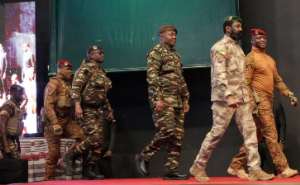
Africa has long contended with foreign military presence, a factor that has influenced its security, economic stability, and sovereignty. Today, an increasing number of African nations, particularly in the Sahel region, are rejecting foreign military bases in favor of self-reliance and regional defense strategies. Burkina Faso, Niger, and Mali have pushed back against U.S. and French military influence, demanding full autonomy over their security affairs. As Ghana navigates its own path, the Status of Forces Agreement (SOFA) signed with the United States in 2018 raises critical questions. With mounting evidence of foreign interference hindering African development, Ghana is now at a crossroads: should it follow the footsteps of its Sahel neighbors and abrogate U.S. military presence, reclaiming its sovereign security and resource control?
The Legacy of Foreign Military Presence in Africa
The history of foreign military intervention in Africa is one of destabilization and exploitation. Western nations, particularly the United States and France, have maintained a strong military presence across the continent under the guise of counterterrorism and regional stability. However, this presence has often resulted in:
- Political interference, influencing leadership changes and policies to serve foreign interests.
- Economic exploitation, ensuring continued control over Africa’s gold, oil, mineral and natural wealth.
- Security disruptions, where foreign-backed conflicts serve strategic objectives rather than genuine African peacekeeping efforts.
The rejection of foreign troops by Burkina Faso, Mali, and Niger signals a new era of African resistance. These nations now prioritize self-sufficient defense strategies, resource nationalization, and intra-African alliances, paving the way for true sovereignty.
The CIA-Backed Overthrow of Dr. Kwame Nkrumah and Its Lasting Impact on Ghana
One of the most devastating foreign interventions in Ghana’s history was the CIA-backed coup against Dr. Kwame Nkrumah on February 24, 1966. Nkrumah, Ghana’s first president, envisioned an industrialized, economically independent Ghana, but his overthrow marked a turning point that:
- Halted Ghana’s industrial projects, including state-backed factories that were designed to make Ghana self-sufficient in production.
- Disrupted Pan-African unity, weakening efforts toward a unified African economy.
- Opened the door to foreign economic control, leading to neoliberal policies that favored Western corporations.
This intervention derailed Ghana’s trajectory toward self-reliance, leaving a legacy of economic dependency and political instability that persists today. It serves as a stark reminder of why Ghana must tread carefully in security agreements with foreign powers.
The Sahel Region’s Bold Step Toward Self-Determination
Burkina Faso, Mali, and Niger have taken decisive action against foreign military presence, closing U.S. and French bases while forging African-led security partnerships. These nations recognize that:
- Foreign bases do not prioritize African security—they serve external geopolitical interests.
- A militarized Africa remains vulnerable to foreign manipulation.
- Resource nationalization is key to funding defense forces and economic independence.
The leadership of Captain Ibrahim Traoré in Burkina Faso exemplifies how a gold-backed economy can reinforce national security without Western military aid.
The U.S. General’s Criticism of Traoré: A Threat to African Sovereignty?
Recently, U.S. General Michael Langley labeled Captain Ibrahim Traoré’s policies as dangerous, accusing him of misusing gold reserves. However, this criticism is deeply hypocritical, as Western nations themselves safeguard their mineral wealth for national development. Traoré’s move toward a resource-backed financial system represents a strong alternative to reliance on foreign powers, challenging the long-standing Western dominance over African economies.
Ghana’s Position: A Crossroads Between Cooperation and Autonomy
Ghana remains in a strategic dilemma—the 2018 Status of Forces Agreement (SOFA) granted unimpeded access to U.S. military personnel, raising concerns about:
- Sovereignty erosion, as Ghana’s ability to regulate foreign military activity is compromised.
- Security vulnerabilities, making Ghana a potential target in global conflicts.
- Economic disadvantages, where resource exploitation could serve foreign interests over national progress.
With Sahel nations rejecting foreign military influence, Ghana must reassess and reset its role. By abrogating military agreements, Ghana can follow Burkina Faso’s lead in prioritizing national security and economic independence.
Lessons from the Philippines: The Challenges of Hosting U.S. Military Bases
The Philippines offers a strong precedent for nations reconsidering U.S. military presence. Historically:
- In 1992, the Philippines expelled U.S. military bases, citing sovereignty concerns.
- Environmental and social damage caused by foreign troops became a major issue.
- Legal immunity for U.S. personnel led to human rights concerns.
Despite recent talks about reintroducing U.S. bases, the history of U.S. intervention in the Philippines serves as a warning to Ghana—foreign military presence rarely serves national interests in the long run.
Building a Self-Sufficient Security Framework for Ghana
To successfully move away from foreign military dependency, Ghana must focus on:
- Strengthening ECOWAS and AU defense coalitions to prioritize African-led security solutions.
- Investing in local intelligence and military infrastructure without reliance on Western aid.
- Nationalizing key resources, ensuring gold, oil, naturals and agricultural wealth funds Ghana’s security and economic development.
- Establishing a resource-backed financial strategy, following Burkina Faso’s gold-backed security approach.
By implementing sovereign security and economic policies, Ghana can break free from foreign military reliance while safeguarding its wealth for national progress.
Ghana’s Path to Sovereignty
President John Dramani Mahama’s administration has the historic opportunity to abrogate U.S. military agreements, setting the stage for true Ghanaian sovereignty. By rejecting foreign military bases, prioritizing self-sufficient security, and leveraging Ghana’s natural resources, Mahama’s leadership can restore the vision that Kwame Nkrumah once championed. Ghana’s path forward must embrace independence, strength, and Pan-African unity, ensuring that security and wealth serve its people—not foreign interests.
Retired Senior Citizen
Teshie-Nungua
[email protected]

 Preaching in moving vehicles banned, not stationed vehicles — Mahama clarifies
 Man picking mushroom accidentally shot dead at Nyagbo Kume Forest, hunter in pol...
 Strike suspended, but negotiations for teachers’ benefits not over — GNAT
 CSA rejects FBI claims, insists Ghana led cybercrime operation
 Govt suspends enforcement of ban on preaching in moving vehicles
 Trump strikes diesel deal with Putin, reversing years of pressure on Russia over...
 Powerful 7.6 magnitude quake shakes Panama, triggering tsunami warning
 GH¢800,000 worth of goods lost in Kia Rhino truck fire at Amanfrom
 I never said Ghana has more nurses than it needs — Akandoh
 I have tried reaching Boakye Agyarko after NPP chairmanship race, but to no avai...


