




Let’s stop pretending this is accidental.
Every day, brilliant people are filtered out of opportunity—disqualified not by incompetence, but by invisible signals: a name that doesn’t fit, a zip code that sounds poor, a résumé that doesn’t follow the script. We like to imagine hiring as a meritocracy. But the systems don’t reward merit. They reward conformity—and conformity is coded.
This is not just about prejudice. It’s about pattern recognition on autopilot.
AI is already deciding who gets seen, who gets skipped, and who never even gets the chance. And here’s the part that should concern you: no one’s watching the watchers. Résumé scanning tools, ranking algorithms, scheduling bots—they all operate in a black box. Employers don’t question them. Applicants never see them. Regulators can’t even access them.
Bias isn’t just present. It’s optimized.
Now, here’s where it gets interesting.
For the past year, I’ve been building what most people in the space have only danced around: a real system of accountability. Not a TED Talk. Not a theoretical paper. A tool that surfaces bias before it becomes policy. A system that shows you—clearly—where exclusion lives in your hiring pipeline.
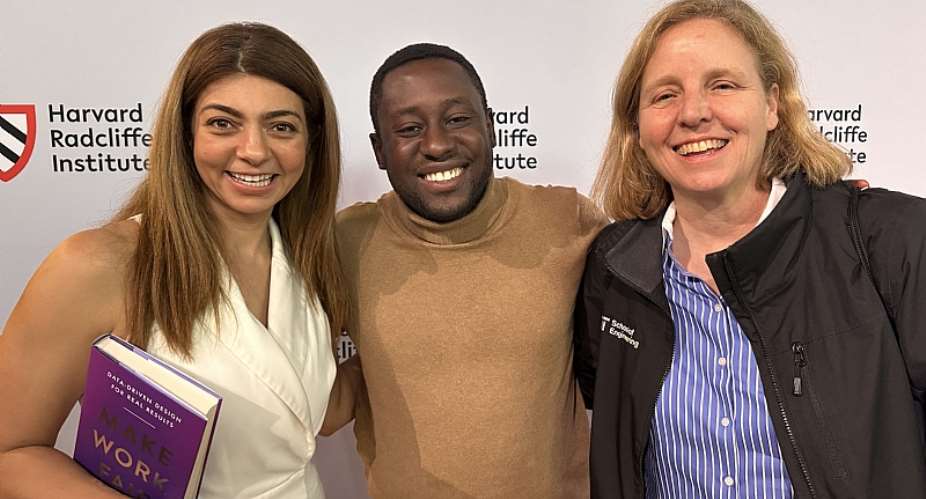
I attended Harvard’s Gender + AI conference—not as a passive observer, but as someone deeply engaged in the urgency of translating ethical theory into practice. I don’t theorize fairness. I engineer it.. I translate ethics into systems. I collaborate with people who write the laws and people who build the models—and I sit at the intersection with one question: Can we see the bias before it causes harm?
This work is informed by behavioral equity research like Dr. Iris Bohnet’s What Works and her most recent book Make Work Fair, which I explored further at Harvard’s Gender + AI conference—an event that sharpened my resolve to translate ethical theory into real accountability systems.
The answer is yes. We can. But most people don’t want to. Because once you see it, you can’t unsee it. And then you have to do something about it.
We’ve spent years building hiring systems that no one can explain. It’s time we build one that can be trusted.
And let me be clear: this isn’t about America. Or the African continent. This is about everywhere. Because when bias is invisible, it becomes universal. And when it becomes universal, people start calling it normal.
I don’t want normal. I want fairness. And I’m not waiting.
The Global South has a rare opportunity right now: to stop importing broken systems and start designing what the rest of the world will eventually catch up to. You don’t need permission to lead. You just need precision—and a little bit of audacity.
So here’s what I’m building: A signal. A mirror. Something that doesn’t just expose bias—it forces the question:
Now that you know… what are you going to do about it?
Fairness doesn’t happen by default. It has to be built, tested, and enforced—just like safety, just like security. We’ve accepted black-box systems in hiring for too long. It’s time to demand transparency as a baseline. The next wave of innovation won’t just be about who gets hired faster—it’ll be about who gets seen fairly. That’s the future I’m building toward. And if we don’t build that future now—someone else will build a worse one.

 Iran offers strait deal, Trump says he's not satisfied
 Here are areas to be affected by ECG's planned maintenance today
 Suma Paramount Chief commends President Mahama’s development agenda
 How faulty fan regulator sparked fire, destroyed two rooms at Suhum Konfine
 Don’t store bread beyond four days – Baker advises
 Mahama cuts sod for construction of 24-hour economy market at Asesewa
 Mahama commissions divisional police headquarters at Laasi, Krobo-Odumase
 Lambussie district assembly fails to elect presiding member after two rounds of ...
 Public sector workers struggling to meet pressing needs – TUC secretary
 Seven arrested in Ashaiman police operation over robbery, arms supply


