




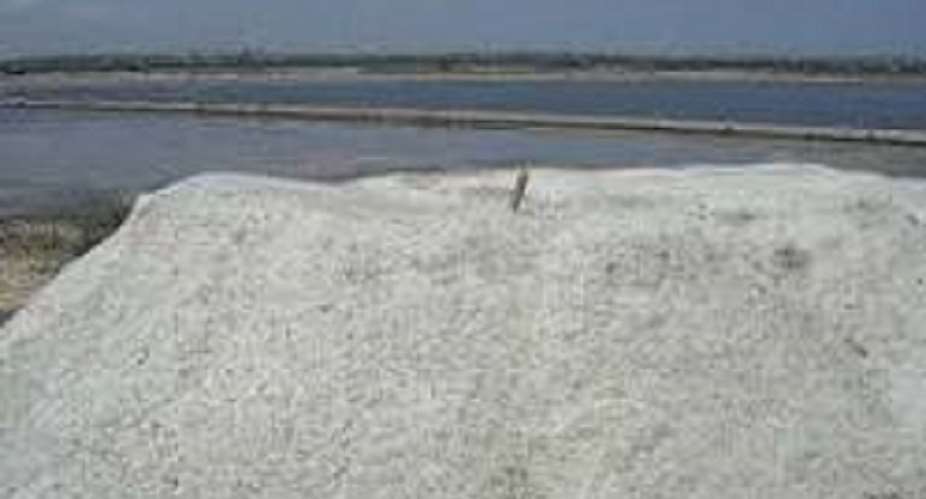
In recent years, Ghana has seen remarkable growth in various sectors of its economy. However, one area that holds immense potential yet remains underdeveloped is salt mining. The vast salt deposits along the coastlines of Ghana present a golden opportunity for economic growth, job creation, and international trade. To fully harness this potential, it is imperative for the Ghanaian government to lend its support and invest in the salt mining industry.
Salt, often referred to as "white gold," is a vital commodity used in various industries, including food processing, chemical production, and water treatment. Ghana's salt mines have the capacity to meet both domestic demand and serve as a significant player in the global market. However, to achieve this, concerted efforts and strategic investments are required.
One of the key initiatives the Ghanaian government should undertake is to support individuals interested in salt production by providing funding and necessary equipment. Many potential entrepreneurs and small-scale miners lack the financial resources and access to modern equipment needed to exploit salt deposits efficiently. By offering financial assistance and modern machinery, the government can empower these individuals to establish and expand their salt mining operations.
Moreover, investing in mechanization and modernization of salt production processes is crucial to increase efficiency, reduce costs, and improve the quality of salt extracted. Mechanized salt mining not only boosts productivity but also ensures environmental sustainability by minimizing the ecological impact of extraction activities. Therefore, the government should collaborate with salt mining companies to provide mechanized equipment and training to workers, thereby enhancing overall production capacity.
Furthermore, packaging and marketing play a pivotal role in attracting international buyers and commanding premium prices for Ghanaian salt products. The government should facilitate the establishment of packaging facilities that adhere to international standards. This includes investing in packaging machinery, quality control measures, and branding initiatives to promote Ghanaian salt as a premium product in the global market. By ensuring high-quality packaging and branding, Ghana can differentiate its salt products and compete effectively with established players in the industry.
In addition to supporting individual miners and production companies, the government should offer attractive incentives to investors interested in salt mining ventures. These incentives could include tax breaks, import duty waivers on equipment, access to land leases, and streamlined regulatory processes. By creating a favorable investment climate, the government can attract both domestic and foreign investors to inject capital into the salt mining sector, thus fueling its growth and expansion.
Furthermore, the government should prioritize infrastructure development in salt mining areas to facilitate transportation of salt from production sites to processing facilities and export terminals. Improving road networks, port facilities, and logistical infrastructure will reduce transportation costs and enhance the competitiveness of Ghanaian salt products in the global market. Additionally, investments in research and development are essential to innovate new salt extraction technologies, improve product quality, and explore alternative uses for salt-derived products.
Job creation, especially for the youth, is a critical aspect of economic development in Ghana. Salt mining presents a unique opportunity to generate employment opportunities across the value chain, from mining and processing to packaging, marketing, and logistics. By investing in salt mining, the government can create thousands of direct and indirect jobs, particularly in rural coastal communities where salt deposits are abundant. Moreover, empowering local communities to participate in salt mining activities can contribute to poverty alleviation and socio-economic empowerment.
In conclusion, the Ghanaian government has a crucial role to play in unlocking the full potential of the salt mining industry. By providing financial support, modernizing production processes, facilitating packaging and marketing initiatives, offering incentives to investors, and investing in infrastructure and research, Ghana can position itself as a leading player in the global salt market. With strategic investments and proactive policies, salt mining has the power to drive economic growth, create sustainable livelihoods, and propel Ghana towards a brighter future. It is time for Ghana to seize the opportunity and reap the benefits of its abundant salt resources.[/AUTHOR]


 Abronye loses again as Court of Appeal dismisses bid to halt Samson Anyenini’s d...
 Over 30 women feared trapped in prostitution in Savannah as GIS arrests traffick...
 Govt pays GH¢24.8bn to statutory funds since January — Ato Forson
 Seven missing Axim fishing canoe crew located in Togo’s waters — Western Regiona...
 Health Ministry assures Ghanaians of readiness to manage Ebola cases
 FDA shuts down Arcan Bitters factory again over illegal production in Ashanti Re...
 PAC chair praises NPA CEO Edudzi Tameklo’s performance at committee hearing
 Ghanaian jailed nine months in US for using relative’s social security number to...
 Ukraine war: I'm going to Russia to convince President Putin to ceasefire — Maha...
 'Prof. Jane Naana is Vice President of Ghana; not for women and girls' — Victori...


