




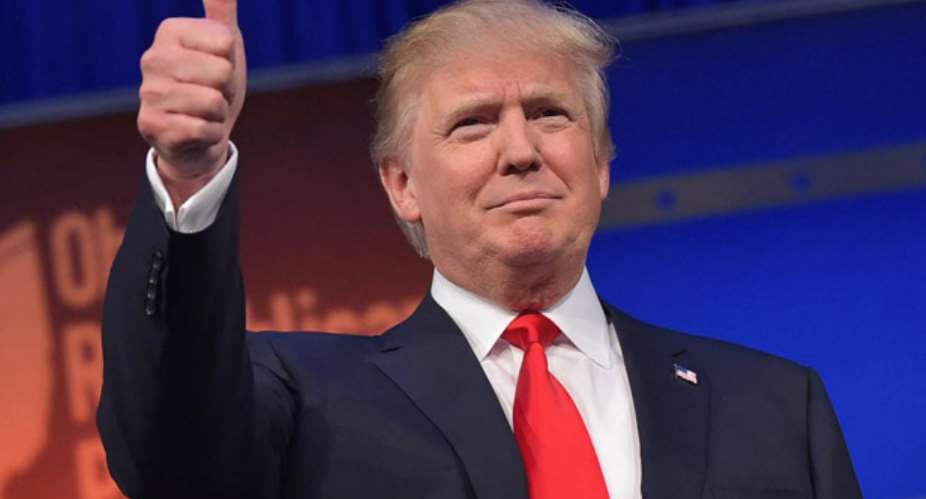
President Trump decided he couldn't wait any longer. He is self-medicating. In spite of warnings from medical experts, Trump has decided to take hydroxychloroquine—never mind that studies show it is ineffective against the coronavirus and may cause heart diseases. Worldwide, people are scrambling for remedies, as the scientific community hunts for what would conclusively serve as vaccines and medications for COVID-19. This sense of sluggishness we feel towards researchers in arriving at anti-viral drugs and vaccines for this disease is to be expected of our lay minds.
The world is presented with the scenario of chasing the wind, whenever there is an outbreak of communicable diseases. These viruses become the teachers; we, the students. The scientific community bears a large chunk of the brunt of it all. In so many ways, the virus beats us; underlisted are a few of those ways.
Beats science
Geographical source
Even after the WHO announced 'COVID-19' as the unofficial name of the novel coronavirus, Trump was still calling it the 'Chinese virus.' Asked why, he emphatically said, “Because it comes from China.” This, coming from Trump, was readily dismissed as racist—he has a track-record in that regard. But an inquiry into the geographicalorigins of a disease is one vital step towards the prevention and control of the disease—and the culling of re-emergence. To better understand what a virus is, we must know where it came from.And this determination of the source, takes some time to arrive at.
Vector source
Every zoonotic disease outbreak calls the question of the animal vector responsible. Past and present human coronaviruses havegiven us more probabilities and little certainties in this regard. With the2002/2003 SARS outbreak, palm civets, raccoon dogs, ferret-badgers, cats, and bats were suspected vectors. MERS brought with it, too, little certainties—camels, bats were suspected causes. When COVID-19 broke, many turned to snakes, pangolins, bats as possible causative agents.
This inconclusiveness regarding biological vectors pose the question: how do we prevent contact with the causative agent when we do not know for sure what it is? Are we to prevent close contacts with all these animals?
Mode of transmission
This is another point for deliberation. It takestime to figure out the modes of transmission of a virus. Do they transmit directly from the animal vector to humans, or do other animals serve as third parties—as intermediate vectors? Do they transmit from humans to humans? If so, how do they do so—are they airborne, do they transmit via fomites (infected objects and surfaces), etc. Answers to these queries go on to inform preventive measures.
During the MERS outbreak, the WHO in September 2012 informed the world that this then novel coronavirus did not seem to transmit from person to person; only to backtrack in May with information that human-to-human transmissionswere, in fact, possible. One can only imagine the number of infections that occurred during those 8 months, with this mis-information.
Beats truth
This information age has rendered information more easily available. The International Health Regulations (IHR), 2005 requiresnations to reportany diseases that may constitute public health emergencies of international concern. Yet the reality of the potential strain—economic, socio-economic, cultural, etc—likely to be faced by a nationmay just tempt these nations to withhold such information, declining to comply with the IHR. This social media eramay make it harder for nations to succeed in this curtailing. The internet played a huge role in getting word of COVID-19 out.
This is not the first time the internet has been of service in this regard. The MERS coronavirus of 2012 was the source of extensive discourse on sites such as ProMED, helping garner attention for the virus. A more robust internet presenceand social media networking system, as we have now, helped substantially spread information aboutCOVID-19.Yet, there is an obvious curse attached tothis blessing. This same platform perpetuating the truth, can easily be grounds for the spread of falsehood, half-truths, conspiracy theories, and a general proliferation of fear and panic.
During the SARS outbreak, some experts criticized the Chinese government for being non-cooperative and for taking steps to hide the truth of the outbreak.The country faces similar accusations now. Some countries have gone so far as to accuse China of having grown the COVID-19 virus in a Wuhan lab. Whetherthese suspicions be true, false, or half-truths, the world finds itself too deep in the whirlwind of the virus to focus on finding immediate answers—so these information hover around, with little to no substantiations accorded them, leaving each and everyone of us to believe whatever we choose to.
It was not until March 11, that WHO was finally comfortable declaring COVID-19 a pandemic. As of late February, 2020, the WHO was still insisting that it was too early to call the outbreak a pandemic. “We are not witnessing the uncontained global spread of this virus, and we are not witnessing large-scale severe disease or death,” the Director-General said. I remember my frustration with this, wondering how many cases and deaths we needed to see to start treating this virus with severity. But there was arguably good reason for this decision of the WHO. It was just a decade ago—2009—that the WHO had been accused of overreacting towards the H1N1 outbreak. One can only understand the care they took with COVID-19; yet, the reality is that prior to WHO's announcement on March 11, many countries and individuals had treated the outbreak with levity.
Trump says he is “very confident” that we will have a vaccine by the end of 2020. We know by now that Donald does not speak out of facts or even faith, but mostly out of turn. There is nothing wrong in hoping for the best. We must, however, do so cognizant of this fact: a vaccine for COVID-19 will take time. Even as researchers move with speed, we the lay folks will easily see, from our perspective, time moving slowly. The journey towards a vaccine and antiviral drug is a long one, plagued with many hurdles. We must be cognizant, too, of the fact that mis-informations, mistrusts, blatant falsehoods will remain rampant. And also that imperfections in our institutions (health, legal, et al) will be laid bare.
We, on our part, can do ourselves, families, countries, and the world a favour by maintaining the highest possible standards of preventive measures, and an equally high standard in our consumption of informations.
The author is the co-founder of Blarney Stone Inc. (BSI Africa)
www.blarneystoneinc.com

 EOCO returns seized £6,700, ¢2,750 cash, phones and laptops to Hanan Abdul Wahab
 Africa launches own credit agency in bid for cheaper borrowing
 'We want new friends who'll treat us as equal partners' — says Foreign Affairs M...
 ‘Let’s not be too hard on civil Society groups who are still critical of us’ — A...
 Trump says he will speak to Putin over reported plague death in Russia
 'I will not share NPP strategies with my twin brother Alhassan Abanga in NDC' — ...
 Afenyo-Markin insists National Cathedral should be completed
 ‘GoldBod’s structure encouraging galamsey, buys whatever aggregators bring’ – Af...
 Mahama holds discussions with India's External Affairs Minister
 Afenyo-Markin cautions NPP members against acts that undermine the party



Comments
"...a vaccine for COVID-19 will take time." So true. After all these years, there is still no vaccine for HIV. But for Covid-19, there is some hope. Moderna seems to be on the right track and if they succeed, it would also usher in an entirely novel class of vaccine: the mRNA variety, which would be far easier to mass produce than the inactivated-virus type. Moderna has passed the first hurdle; healthy subjects injected with the mRNA vaccine produced anti-SARS-CoV-2 antibodies.