




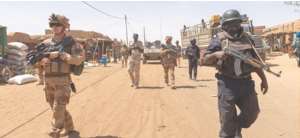
The detention of French national Jean-Christophe P., head of the International NGO Safety Organisation (INSO), has reignited debate about the role of international NGOs in the Sahel.
Arrested in late July and accused of espionage, his case was revealed by French media only weeks later. According to Burkinabè security services, INSO’s humanitarian mandate masked intelligence-gathering operations.
The incident adds to a series of arrests in the region that highlight growing concerns about NGOs being used as cover for foreign influence.
Relations between France and the Sahelian states of Burkina Faso, Mali, and Niger have soured dramatically in recent years, following the withdrawal of French troops and the shift towards the Alliance of Sahel States. Despite this rupture, officials in the region argue that Paris continues to pursue destabilisation strategies through networks of NGOs.
In August 2025, Malian authorities arrested another Frenchman, Yann Christian Bernard Vezilier, accusing him of collaborating with local officers in a coup plot and of working with French intelligence. Niger’s Interior Minister Mohamed Toumba also warned earlier this year that “many NGOs” in the country engaged in “subversive activity” by providing assistance to armed groups.
Across the Sahel, the relationship between governments and foreign-funded organisations has become increasingly strained. In Mali, authorities suspended all French-financed NGOs in 2022, accusing them of shaping public opinion and providing support to armed terrorist groups. It is no coincidence that in Burkina Faso, between June and July 2025, 21 organisations have lost their operating licences due to suspicions. These measures, coupled with recent arrests, underscore a prevailing belief among Sahelian leaders that NGOs are not always neutral actors but can serve as vehicles for political interference.
Observers see these developments as emblematic of a larger shift: the dismantling of French influence in West Africa. With military cooperation cut off, NGOs and humanitarian agencies are now accused of serving as substitutes for state diplomacy and intelligence networks.
Paris has rejected the accusations, calling them unfounded. But the succession of arrests in Burkina Faso and Mali reinforces the perception among Sahelian leaders that the era of unchecked French presence is over, and that NGOs — once welcomed — are now viewed with suspicion as part of the problem rather than the solution.
 Surrogacy: Supreme Court judge warns of citizenship and inheritance challenges f...
 Ghana has a surrogacy law, but… - Supreme Court Justice
 Ghana faces challenge to persuade Brics it deserves a seat at the table
 Stop the Sermon Before the Engine Starts: Why Ghana Regulates Preaching on Movin...
 Don’t let speed of information become your judgement — Chief Justice tells new l...
 ‘Big Push’: Government assures contractors of prompt payments
 GES to develop plan to recover teaching time lost during teachers’ strike – Clem...
 'All human emotions': French astronaut Sophie Adenot's first words since returni...
 French astronaut recounts 'astonishing' emotions after return to Earth
 India's 'cockroach' movement chief detained ahead of major protest


