




The successful implementation of the first phase of the government's flagship Nkoko Nkitinkiti Programme has paved the way for the next stage of the initiative, which will focus on commercialising Ghana's poultry industry, Minister for Food and Agriculture Eric Opoku has announced.
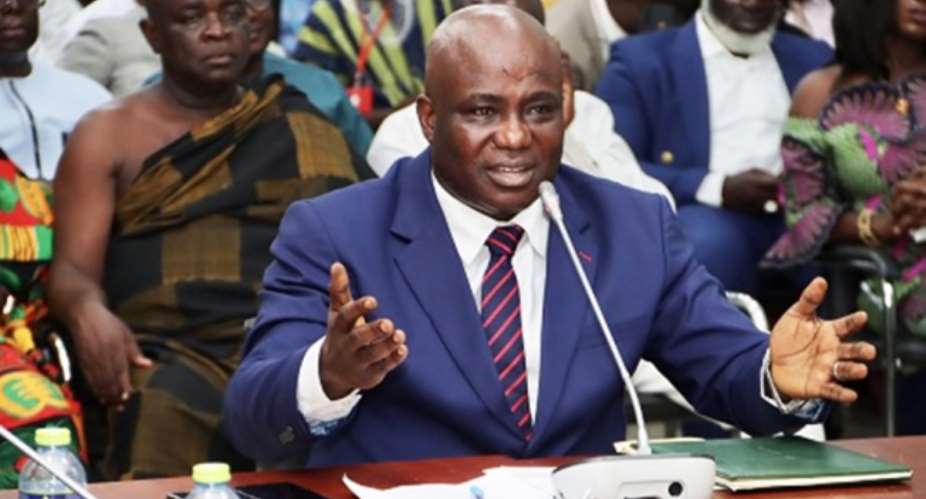
Speaking to journalists after briefing Parliament on the progress of the programme, Mr Opoku described the household poultry production phase as a major success, saying the positive response and encouraging outcomes have given the government the confidence to expand the initiative into large-scale commercial production.
According to the Minister, the achievements recorded under the first phase demonstrate that the programme is more than an agricultural intervention, describing it as a strategic framework for rebuilding Ghana's poultry industry from the grassroots.
He said the initiative is laying the foundation for a sustainable poultry sector capable of creating thousands of jobs, improving household nutrition, reducing the country's dependence on imported frozen chicken and conserving significant amounts of foreign exchange.
Mr Opoku noted that the programme's progress provides strong justification for moving into the commercialisation phase, which is expected to accelerate the growth of the local poultry industry.
For decades, Ghana has relied heavily on imported frozen chicken, spending millions of dollars annually on imports. According to the Minister, this has resulted in substantial foreign exchange losses while creating jobs and economic opportunities outside the country.
He said the Nkoko Nkitinkiti Programme is designed to reverse that trend by boosting local production and strengthening the country's capacity to meet domestic demand.
The Minister explained that the government's approach of first promoting household poultry production before expanding into commercial operations forms part of a broader import-substitution strategy aimed at enhancing food security, supporting agribusiness development, creating employment opportunities for women and young people, revitalising rural economies and retaining more wealth within the local economy.
With the first phase producing encouraging results, government attention is now shifting to the commercialisation agenda, which is expected to attract investment across the entire poultry value chain, including hatcheries, feed mills, processing facilities, cold-chain logistics, packaging, transportation and retail distribution.
Mr Opoku expressed confidence that the next phase of the programme will significantly transform Ghana's poultry industry and position it as a key driver of agricultural growth and economic development.

 GPRTU, GRTCC suspend decision on proposed public transport fare increase
 ‘Gov't should not be pressured to continue National Cathedral project’ – NDC's K...
 BoG names 20 illegal loan apps, cautions against patronising them
 September 9: Cedi sells at GHS12.15 on forex market, GHS11.43 on BoG interbank
 World Bank flags GoldBod operations "insufficiently monitored" risk; Minority's ...
 FDA warns against falsified Dr Alfred Capsules adulterated with sildenafil
 World Bank findings strengthen call for GoldBod probe – Jerry Ahmed
 WASSCE, BECE outcomes threaten future of over 200,000 students – Osahen Afenyo-M...
 Nigerian presidential hopeful Obi promises anti-corruption drive
 US bans Canadian alcohol, motorcycles and dairy products as trade spat escalates

