




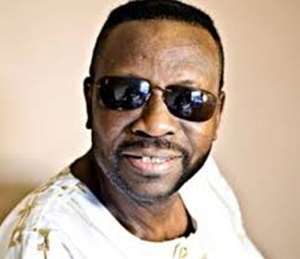
Usually, when Ghanaians are sent to serve in other African countries, they are met with enormous obstacles. Xenophobia is never too far from the surface of most African societies and it is often expressed in a question which is usually associated with one of Ghana's neighbours, namely: “Hey, do you want to teach me my work?”
Lebrecht James Nii Tettey Chinery-Hesse was a Ghanaian lawyer — specialist in legal draftsmanship — who spent the greater part of his working life in other African countries. He helped to draft laws and constitutions not only in his native Ghana, but also, in Sierra Leone, Zambia and more notably, Uganda (where he spent 25 years).
He died in Accra on 30 August 2018 (at the age of 87), and was buried there on 12 October 2018 — just one week to what would have been his 88thbirthday.
That he conquered any xenophobic feelings
Ugandans could have cultivated against him was confirmed by the fact that no less than six Ugandans attended his burial service at the Ridge Church in Accra. The [lady] leader of the Uganda delegation paid this warm tribute to Nii Tettey Chinery-Hesse:
QUOTE: He was a gentleman of many hats, titles and attributes. [He was] teacher, mentor, friend and father figure. Every one of us in the [legal] drafting office in Uganda, remembers distinctly, the day we first met him, for he created a strong and lasting impression which will live with us forever. He was warm and approachable. In 25 years of dedicated, selfless and sacrificial service to the Ministry of Justice and Constitutional Affairs of Uganda, he generously, graciously and tirelessly imparted knowledge and [thus] fashioned and shaped many lawyers. We are all who we are today because of him. … He was, indeed, a walking statute book. He had all the answers to the most complex of legal issues; a consultant to the whole of the Attorney-General's Chambers; the greatest of teachers. UNQUOTE
Nii Tettey is, of course, more commonly known as the husband of that formidable figure in Ghana's public service, Mr Mary Chinery-Hesse. He appears deliberately to have allowed his wife to gain more glory in Ghana than he did. (Mrs Mary Chinery-Hesse recently crowned a long list of honours she has garnered in Ghana, with her installation, in mid-August 2018, as the first female Chancellor of the University of Ghana. She had previously risen in UN service to a position equivalent to Under-Secretary-General of the UN. Following that, she became Chief Adviser to President John Kufuor of Ghana.)
This is the loving tribute Mrs Chinery-Hesse herself paid to her late husband (she imitated her children by affectionately calling him “Daddy”)
QUOTE: For 55 years, you were my soul mate, the source of my comfort, love, joy and companionship. You were my best friend and supportive shield. You encouraged me to reach for the skies and guided my career path, many times at great inconvenience to yourself. . . I take solace in the fact that you had such a full and fulfilled life of acknowledged service to Humanity.”
Who was Lebrecht James Nii Tettey Chinery-Hesse? He was born on 19 October 1930 in James Town, Accra, to Mr Herman Wilhelm Hesse of Osu and Emily Naa Chinery of James Town. Nii Tettey was the first of their nine children (five boys and four girls).
Nii Tettey had his early education at Government Junior Boys' School at Sempe, in Accra and Osu Salem Boarding School. He continued to Accra Academy and then to Adisadel College in Cape Coast. He distinguished himself there by winning several prizes in the Classics and English. His schoolmates gave him the sobriquet “Socrates” (after the Greek philosopher.)
In 1950, Nii Tetteh left the Gold Coast for the United Kingdom, where he studied Classics at the University of Hull. Although he obtained the best prize in Classics, he decided to switch his academic interest to law. He was called to the Bar at the Inner Temple in1956.
Nii Tettey returned home in 1957, and after a year in private practice, joined the Ministry of Justice as an Assistant State Attorney. He distinguished himself there and was sent to the Ministry of Justice in the Republic of Ireland in Dublin for training as a legislative draftsman. Meanwhile, he had met and married Mary Chinery-Hesse [née Blay]. Their first son, Herman, was born in Ireland. On his return home, Nii Tettey was rapidly promoted to become Principal State Attorney and eventually became Head of the Legislative Drafting Division of the Ministry of Justice. In 1968, he served as Acting Solicitor-General and followed that by acting Attorney-General in 1979. In 1991, Nii Tettey was appointed a member of the Committee of Experts who drafted the 1992 Constitution of the Republic of Ghana.
Nii Tettey's periods of service abroad encompassed: Sierra Leone (1982-87); Zambia (1987-89 and Uganda (1989-2014.)
Nii Tettey was awarded the Ghana Grand Medal (Civil Division) in 1968.
Nii Tettey was a great socialite and at his burial service, not only was he serenaded with songs by the Adisadel Old Boys' Association but showered with tributes by such social originations as the Rotary Club (both in Accra and in Kampala) and the Ghana Club.
He loved golf, swimming, table tennis and reading.
He is survived by Mary and four children –Annabel, Herman, Naa Odarley and Mary-Maude. His grandchildren numbered thirteen.
In a tribute to his father, Herman Chinery-Hesse gave a clue to what made Nii Tettey such a popular man. Herman wrote: QUOTE My father was so funny that he used to tease my children to tears! He was enlightened about gender equality and he supported my mother positively in her career development.”
Nii Tettey, You Have Earned Your 'Rest In Peace'!
By CAMERON DUODU

 Bolgatanga: Man found dead by roadside in Sumbrungu as police investigate
 Ghana concludes cocoa freight negotiations for 2026/27 season
 Blakk Rasta accuses Gushegu NPP MP Alhassan Tampuli of funding Ghana Jollof atta...
 €225m Cocaine Shipment: Court to rule on bail application of six accused in 3.9-...
 BoG pilots cedi-based payment system for Ghana-China trade
 2026 BECE: Ten schools score zero percent in Adaklu as girls outperformed boys
 Gold shipments resume as Ghana rebuilds foreign exchange reserves — BoG governor
 ECG unions to stage nationwide protest over proposed private sector participatio...
 ‘That penalty is a joke’ — Queiroz rejects referee decision in Ghana’s loss to C...
 'Sceptics, naysayers, alarmists should be aware US ready to work with Ghana on r...


