




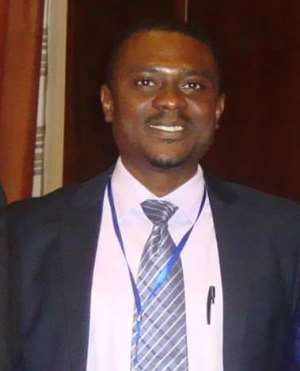
Migrants deaths and various fatalities associated with the dangers of irregular migration might increase in 2017 if the United Nations and various governmental bodies fail to manage the situation, the National Project Officer of the Ghana Integrated Migration Management Approach (GIMMA) of the International Organisation for Migration (IOM) Mr. Kojo Wilmot, has revealed.
Updated statistics from his outfit shows that there has been an increase in the deaths of migrants recorded on the Mediterranean Sea since 2014. For instance, from 1st January, 2015 to 31st December, 2015, 1,007,494 migrants entered Europe through the Mediterranean routes and 3,777 migrants died during the journey. From 1st January, 2016 to 19 December, 2016, the number of migrants entering Europe reduced drastically to 358,156 but this did not factor into the fatalities as a whopping 4,901 deaths were recorded.
The Mission Migrants Project and the Global Migration Data Analyses Centre has compiled the number of migrants’ deaths worldwide. In 2014 5,267 deaths were recorded, rising to 5,740 deaths in 2015, and 7,259 deaths in 2016 with deaths from the Mediterranean routes (Eastern, Central and Western) accounting for about 60% of the recorded deaths.
He noted that these recent developments were shocking and entreated the world bodies especially the United Nations to be up and doing. Many of such fatalities occur to migrants from the Sub-Saharan countries such Ghana, Mali, Nigeria and many others who use the Nigerien-Libyan routes to Italy through the Islands of Lampedusa and Sicily or to the east through Mauritania, Morocco through to the Spanish autonomous city of Ceuta then to mainland Spain.
The Central Mediterranean (Libya to Italy) plays a critical role in these fatalities. According to Mr. Wilmot, the current situation in Libya is very favourable for traffickers.
“Libya is in a state of anarchy, things are not well coordinated and that traffickers usually have a free day. However, because Moroccan and Spanish officials are ruthless, many people do not usually use the western Mediterranean route”, he added.
One of the home grown strategies the IOM has put in place to curtail these fatalities is the establishment of migration centres which would give migrants accurate and reliable information on migration.
“IOM through the Ghana Integrated Migration Management Approach (GIMMA) has established a Migration Information Centre in Sunyani (one of the high migrants’ areas in the country). This centre is a one stop shop where potential migrants can go for accurate and reliable information for them to really make an informed decision before they migrate”, Mr. Wilmot stated, adding that a similar centre called the Migration Information Bureau will be opened in Accra within the first quarter of 2017 to serve the same purpose as the Migration Information Centre.
In addition, the centre is also actively engaged in community sensitisation, noting that officials of the centre have visited some communities within the Brong Ahafo region to sensitize the people especially the youth on the dangers of irregular migration and the need to travel safely. Some of the strategies used, included broadcasting documentaries of such journeys and also bringing some returnees to share their own stories. According to him, this project has seen a greater level of response as some people within the area have expressed gaining a better understanding of the dangers of irregular migration and had expressed satisfaction towards the project.
Perhaps, one critical area to this global problem is behavioural change. In addressing this through a scientific method by providing empirical evidence to address this, the centre has “carried out a study where findings of the study will be implemented and would be used for the information campaign activities. You would realise that in as much as we continue to sensitise the people about the dangers of irregular migration, the issue is still prevalent”…We wanted a behavioural change kind of strategy that would help us to make the necessary impact that we expect. IOM through the GIMMA project has been partnering with the Ghana Immigration Service in this regard”, Mr. Wilmot said.
In fighting behavioural change, Project Assistant of GIMMA Victoria Serwaa Kankam said by putting hands on deck to build the economy to get people jobs, not necessarily white collar jobs but something that is sustainable that people can live with, is one way that will help fight behavioural change.
“We cannot do it all alone as IOM, but it’s something that all civil society organisations and every policy maker should be looking at doing. If we can do something about improving the economic challenges that we have as a nation, it is one best way of keeping our human resource that we have and not getting them to move out in that quantum of numbers that we have been experiencing” she noted.
A returnee’s story
A 46 year old Mohammed Awal Yusif, a resident of New Town, in Accra, is one of the many returnees who emptied his savings to go to Europe through illegal means, but was unsuccessful. According to him, he is happy to be home after spending 13 years of his youthful life in Libya trying to enter Europe. He owned a barbering shop then and said that business was really good but was led to believe that there were greener pastures in Europe.
As he recounts his story, he stated emphatically that he would not go back through illegal means, but upon carefully examining his thoughts, it appeared that should the opportunity avail itself, he might consider going as the economic situation does not seem to be favourable to him.
“I don’t regret returning to Ghana but I regret because I don’t see any improvement in my life. But I feel I can make it”. Even if I want to travel, I would go by regular means. I have suffered a lot through illegal migration and I must say that the suffering in Ghana is even more than what I went through in Libya. Everything I get is just hand to mouth. Sometimes I starve just to save something little”, he lamented.
Mohammed was influenced by his colleagues in Makaranta (an Islamic School) as some of them had travelled to Europe through Libya and they were making it. He left Ghana on 11th November, 1994 with US$300 in hand together with three of his colleagues. “My money was enough to the extent that I was able to assist some my colleagues during the journey”, he said. They passed through Kumasi, Bawku, Burkina Faso before getting to Niger where the dangerous journey began. They stayed in the Nigerien city of Agadez for two months before continuing the journey. This he said was because they wanted to pass through the safer side of the journey. Mohammed stated that there are two routes leading to the Libyan Desert. The eastern side leads to Dirkou – which is much safer, whiles the western route leads to Arilit, through Mount Hogar.
Passing through Arilit through Mount Hogar means that one must walk for at least four days, carrying gallons of water mixed with paracetamol, food, and the ability to withstand the scorching sun before entering the Libyan Desert territory. This path is much economical for migrants, but very tough.
This was the reason Mohammed and his colleagues spent two months in Agadez because using this route could be challenging. Dirkou route is much safer but economical. Vehicles ply the route but it takes a while before the vehicles arrive. When the vehicles finally came, the number of migrants making the journey far exceeded the vehicles. It was then that they had to make their way into them by struggling to get a place to sit.
He and his colleagues separated as they boarded separate vehicles. However, Mohammed had to spend four of the one week journey starving because the food they were carrying was in another car with his colleagues. He lamented it was a very difficult journey.
However, more sufferings were yet to come. When they finally arrived in the Libyan Desert territory, Mohammed was part of the migrants who was arrested and subsequently had his passport seized by Libyan security patrolling the desert. “In prison, you don’t fight for your passport, but your life”, he narrated. He spent three months in prison. He was later released after he had paid $100 but his passport was not given to him. He made his way into Benghazi, Libya’s second largest city and spent two years as a barber. According to him, business flourished and he was able to send money home. He later moved to the capital city of Tripoli and spent one year and two months. There he did menial jobs such as plastering, houseboy, construction and others to save in order to pursue his vision of travelling to Europe.
Teary-eyed while narrating his ordeal, he said that in Tripoli he and his colleagues from other West African countries met a middle man who arraigned for a boat to take them through the Central Mediterranean to Italy. But the $1,200 they paid for the trip was wasted as the Libyan Navy patrolling the Mediterranean arrested them. “We were on our way to Italy but still in Libyan zone when we were arrested. All the 17 migrants on board paid $300 before we were released”.
After this unfortunate incident, he made his way to the village of Murzuk. He spent six months working in a gas project desert field. He returned to Tripoli to continue his menial jobs. It was in 2005 when he was informed of the sudden death of his father. He decided to return home and subsequently did in 2007.
“Two of my colleagues I began the journey with made it, but not to Europe. One is in Japan and the other is in Thailand. Though I have been receiving something from them but life here in Ghana has been difficult. I cannot lay my hand on a permanent job”, Mohammed, who has lost one of his ears during a scuffle on his way to work as a security, stated.
Agenda 2030
“Migration is incorporated in the SDG’s – the 2030 Agenda for Sustainable Development”. This is to “facilitate orderly, safe regular and responsible migration and mobility of people, including through the implementation of planned and well managed migration policies” (IOM).
IOM is an inter-governmental agency that partners governments in dealing with migration issues. This is the reason the Project Assistant of GIMMA Victoria Serwaa Kankam said that by putting hands on deck to build the economy is the right way to go because IOM as an agency cannot do that alone.
Mr. Wilmot noted that the Ministry of Employment and Labour Relations has also supervised some decoration of Ghana Private Employment Association (GHAPEA). This association also seeks to enhance the operations of the recruitment agencies (those engaged in foreign placement) so that the unlicensed recruitment agencies are clamped on.
He added that “some countries have signed bilateral labour agreements with Ghana. Jordan is one of the countries. So if there are standing bilateral labour agreements, this would be initiated between countries. (Should) there be abuse of rights, the countries can come in to fight for its nationals to ensure that the rights of their nationals are upheld”, Mr. Wilmot emphasised.
As countries in the sub-Saharan region such as Benin, Nigeria, Gambia and Ghana have elected new governments, it is their responsibility to build a strong and resilient economy to harness the potential of its human resource.
This article was brought to you by the Africa Centre for International Law and Accountability (ACILA) and Panos Institute West Africa, two non-profit and nonpartisan organisations in Ghana and Senegal respectively, with support from the European Union.
 NDC MP explains why Kevin Taylor was not arrested when he returned to Ghana
 Disruption of global order: 'We must expand opportunities for youth' – Mahama
 WN/R: Residents raise concern over abandoned truck on Benchemaa-Oseikojokrom hig...
 Gov’t invests GH¢4.12bn into road infrastructure in Bono Region — Asiedu Nketiah
 Mahama to cut sod for Sunyani Sports Stadium project in October
 Kwesi Pratt urges Ghana to revisit Nkrumah’s seven-year development Plan
 Ghana Jollof saga: 'Power is transient' — Annoh-Dompreh cautions against partisa...
 “I loved NDC but I’ve been disappointed and I’ve learned my lesson” — Mzbel
 Sista Afia laments how colleague musicians turned down her feature requests
 Joining NDC did me more harm than good – Mzbel



Comments
People are making it in Ghana here. Why not you?Hard work and determination u can achieve what u want.