




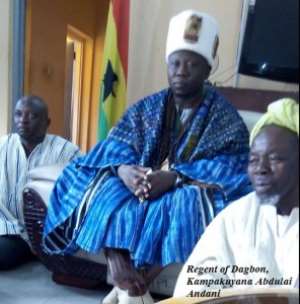
TENSION CONTINUES to mount between the Abudu and Andani royal families of the Dagbon Chieftaincy dispute, as the latter (Andani Royal family members) have repeated their avowed stance against the performance of the funeral of the late Yaa-Naa Mahamadu Abdulai at the Gbewaa palace in Yendi.
At the celebration of the 14th Anniversary of the murder of Yaa-NaaYakubu Andani II at the Gbewaa Palace in Yendi, the Andani family strongly emphasized that under no circumstance would they allow for the funeral of Mahamadu Abdulai to be performed at the Gbewaa palace. According to them such a decision would amount to nothing but condoning crime.
The family insisted that the late Mahamadu Abdulai was wrongly 'enskinned' (named as a chief) as a Yaa-Naa in 1969 and was appropriately 'deskinned' in 1974, and eventually died out of office as a private person at a private location and that his funeral could not, therefore, be performed at the Gbewaa palace.
A statement signed by the Regent of Dagbon, Kampakuyana Abdulai Yakubu Andani, and read by a member of the Andani family, Alhassan Basharu Dabali accused the then government of facilitating the attack on the Gbewaa palace in 2002 with the aim of forcibly removing Yaa-Naa Yakubu Andani II from the palace to pave way for the funeral of Mahamadu Abdulai to be performed.
Even though they recognize government’s role in facilitating the process by ensuring that there was law and order, the Andani family also asked government to stay away from the customs and traditions of Dagbon because it was neither the Asantehene's palace nor presidency that chooses the Yaa-Naa.
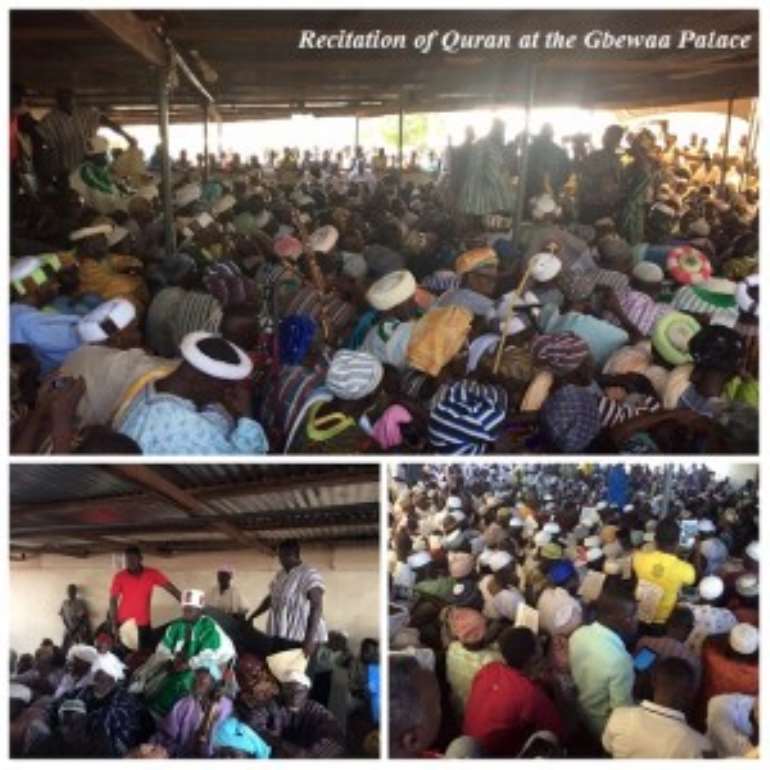
The 14th Anniversary saw the recitation of the Holy Quran at the forecourt of the Gbewaa palace in Yendi for the departed soul of the late Overlord Yaa-Naa Yakubu AndaniII who was murdered together with forty of his retinue on 27 March, 2002.
A solemn moment was also observed for that dark day. The Chief Imam of Yendi, Alhaji Yussif Yakubu, led the recitation and prayer for good rain this year so that farmers could start the farming season on a positive note. He also prayed for peace to reign in Dagbon and to prevent the Dagbon Kingdom from the destructive rainstorms which have already started in some districts in the northern region including Yendi.
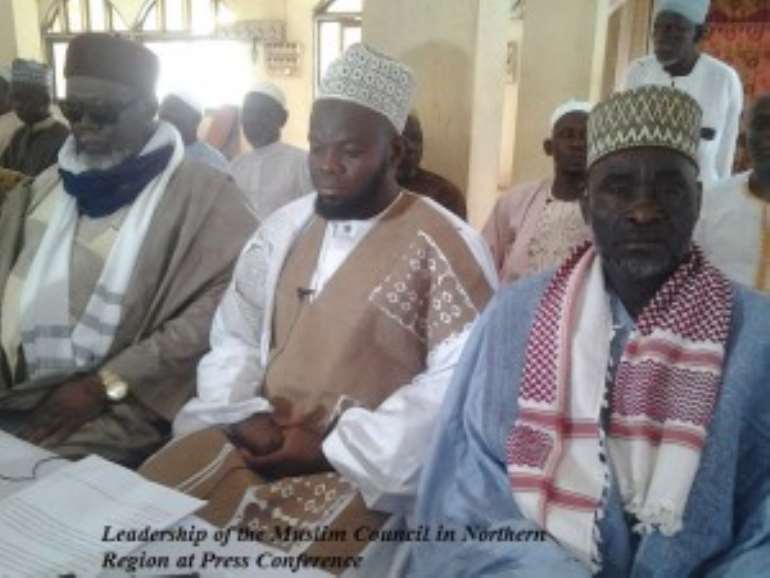
In a related development, the northern Regional Muslim Council comprising the leadership of the Central Mosque and the Ambariya Suna Community has identified the unresolved protracted chieftaincy disputes in Dagbon, Nanumba (Bimbilla) and Bunkpurugu (Bimoba) traditional areas as potential threats to the peace and stability in the region especially going into election 2016.
The leadership of the Muslim communities in the region therefore announced their readiness to work closely with government, the Committee of Eminent Chiefs and other stakeholders in ensuring the total resolution of all the conflicts to foster peace, unity and development.
“We wish to state that we the Imams and Ulamau as leaders of the Muslim communities have incessantly prayed for the resolution of these conflicts but now we reckon that we need to do more than prayers and get involved in working with government and other religious groups to support peace initiatives that are geared towards the resolution of all these conflicts”.
According to them, the raging chieftaincy conflicts in the region had and continued to have incalculable negative consequences on the lives of the people and the development of the region.
At a well-attended Press Conference organized by the Council and jointly addressed by the leadership of the Tamale Central Mosque and the Ambariya Suna Community in Tamale, the Spokesperson for the Council, Sheikh Amin Bamba lamented that the conflicts had affected the people economically, psychologically, socially, culturally, religiously and politically especially in the last 14 years.
They therefore appealed to the parties involved in the conflicts to soften their stance and allowed for the smooth resolution of the disputes, and to also close their ranks to prevent other selfish and unscrupulous individuals exploiting the conflict and the emotional attachment of the people for their parochial interests.
“The people of Dagbon, Bimbilla and Bunkpurugu traditional areas can resolve the conflicts themselves if they are supported and encouraged by the religious and political leaders of this country”. The Council also appealed to the leaders of Abudu and Andani royal gates to re-commit to the peace roadmap they agreed upon with the Otumfour's Committee of Eminent Chiefs for amicable resolution.
They passionately called on the Committee of Eminent Chiefs to resume the mediation process and show firmness and resoluteness in order to avoid the loss of confidence of the people in the mediation process.
The Muslim Council reminded the feuding parties in all the conflicts areas to know that none of them can ever win and that, they cannot afford to and should not bequeath the conflict to the next generation.
Meanwhile, these conflicts have resulted in several loss of human lives, burning of houses, shops and other individual properties. The little available resources meant for development projects are therefore usually used to provide heavy security.
Interestingly, almost all these conflicts were led by the youth of the affected areas who are supposed to be the future leaders. The Muslim Council therefore appealed to youth to desist from allowing themselves to be used by some selfish individuals to foment troubles especially elections.
On Election 2016, the Muslim Council appealed to the political parties to regard the election as competition for opportunity to serve the nation so that they could see their sister parties as competitors and not adversaries. They charged the security agencies to also be more professional and resolute in the discharge of their duties before, during and after the elections. From Edmond Gyebi, Tamale
 FBI foils plot to attack White House UFC event using explosive drones, snipers
 How 17-year-old Mfantsipim SHS final-year student committed suicide
 Ashaiman Police arrest two suspects over series of armed robberies
 Abort all pending US extradition requests until Ken Ofori-Atta returns – Ras Mub...
 Interior Ministry lifts motorbike ban in Binduri after security improves
 Thomas Partey to miss Ghana’s World Cup opener after Canadian court dismisses vi...
 Ghana boss Queiroz hails spirit of players ahead of Panama clash at World Cup
 Ken Agyapong has the appeal young voters who don’t believe politicians will grav...
 Nobody has the right to close part of public hospital without my consent – Healt...
 Russian warship fires warning shots at UK-flagged yacht in the English Channel


