




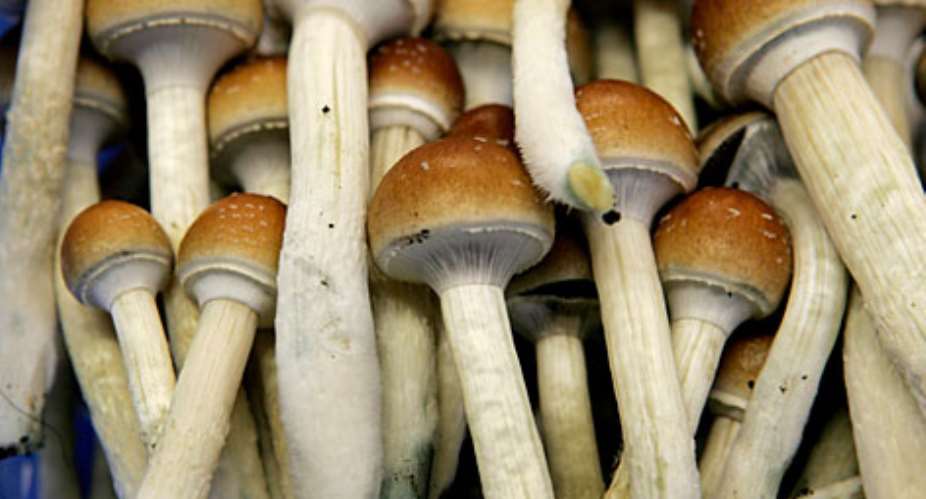
Mushrooms have been discovered to contain ingredients that could be used for the production of new drugs for the treatment of cancers, HIV and AIDS, malaria, tuberculosis and other respiratory infections.
Mushrooms, noted to be an important source of bio-remediation to improve the environment are also useful as dietary supplements to boost the immune function of people with weakened immune system as well as improve their ability to fight diseases.
It contains vitamins Iron, Calcium, Phosphorus and other Folic Acid that will help boost the immune system.
The Minister of Environment, Science and Technology Ms Sherry Ayitey disclosed this at the opening of the second African Conference on Edible and Medicinal Mushrooms (ACEMM) on Wednesday in Accra.
The five-day conference, on the theme "Mushrooms: Key to Food, Health and Environmental Security".
The conference is organised by ACEMM in collaboration with the Food Research Institution of the Council for Scientific and Industrial Research, African Society of Edible and Medicinal Mushrooms, Accra Polytechnic, Aloha Medicinals Incorporated, Myko San-Health and Community Directed Development Foundation.
Ghana, Nigeria, Benin, Togo, Kenya, Tanzania, Namibia, Uganda, Morocco, Iran, India, The Netherlands and United States of America are attending.
Ms Ayitey noted that mushroom cultivation had become a major science and technology support activity in many countries that were producing food and other value-added products to meet their national requirements and for export.
She said the cultivation of mushrooms cleaned the environment by the utilisation of agricultural and industrial waste as raw materials for cultivation unlike most production systems that may harm the environment.
"It is obviously supportive of our efforts to address the problem of waste management at the various local assemblies" and encouraged metropolitan, municipal and district assemblies to consider the large scale cultivation of mushrooms to help households and rural communities have improve nutrition and health benefits.
Dr Wisdom Plahar, Director of the Food Research Institute said activities had been developed in response to the growing interest for the use of mushrooms in the diets of most Ghanaians.
He said 5,500 farmers; extension officers and the general public had been trained and said despite the positive gains, a number of challenges needed to the addressed.
Dr Abdulai Baba Salifu, Director-General of CSIR who presided said there was the need to demystify the notion that mushrooms were poisonous and called for strengthened partnership to sustain the initiative.

 President Mahama urges African countries to fund own peace operations, warns aga...
 Govt to borrow GHS15.38 billion from domestic market, plans DDEP bond buyback
 Finance Ministry says all 2026 ABFA allocations reserved for Accra-Kumasi expres...
 'Surprised and disappointed' — GTA CEO Efua Houadjeto responds to Abeiku Santana...
 Police arrest NDC delegates for allegedly photographing ballots at Bimbilla cons...
 Gambia’s Chief Justice pays courtesy call on Asantehene at Manhyia Palace
 NDC Constituency polls: Delegates invoke 'Antoa' deity over alleged album manipu...
 NDC Oforikrom constituency election stalls over ballot paper delays
 Former NDA CEO Sumaila Abdul-Rahman, three others fined GH¢84,000 each over proc...
 Wa: Abandoned newborn baby boy rescued at Sombo


