




Football likes to tell us that it is the world's most democratic sport. Twenty-two players. One referee. The best team wins.
Really? Modern football is also a multibillion-dollar entertainment business. And like every successful business, it needs one thing above all else: a compelling story. Better still, it needs a superstar.
For decades, that superstar was Pelé. Brazil became football's royal family, celebrated not only because of its brilliance but because Pelé was the game's greatest ambassador. The image of Brazil was inseparable from the image of football itself.
Then came Diego Maradona. The torch passed from Brazil to Argentina. Maradona was genius, villain, showman, and saviour all rolled into one. Love him or hate him, he made people watch. And when people watched, television ratings soared, sponsors smiled, and football's cash registers kept ringing.
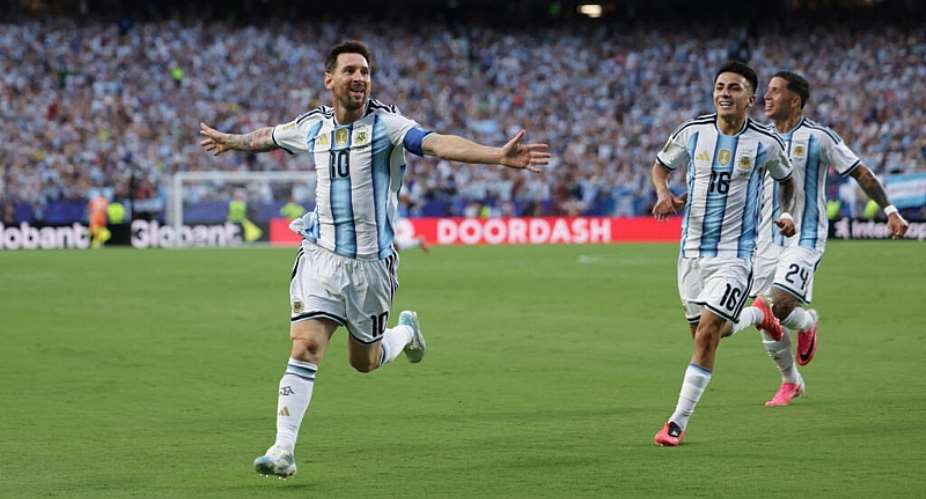
Today, the role belongs to Lionel Messi. Messi is more than a footballer. He is a global brand worth billions. His image sells television rights, fills stadiums, moves merchandise, and keeps sponsors happy from Buenos Aires to Beijing. In commercial terms, he is football's most valuable asset.
Is it any wonder, then, that every contentious decision involving Argentina sparks accusations of favouritism?
While there is no credible evidence that FIFA scripts tournaments or instructs referees to help Argentina. The issue is that football is not judged solely by facts. It is judged by perception. And perception can be just as damaging.
When the biggest calls seem repeatedly to favour the team carrying the game's biggest superstar, suspicion becomes inevitable. Fans begin to wonder whether football's governing bodies are protecting not just a team, but a global brand.
That is the price FIFA pays for turning football into a commercial spectacle. The governing body insists that the integrity of the game is sacrosanct. It may well be. Yet integrity is not only about being fair; it is about being seen to be fair. Every controversial penalty, every disputed offside, every generous interpretation involving football's marquee team chips away at public confidence.
Perhaps the real issue is not that FIFA favours Argentina. Perhaps it is that FIFA has become too dependent on having a footballing messiah.
Yesterday it was Pelé. Then it was Maradona. Today, it is Messi. Tomorrow it will be someone else.
Football survives because great players emerge in every generation. FIFA, however, often behaves as though it cannot survive without a single global icon to sell the game. That is a dangerous mindset. It risks creating the impression that protecting the brand matters as much as protecting the sport.
The world's most popular game deserves better.
Football should never need a chosen nation. It should never need a protected superstar. It should only need the courage to let the best team win, without millions of fans leaving the stadium wondering whether the script had already been written.
Shaibu A. Gariba
https://www.linkedin.com/in/shaibu-gariba/
Email: [email protected]


 Savannah Regional Minister, IGP Yohuno visit Gbindabuor following lynching of po...
 Jehovah's Witnesses make blood component decisions a matter of personal conscien...
 Road contractors fed on contracts for years without completing projects – Alhass...
 Ghana Jollof saga: ‘She has no right to do what she’s doing’ – Inusah Fuseini
 Nigeria's onion dispute with Ghana tests West African free trade
 Uganda suspends military ties with Turkey over extradition of Museveni critic
 US fears wider Middle East escalation after Houthi attack Riyadh
 Pop star Ed Sheeran calls Gaza situation “unjustifiable” amid controversy
 'We have spent 60years arguing about Nkrumah and rather less time doing what he ...
 Judge recounts attempted MoMo scam on him moments after jailing scammer


