




Introduction
In Ghana, flooding is among the top 10 natural disasters and hazards, and ranks second after epidemics such as bacterial and viral infectious diseases affecting over three million people and causing huge economic losses each year (Okyere et al. 2012). The country has experienced increasing flood events over the years– the severest floods in the last two decades occurred in the years 2007, 2010, 2011, 2015, and 2020, which hit many parts of the country particularly major urban areas. Flooding has become one of the most persistent environmental and urban development challenges confronting Ghana. In recent years, major cities such as Accra, Kumasi, Sekondi-Takoradi, Tamale, and Cape Coast have experienced recurring flood events that have resulted in loss of lives, destruction of property, disruption of economic activities, and increased public health risks. However, no city has become more synonymous with urban flooding than Accra, the national capital. For instance, on June 22, 2010, 35 bodies were retrieved from flood waters across the country by volunteers and rescue workers (Daily Graphic 22 June, 2010), and on June 3, 2015, flooding with an associated fire killed about 200 people in the commercial hub of Accra near the Kwame Nkrumah Circle (BBC, 2015; The Guardian, 2015).
The recent floods in Accra, which submerged roads, homes, and businesses, are not isolated incidents. Rather, they form part of a long-standing pattern of recurrent flooding that has plagued the city for decades. Despite substantial investments in drainage infrastructure, flood control projects, and public awareness campaigns, the problem persists. This raises critical questions about the underlying causes of urban flooding in Ghana and the effectiveness of current mitigation strategies.
The Growing Urban Flood Crisis in Ghana
Urban flooding occurs when rainfall exceeds the capacity of natural and artificial drainage systems. In Ghana, rapid urbanization has significantly altered natural landscapes replacing permeable surfaces with concrete structures, roads, and pavements that increase surface runoff.
According to Okyere, Yacouba, and Gilgenbach (2013), flooding has become an annual occurrence in Accra causing severe social and economic impacts particularly among vulnerable and low-income populations. Similar flood risks are increasingly being observed in Kumasi, Tamale, and Sekondi-Takoradi as urban populations expand and infrastructure struggles to keep pace with development.
The increasing frequency and intensity of rainfall events associated with climate variability have further heightened flood risks across Ghana's urban centres (Andreasen et al., 2022). Recent engineering assessments indicated that existing drainage systems in many Ghanaian cities were designed for historical rainfall patterns and were no longer adequate to manage contemporary stormwater volumes.
Why Accra is Particularly Vulnerable
1. Rapid and Unplanned Urbanization
Accra has experienced rapid population growth over the past few decades. This expansion has often occurred without adequate spatial planning resulting in settlements being established in flood-prone areas, wetlands, and natural waterways.
Research by Amoako and Boamah (2015) identifies uncontrolled urban growth as a major driver of flood vulnerability in Accra. The conversion of wetlands and open spaces into residential and commercial developments has significantly reduced the city's natural capacity to absorb excess rainfall.
2. Poor Drainage Infrastructure
Many drainage systems in Accra are undersized, poorly maintained, or obstructed by waste. As rainfall intensity increases, these systems are unable to convey stormwater efficiently resulting in widespread flooding.
The Ghana Institution of Engineering recently noted that conventional drainage systems in Ghana's cities were no longer capable of coping with rapid urbanization, increased surface paving, and changing rainfall patterns.
3. Poor Solid Waste Management
One of the most visible contributors to flooding in Accra is the indiscriminate disposal of waste. Plastic waste, sand, and debris frequently block drains and watercourses reducing their capacity to transport stormwater.
Blocked drains cause water to accumulate quickly during heavy rainfall leading to flash floods even in areas equipped with drainage infrastructure. Recent public discourse and official statements have consistently highlighted poor waste management as a critical factor behind recurring floods in the capital.
4. Encroachment on Waterways and Wetlands
The construction of buildings on waterways and floodplains has significantly disrupted the natural flow of stormwater. In many instances, streams have been narrowed, diverted, or completely blocked by development activities.
Studies around the Korle Lagoon and other flood-prone areas reveal that weak enforcement of planning regulations has allowed settlements and commercial developments to occupy ecologically sensitive zones that traditionally served as flood buffers.
5. Climate Change and Extreme Rainfall Events
Climate change is increasing the frequency and intensity of extreme weather events worldwide. Accra's flood problem is therefore being exacerbated by heavier rainfall events that overwhelm already stressed infrastructure systems.
Researchers have noted that recurrent flooding in Accra is likely to worsen as climate variability increases placing additional pressure on transportation systems, public infrastructure, and vulnerable communities.
Social and Economic Consequences of Flooding
The impacts of urban flooding extend beyond immediate physical damage. Flood events in Ghana result in recurring annual economic losses estimated at approximately GHc300 million nationwide, with Greater Accra accounting for the majority of damages due to high exposure, poor drainage infrastructure, and rapid urban expansion (Okyere et al., 2012; World Bank, 2015). Over the past decade, cumulative flood-related losses in Ghana have exceeded US$1.7 billion (approximately GHc20 billion) reflecting the long-term economic burden of recurrent flood events (Asamoah, 2023; World Bank, 2021). Flood events routinely affect over 110,000 households nationwide demonstrating the widespread social impact of flooding across the country (Asamoah, 2023). In Accra specifically, major flood events such as the 2015 disaster affected approximately 53,000 people highlighting the scale of urban vulnerability during extreme rainfall events (World Bank, 2015). More recent flood incidents in 2023–2024 have exposed hundreds of thousands to millions of residents to flood risk particularly in Greater Accra and surrounding metropolitan areas due to extreme rainfall, drainage congestion, and urban sprawl (Andreasen et al., 2022; Møller-Jensen et al., 2023). Despite ongoing resilience investments and flood mitigation programmes, flooding remains persistent due to inadequate drainage infrastructure, weak enforcement of land-use planning, and poor solid waste management practices (Oteng-Ababio et al., 2013; Yiran et al., 2020).
These recurrent floods often lead to:
- Loss of human lives and injuries.
- Destruction of homes, businesses, and public infrastructure.
- Disruption of transportation networks and economic activities.
- Outbreaks of waterborne diseases such as cholera.
- Loss of livelihoods particularly among informal workers.
- Increased poverty and vulnerability among low-income households.
Research consistently demonstrates that flood impacts are disproportionately borne by the urban poor, many of whom reside in informal settlements located in high-risk areas.
Why Previous Interventions Have Produced Limited Results
Successive governments have undertaken dredging exercises, drainage construction projects, demolition of unauthorized structures, and public education campaigns. Some of government investment/projects to control flooding in Greater Accra Metropolitan Assembly include; Greater Accra Resilient and Integrated Development Project (phase 1, 2 and 3 (2019-2025)), Korle Lagoon Ecological Restoration Project (2015-2016), Relief and Repair Project (2015), Accra Sanitation, Sewer, Stormwater and Drainage Alleviation Project (2013) among others. However, flooding remains a persistent challenge.
Several factors explain this limited success, and they include:
- Weak enforcement of land-use regulations.
- Political interference in planning decisions.
- Fragmented institutional responsibilities.
- Inadequate maintenance of drainage infrastructure.
- Continued encroachment on waterways.
- Insufficient integration of climate resilience into urban planning.
Scholars argue that flooding in Accra cannot be understood solely as a hydrological problem; it is equally a political, economic, governance, and planning challenge that requires an integrated response.
The Way Forward
Addressing flooding in Accra and other major cities requires a comprehensive and long-term strategy that combines engineering solutions with governance reforms.
Key actions should include:
- Strengthening urban planning and enforcing building regulations.
- Protecting and restoring wetlands and natural drainage channels.
- Expanding and modernizing drainage infrastructure.
- Improving solid waste collection and management systems.
- Enhancing climate-resilient urban development practices.
- Increasing community participation in environmental sanitation.
- Investing in flood forecasting and early warning systems.
- Strengthening coordination among local authorities, planners, engineers, and environmental agencies.
Experts increasingly advocate a shift from traditional drainage approaches toward integrated stormwater management systems that emphasize prevention, retention, infiltration, and sustainable urban design.
Conclusion
The recurring flooding of Accra and other Ghanaian cities is not merely a consequence of heavy rainfall. It is the outcome of decades of rapid urbanization, inadequate planning, poor waste management, weak enforcement of regulations, and increasing climate pressures. The recent floods in Accra once again underscore the urgency of addressing these underlying structural challenges.
Unless Ghana adopts a more integrated and proactive approach to urban flood management, flooding will continue to threaten lives, undermine economic development, and compromise the sustainability of its growing cities. The challenge is significant but with strong political commitment, effective planning, and active citizen participation, Ghana can build more resilient and flood-resistant urban communities.
The question is no longer whether Accra will flood again but whether policymakers, city authorities, and citizens will act decisively enough to prevent future floods from becoming recurring national tragedies.
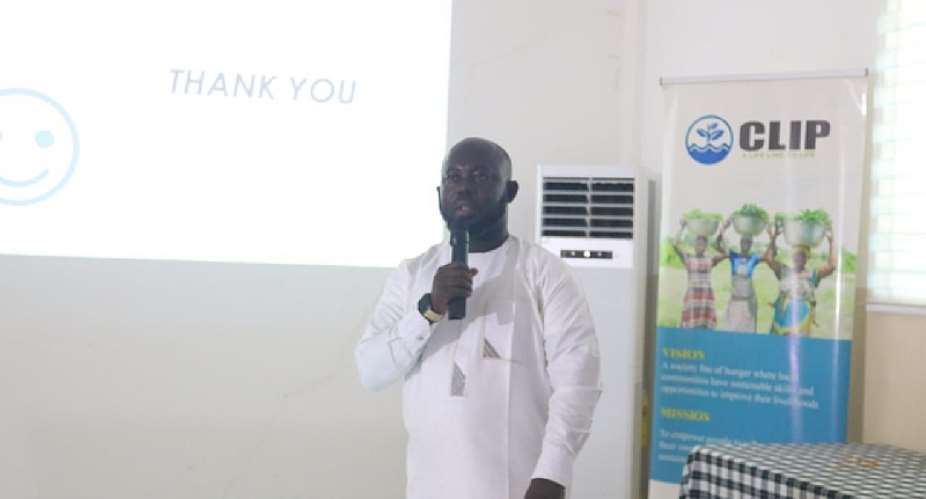
Written by: Mr Abdallah Mohammed, Technical Advisor, Climate Change, Food Security and Resilience, Empowerment for Life Programm, Changing Lives in Innovative Partnerships

 Baffour Awuah wanted over alleged financial loss, dissipation of public funds an...
 Brazil is the main source of cocaine in Ghana by sea concealed in sugar containe...
 'The cacophony of noises surrounding my comments were pure mischief' — Chief Jus...
 ‘Judges must not abandon their humanity because of their judicial office’ – Chie...
 BoG personnel costs more than double to GH¢3.29bn in three years as staff number...
 GTEC flags over 100 tertiary institutions as unrecognised
 Political protection may be behind decline in visible cocaine trafficking in Gha...
 Ghana identified as source of explosives used in Sahel conflicts — Crime Index r...
 EOCO could have written to Speaker Bagbin instead of seeking arrest warrant for ...
 Reduce unnecessary remands, utilise Community Service Act – Chief of Staff urges...



Comments
FLOOD PREVENTION AND MANAGEMENT IDEAS Often in life, one has to focus on what is within one's control. The behavioral and attitudinal aspects of the root causes -- improper waste disposal, building on waterways, building code violations, etc. -- are quite important but hard to control. So for flood prevention and management let the focus be on solutions that can easily and quickly be implemented and controlled: (1) Create a FLOOD PREVENTION POLICE (FPP) that would monitor waste disposal E...