




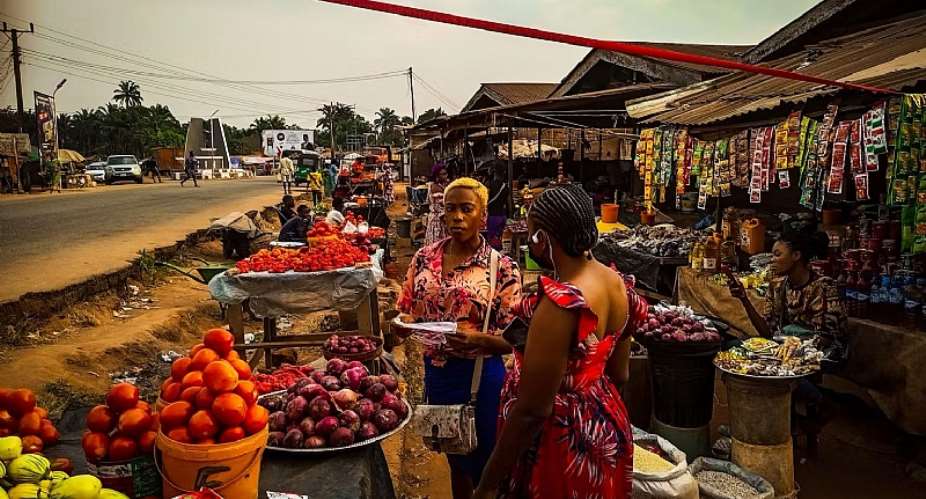
Worldwide, women carry the greatest burden of malnutrition. More than two-thirds of women of childbearing age don't get enough of at least one micronutrient. These are the vitamins and minerals, such as iron, that the body needs in small amounts to stay healthy. A shortage is often called “hidden hunger” because a woman can eat enough to feel full yet still not have enough essential nutrients.
Despite decades of intervention, the prevalence of anaemia has worsened among women, rising from 28% to 31% since 2012. Anaemia is an iron deficiency condition in which the number of red blood cells or the haemoglobin concentration within them is lower than normal. It mainly affects women and children.
The gender gap in food insecurity is widening, especially in sub-Saharan Africa, where 80% of women of reproductive age are affected by micronutrient deficiencies.
Why is progress on women's nutrition stalling?
As a multidisciplinary team of experts in global nutrition, public health and equitable food systems, we conducted a systematic scoping review of 518 studies across 125 low- and middle-income countries. We identified 143 drivers of what a woman can eat. The result is the first evidence-based framework of women's food environments, the factors that influence the quality of women's diets.
The central finding of our research was striking: the single most important thing shaping women's dietary quality is not food availability or household income. It is agency, a woman's ability to make decisions about food, to control household finances, to manage her own time, and to move freely.
Who decides what a woman eats?
Why does a woman in low-resource settings in Africa, Latin America, or the Asia-Pacific not eat enough of certain foods? Often the answer is that men or older women control what's spent on food, and social norms dictate that other household members eat first. Younger women with lower social status face particular barriers: less control over financial resources, less time because of the unpaid work they do, and restricted mobility.
Decades of agriculture and nutrition interventions have largely overlooked these realities. The dominant approach has assumed that educating women about healthy eating is enough. Our review revealed that the research has not focused on the greatest need. The numbers bear this out. Across the 518 studies we reviewed, food literacy – what women know about nutrition – was the most-studied factor, appearing in 57% of studies. Women's agency, which our analysis identified as the most important lever, featured in only about a third.
Why this matters
The implications go well beyond nutrition science. Telling a woman to diversify her diet without addressing the fact that she has limited decision-making or bargaining power is not an intervention. It places the burden of change on the person with the least power to act.
Our framework also shows that women's diets are shaped by a web of structural, sociocultural and financial drivers, not personal food preferences or nutrition knowledge alone. Climate change, urbanisation and globalised food systems all affect the ability to eat nutritious foods, and these pressures interact with gender inequalities. When droughts reduce harvests or conflict disrupts markets, women often bear the consequences first. This is because they have less control over household resources and because women tend to put other people's needs before their own.
A household can look food-secure on paper while the woman in it goes without. Our findings reinforce the case for the United Nations' move to adopt Minimum Dietary Diversity for Women as a new global development indicator as of March 2025. This indicator is a proxy for whether women are getting the vitamins and minerals they need.
Much of what is known about nutrition comes from research conducted in places that are easy to reach: communities near roads or existing health infrastructure. This is called roadside bias, and it is pervasive. Our review laid bare how uneven the evidence base is. Women in remote areas, climate-affected regions and conflict zones, those most at risk of poor nutrition, are underrepresented in the evidence base. If programmes are designed around evidence from easy-to-reach populations, they will miss the women who need help most.
But the review also found positive patterns. Women with strong social networks, family, friends, and neighbours nearby, often experienced better dietary quality. Those networks helped share the burdens of procuring food, cooking, and caring for children.
What should change
If agency is the primary lever, then nutrition interventions must be designed around it.
Agricultural policies should address barriers to women's decision-making and bargaining power, and control over income.
When designing programmes or making infrastructure decisions, policymakers need to account for women's time burdens and mobility constraints, including cultural norms around intra-household allocation of food, and that restrict movement and the walkability of roads.
Context matters. The relative importance of different barriers varies based on geography, socioeconomic conditions and culture. This means working with communities rather than imposing external solutions.
Filling the gaps in the evidence base also requires investment in primary data collection. This is important in partnership with national researchers who bring expertise in language, context and social dynamics.
Our research in northern Uganda also shows how low-cost tools such as automated mobile phone surveys can reach people where sending a research team is not feasible.
As global nutrition funding is reconstructed in the wake of international aid cuts, the decisions made now about what counts as credible evidence will shape what gets built. If the realities that constrain women's dietary quality are not taken seriously, new interventions will repeat the failures of the old ones.
What a woman eats can shape both her health and that of her children for years and generations to come. Improving women's nutrition was never only a matter of teaching women what to eat. It is also about giving them the power to act on this knowledge. Until programmes take that seriously, progress will keep stalling.
Lydia O'Meara consults for the Food and Agriculture Organization of the United Nations. She has received funding from Research England through the Food and Nutrition Security Initiative (50.18-E3) at the University of Greenwich, and Innovative Methods and Metrics for Agriculture and Nutrition Actions (IMMANA) grant, funded by UK AID (IMMANA 3.01). The funders had no influence on the research findings.
Paula Dominguez-Salas does not work for, consult, own shares in or receive funding from any company or organisation that would benefit from this article, and has disclosed no relevant affiliations beyond their academic appointment.
By Lydia O'Meara, Postdoctoral Fellow, Cornell University And
Paula Dominguez-Salas, Assistant Professor of Nutrition-Sensitive Agriculture, London School of Hygiene & Tropical Medicine
 President Mahama calls for five permanent UN Security Council seats for Africa
 GRIDCo announces 15-hour power interruption in parts of Greater Accra
 Wenchi Traditional Council suspends Twafohene
 Nine Blue Water Guards arrested over alleged bribery, mpersonation of NAIMOS at ...
 Less than 20km of clearing work remains on Accra-Kumasi expressway – Roads Minis...
 My father predicted family feud, church division before his death – Adwoa Safo
 Afenyo-Markin knows why I called him ‘extortionist’; I dare him to sue me – Samm...
 45-year-old man accused of assaulting 90-year-old woman over witchcraft allegati...
 50 aspirants pick NPP national executive election forms; filing begins August 23
 'Contrary to law': US judge strikes down Trump's 75-country visa ban

