




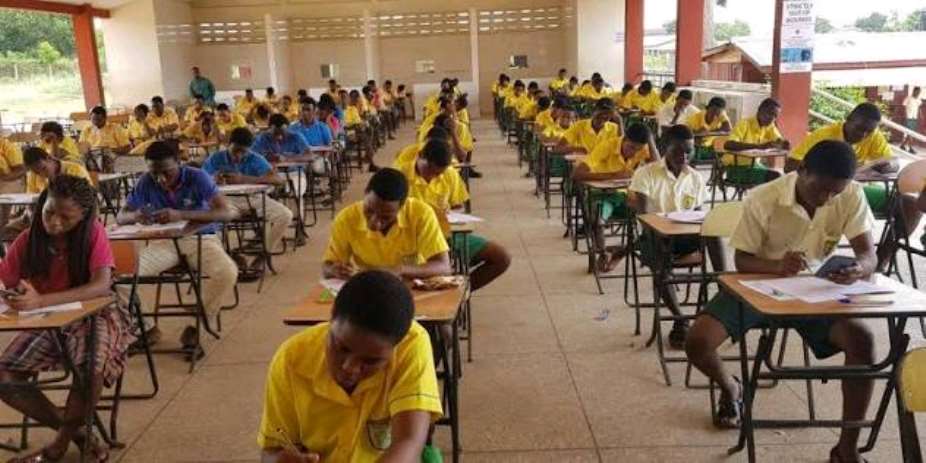
The West African Senior School Certificate Examination (WASSCE) should ideally be a milestone in a student’s educational journey. However, for many students in Ghana, it is increasingly becoming a battleground.
Recent reports during the 2026 WASSCE period indicate a troubling trend: violence is on the rise, with incidents of student clashes, attacks on invigilators, vandalism of school property, and community confrontations escalating after the final examinations. The once-celebratory atmosphere of "jama" (singing and dancing) and signing of shirts has transformed into scenes involving cutlasses, stones, and the intervention of law enforcement.
What Is Happening
Within just the last three weeks, several key incidents have come to light:
1. St. Louis Senior High School, Kumasi : Final-year students attacked teachers with stones after being caught cheating, resulting in two invigilators being hospitalized.
2. Keta Senior High School, Volta Region : A violent clash occurred at a bus terminal between rival schools after an Integrated Science exam, requiring police to fire warning shots to disperse students armed with belts and broken bottles.
3. Achimota School, Greater Accra : Students vandalized dormitory windows and set fire to textbooks during a post-exam celebration that turned chaotic.
Officials from the West African Examinations Council (WAEC) recognize that the pressure related to examination malpractice is a leading cause of these tensions. Notably, statistics from the Ghana Education Service (GES) reveal that reported cases of exam-related violence have surged by 40% since 2022.
Why It Is Happening
Educators, parents, and security experts have identified five main factors contributing to this unrest:
1. Exam Pressure : The high stakes surrounding WASSCE for university admission create tension, leading desperate students to confront invigilators enforcing strict anti-cheating policies.
2. Weak Sanctions : Students who are suspended for violent acts frequently return after the Basic Education Certificate Examination (BECE) concludes, sending the message that consequences are minimal.
3. Group Mentality : The "final year" identity fosters a culture of mob behavior. Social media further spreads this phenomenon, with videos of school fights going viral and inciting similar incidents.
4. Poor Supervision : As core subject exams conclude, school discipline often weakens, leaving students unsupervised during free periods.
5. Community Spillover : Existing rivalries in communities manifest in schools, using the last paper as an opportunity to settle personal disputes.
The Cost
The repercussions of this unrest extend beyond shattered windows:
1. Learning Disrupted : Schools under investigation face delays in results; innocent students often bear the consequences alongside those responsible.
2. Teacher Morale : Invigilators now often request police protection, and some are reluctant to accept postings at schools known for unrest.
3. Reputation : With international universities increasingly scrutinizing WASSCE grades, persistent violence risks devaluing the examination's credibility.
4. Safety : In 2025, a student in the Eastern Region tragically lost their life due to injuries from a post-exam brawl.
What Can Be Done
Addressing this crisis requires a collaborative effort beyond just WAEC's scope:
1. GES and WAEC : Implement immediate and public sanctions. Students involved in violence should face paper cancellations rather than mere suspensions. Transparent reporting of sanctioned schools can deter misconduct.
2. School Heads : Maintain a strict disciplinary environment leading to the exams' conclusion. Have teachers deployed in hotspots, such as bus terminals, on last-paper days and collaborate with Student Representative Councils (SRCs) to plan celebratory events that prioritize safety.
3. Ghana Police Service : Establish a dedicated WASSCE Security Taskforce annually, ensuring visible police presence during major exams and on final days to prevent mob behavior.
4. Parents and Communities : Local leaders, including chiefs, clergy, and assembly members, should proactively intervene before the examinations. The attitude of treating "our children" as untouchable contributes to a culture of impunity.
5. Media and Influencers : Abstain from glamorizing videos of vandalism. Instead, showcase schools that maintain peace during examinations to redefine the narrative students aspire to.
The Bigger Picture
WASSCE has become a high-stakes situation primarily due to the prevailing education system in Ghana, where university admission is limited, and vocational training is undervalued. This creates a perception among students that one exam dictates their future. Until alternative pathways beyond secondary education are developed, the pressure to perform will persist.
However, this pressure must not serve as a justification for violence. The conflict within classrooms is unacceptable. Education should empower students to wield a pen, not a weapon, to shape their futures.
As one headteacher from Tamale poignantly stated, “We used to fear failure. Now we fear the last paper.” This alarming shift in mentality is something Ghana cannot afford to ignore.
If we seek to uphold the credibility of WASSCE and ensure a safe environment for learning, we must take immediate action. The next viral video should portray students celebrating their successes, not perpetuating cycles of violence.

 Gov't to invest GH₵2.5bn into second-cycle education infrastructure
 NDC to rename national headquarters after Rawlings, unveil bust on 79th birthday
 V/R: Two dead, farmlands destroyed as floods ravage Ketu North
 V/R: Flood waters submerge acres of farmland in Anloga
 Al-Qaeda-linked jihadists attack Niger airport, 11 soldiers killed
 Ghana pushes for concrete slavery reparations
 Fire destroys five-bedroom house; family, tenants rendered homeless
 Timber Millers accuse, demand arrest of trade association members behind attack ...
 Two Christ the King SHS students injured in machete attack by suspected gang in ...
 Controller plans salary deductions of 4,000 public sector workers who still owe ...


