




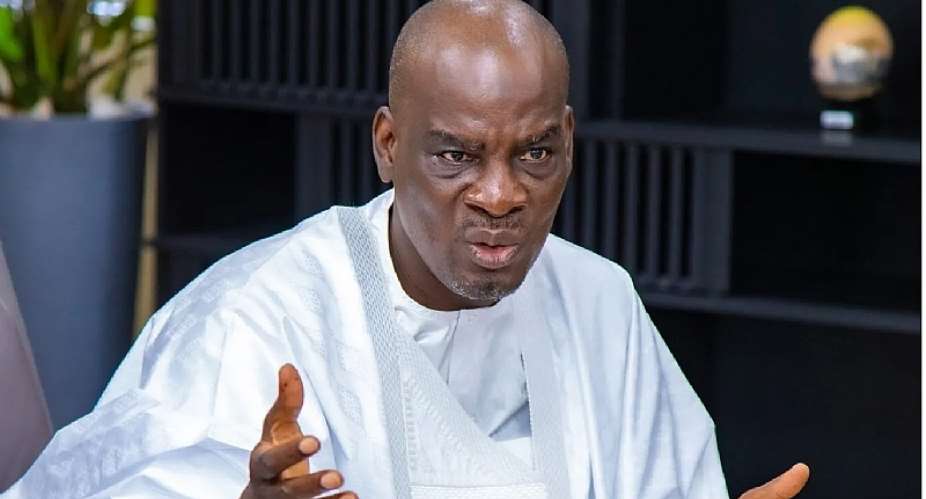
Mr Haruna Iddrisu, the Minister of Education, has announced a bold plan to invest GH₵2.5 billion into second-cycle education infrastructure between 2026 and 2027, with support from the World Bank.
This initiative is expected to address long-standing challenges of inadequate facilities and overcrowding in schools.
Mr. Iddrisu explained that the investment would prioritise the construction of new classrooms, science laboratories, ICT centres, and libraries.
Responding to questions on the floor of Parliament on Thursday, in Accra, Mr Iddrisu highlighted the success of the “No Fees Stress” policy, which was rolled out by the Mahama-led administration in 2025.
According to him, over 312,000 first-year tertiary validated students had already benefited from the intervention, with government spending more than GH₵888 million to ease the financial burden on students.
He noted that this policy has significantly improved access to tertiary education for students from low-income backgrounds.
The Minister stressed that the policy was not just about financial relief but also about equity by removing barriers to access.
The government, Mr Iddrisu, hoped to ensure that every qualified student has the opportunity to pursue higher education, regardless of their economic circumstances.
He described this as a cornerstone of Ghana's vision for inclusive development.
Looking ahead, Mr. Iddrisu said the future of education laid in digital technology, noting that efficient internet connectivity would be central to ensuring fairness and equal access to resources across rural, peri-urban, and urban areas.
The government, he said, was intended to expand broadband coverage and provide affordable devices to schools, enabling students to participate fully in the digital learning revolution.
He further announced that robotics, coding, and Artificial Intelligence would be introduced into the revised curriculum at the basic education level.
The move, he explained, was designed to equip Ghanaian students with 21st-century skills that are increasingly in demand in the global economy.
Mr. Iddrisu emphasised that these reforms would not be limited to urban centres but rural and peri-urban schools would also benefit from the new curriculum and infrastructure investments.
He argued that bridging the digital divide was essential if Ghana is to achieve equitable development and avoid leaving behind communities that have historically been underserved.
The Minister also underscored the importance of partnerships in achieving these goals and acknowledged the role of the World Bank and other development partners in providing quality education across the country.
He urged stakeholders, including private sector actors, to collaborate with the government in building a resilient education system.
GNA

 South Africa summons US ambassador for 'record' third time
 Israel-bound flight diverted to Saudi Arabia after brawl between pilots
 Dangote to launch $16bn refinery in Kenya
 GNFS rescues driver trapped in overturned tipper truck at Bolgatanga
 Ghana, Luxembourg to explore visa waiver agreement
 Tullow loses $393m tax arbitration case against Ghana – Finance Minister
 Bawumia outlines policy proposals to grow Ghana’s insurance industry
 Enforce surcharges, modernise audits to curb GHS100bn losses — Ghana Audit Servi...
 One third of world population exposed to harmful air pollution: monitor
 Shamima Muslim defends constitutional rights of women facing court over hate spe...


