




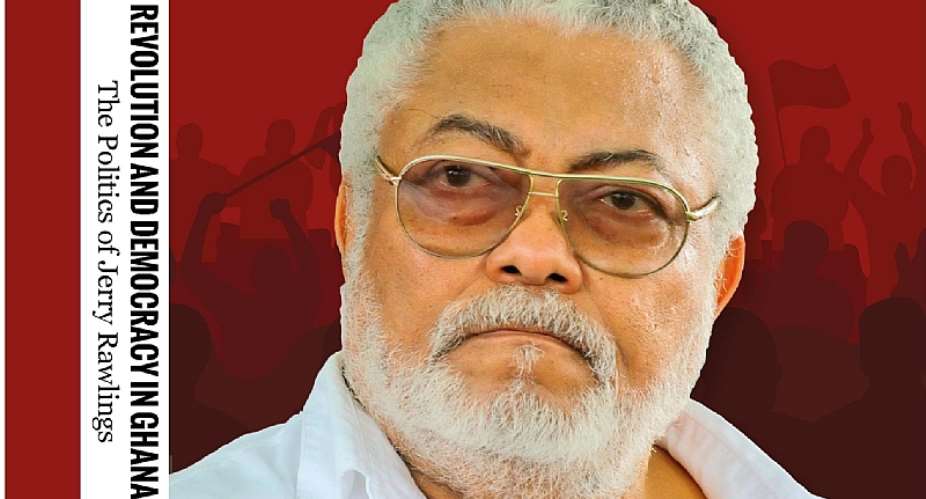
Late former president Jerry John Rawlings’ name is etched into Ghana’s modern history not as a footnote, but as the bridge between military upheaval and constitutional democracy. His journey from coup leader to elected president mirrors Ghana’s own turbulent path from economic collapse to the stability of the Fourth Republic.
THE REVOLUTIONARY BEGINNING
Jerry John Rawlings first entered national politics through the 1979 June 4 Revolution as a young flight lieutenant in the Ghana Air Force. Driven by outrage at corruption and the “illegal enrichment” of the ruling Supreme Military Council at the expense of ordinary Ghanaians, he led the overthrow of the SMC. After overseeing elections that briefly returned civilian rule, Jerry John Rawlings led another intervention on December 31, 1981, establishing the Provisional National Defence Council (PNDC).
The PNDC years, 1981–1992, were defined by a revolutionary agenda centered on probity, accountability, and social justice. This period included a moral purge against corruption and the adoption of structural adjustment programs that stabilized an economy in decay and set the stage for recovery in the 1990s.
THE TRANSITION ARCHITECT
In 1992, Jerry John Rawlings resigned from the military, founded the National Democratic Congress (NDC), and contested elections under a new constitution. He won and became the first president of Ghana’s Fourth Republic. This deliberate transition to constitutional democracy earned him the accolade “Founder of the Fourth Republic”.
As democratic president from 1993 to 2001, Rawlings blended charisma with institution building. His leadership focused on decentralization, grassroots governance, and anti-corruption, moving Ghana from political and economic decay to constitutional rule and economic recovery.
THE LEGACY IN PRACTICE
Rawlings’ legacy remains both celebrated and debated. Supporters remember him as the architect of a democratic Ghana whose commitment to justice and integrity shaped the nation’s political culture. Critics note the contradictions of his rule, but even in debate, Rawlings forced Ghana to confront questions of accountability and the role of the citizen in governance.
Today, statues and commemorations continue to invoke his values of courage, service, and integrity. From the barracks of June 4 to the ballot box of 1992, Rawlings’ trajectory reshaped Ghana. The revolution brought him to power. The Fourth Republic tested whether he could transform that power into institutions. The verdict is still being written by each generation that inherits the republic he helped found.
As we mark his 79th birthday on 22nd June 2026,we remind people of his values of probity, accountability and social justice!

 NPP sets GH¢1,500 nomination fee for constituency chairman aspirants
 We can win Panama game one hundred percent – Majeed Ashimeru
 “OSP’s business is only to dirty Ken Ofori-Atta” – Richard Ahiagbah
 Govt launches committee to probe rising building collapses across Ghana
 NACOC arrests alleged drug kingpin ‘Whiteman’, wife and two others in Kasoa
 'You can do it again' — Bawumia inspires Black Stars ahead of World Cup
 GN Savings and Loans clears major legal hurdle as court strikes out receiver’s a...
 Gifty Oware-Mensah trial: ADB witness says bank processed initial NSA transfer t...
 Ghana, Côte d'Ivoire agree to harmonise cocoa prices to boost farmer incomes
 Ken Agyapong has the appeal young voters who don’t believe politicians will grav...


